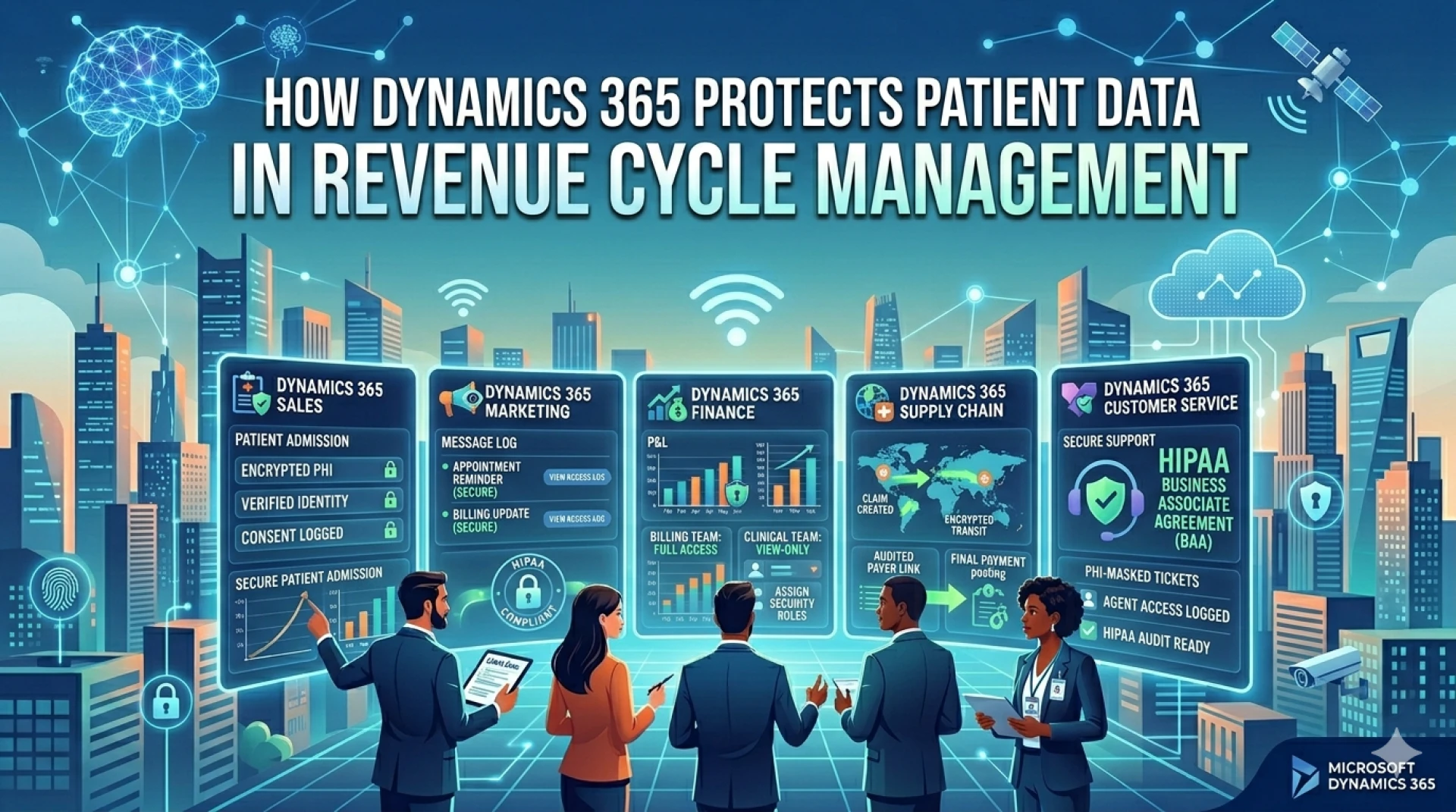

In healthcare, revenue cycle management (RCM) involves handling highly sensitive patient data across billing, claims processing, payments, and compliance workflows. With increasing regulatory pressure and rising cybersecurity threats, protecting this data is not optional it’s mission-critical.
This is where dynamics 365 security and compliance plays a crucial role. Microsoft Dynamics 365 provides a secure, compliant, and scalable framework that helps healthcare organizations protect patient information while optimizing revenue cycle operations.
Built-In Data Encryption for Sensitive Information
Data encryption is the first line of defense in protecting patient records. Dynamics 365 ensures that sensitive healthcare data remains secure both at rest and in transit.
Key security measures include:
- End-to-end data encryption across all systems
- Secure data transmission using advanced protocols
- Protection of patient records from unauthorized access
- Encryption of financial and billing information
With dynamics 365 security and compliance, healthcare organizations can ensure that patient data remains protected throughout the entire revenue cycle.
Role-Based Access Control (RBAC)
Not every employee should have access to all patient data. Dynamics 365 uses role-based access control to restrict data visibility based on job roles and responsibilities.
Key capabilities include:
- Controlled access to patient and financial records
- User-level permissions based on roles
- Segmentation of sensitive healthcare data
- Prevention of unauthorized internal access
This ensures that only authorized personnel can view or modify sensitive information, reducing the risk of internal data breaches.
Compliance with Healthcare Regulations
Healthcare organizations must comply with strict data protection regulations such as HIPAA and other global standards. Dynamics 365 is designed to support compliance with these regulations.
Compliance features include:
- Alignment with healthcare data protection standards
- Secure handling of patient health information (PHI)
- Audit-ready system architecture
- Built-in compliance monitoring tools
By leveraging dynamics 365 security and compliance, organizations can reduce regulatory risks and maintain compliance across all RCM processes.
Secure Cloud Infrastructure
Dynamics 365 operates on Microsoft Azure, which provides enterprise-grade cloud security and reliability. This ensures that patient data is stored and processed in a secure environment.
Cloud security advantages include:
- Multi-layered security architecture
- Continuous threat monitoring and detection
- Secure data storage with backup and recovery
- Protection against cyber threats and data breaches
This cloud-based approach enhances both data security and system availability.
Advanced Threat Protection and Monitoring
Healthcare organizations are frequent targets of cyberattacks. Dynamics 365 includes advanced threat protection tools that detect and respond to potential security threats in real time.
Key features include:
- Real-time threat detection and alerts
- Continuous monitoring of system activity
- Automated responses to suspicious behavior
- Integration with Microsoft security tools
These capabilities help organizations proactively identify and mitigate risks before they impact operations.
Data Audit and Activity Tracking
Maintaining transparency in data access and usage is critical for compliance and security. Dynamics 365 provides detailed audit trails that track user activity within the system.
Audit capabilities include:
- Tracking access to patient records
- Monitoring changes to financial and billing data
- Maintaining logs for compliance audits
- Identifying unusual or unauthorized activities
With dynamics 365 security and compliance, organizations can maintain full visibility into how patient data is accessed and used.
Secure Integration with Healthcare Systems
Revenue cycle management often involves multiple systems such as electronic health records (EHR), billing platforms, and insurance processing tools. Dynamics 365 ensures secure integration across these systems.
Integration security features include:
- Secure APIs for system connectivity
- Encrypted data exchange between platforms
- Controlled data sharing between departments
- Compliance with interoperability standards
This ensures that patient data remains protected even when shared across different systems.
Data Backup and Disaster Recovery
Data loss can have serious consequences in healthcare operations. Dynamics 365 includes robust backup and disaster recovery capabilities to ensure business continuity.
Key features include:
- Automated data backups
- Rapid recovery in case of system failure
- Protection against data loss and corruption
- Business continuity planning support
These features ensure that patient and financial data remain available and secure at all times.
Final Thoughts
Protecting patient data is a top priority for healthcare organizations managing revenue cycle operations. With increasing cyber threats and strict regulatory requirements, businesses need secure and compliant systems to handle sensitive information.
By leveraging dynamics 365 security and compliance, healthcare providers can safeguard patient data, ensure regulatory compliance, and maintain trust while optimizing their revenue cycle processes. From encryption and access control to threat detection and audit tracking, Dynamics 365 provides a comprehensive security framework that supports both operational efficiency and data protection.




























Sign in to leave a comment.