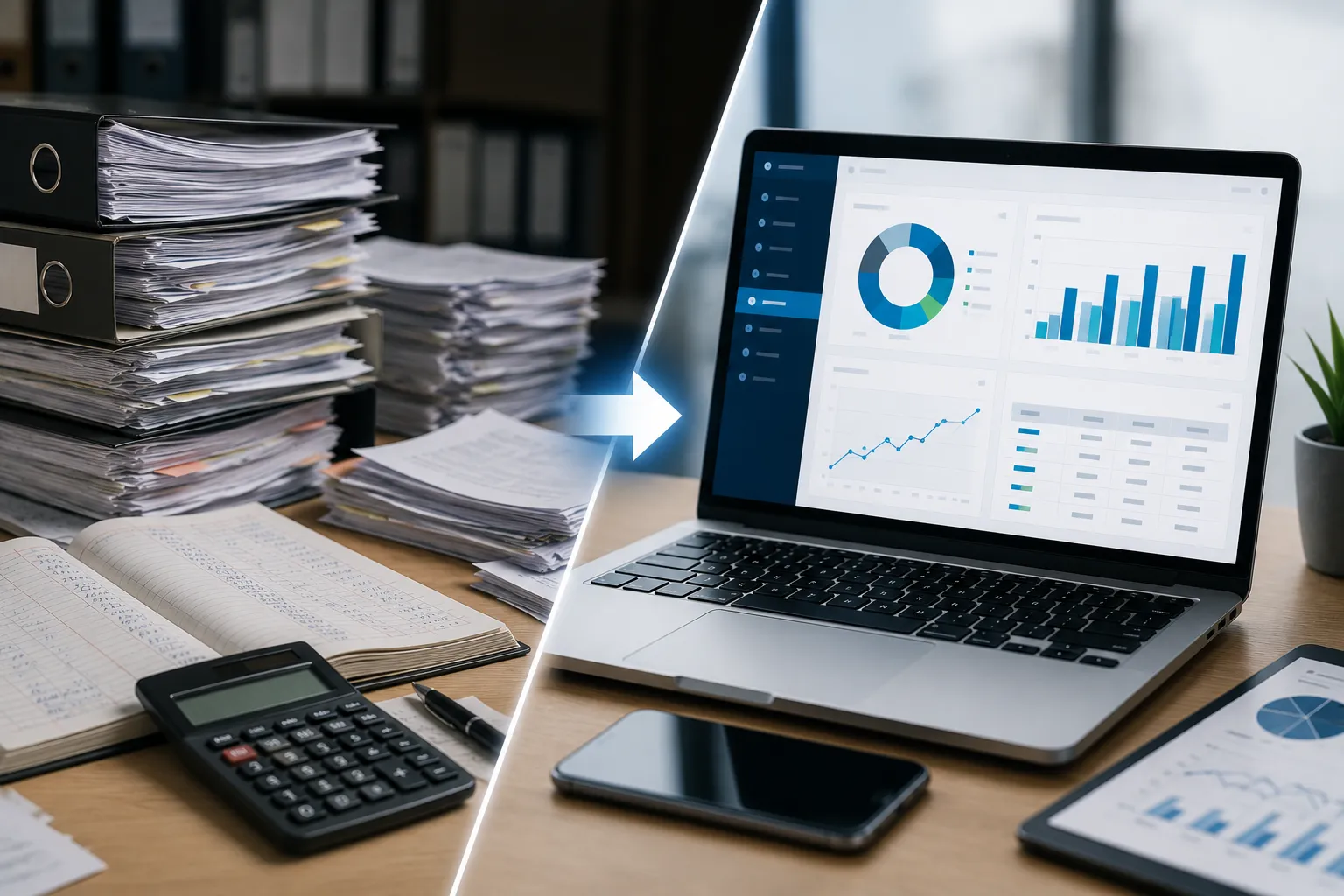

For decades, bookkeeping meant separate systems for separate jobs — one tool for invoicing, another for inventory, a spreadsheet for payroll, and a folder of receipts for tax season. Someone, usually the business owner or an overworked accountant, had to manually stitch all of it together at month-end. It worked, but it was slow, error-prone, and increasingly out of step with how fast businesses now need to move.
That's why integrated accounting platforms are steadily replacing traditional, fragmented bookkeeping methods across small and medium businesses in India and globally. Instead of juggling disconnected tools, businesses are consolidating invoicing, inventory, payroll, and tax compliance into a single system that talks to itself in real time. This article explores why this shift is happening, what it actually means for business owners, and how to evaluate whether it's the right move for your business.
What Is Traditional Bookkeeping, and Why Is It Losing Ground?
Traditional bookkeeping typically relies on:
- Manual ledger entries or spreadsheets
- Separate software for invoicing, payroll, and inventory
- Periodic (often monthly) reconciliation instead of real-time updates
- Heavy dependence on a single bookkeeper or accountant to consolidate data
This approach worked reasonably well when transaction volumes were low and business operations were simple. But as compliance requirements grow more complex — especially with GST in India — and businesses demand faster decision-making, these disconnected systems increasingly struggle to keep up.
What Makes an Accounting Platform "Integrated"?
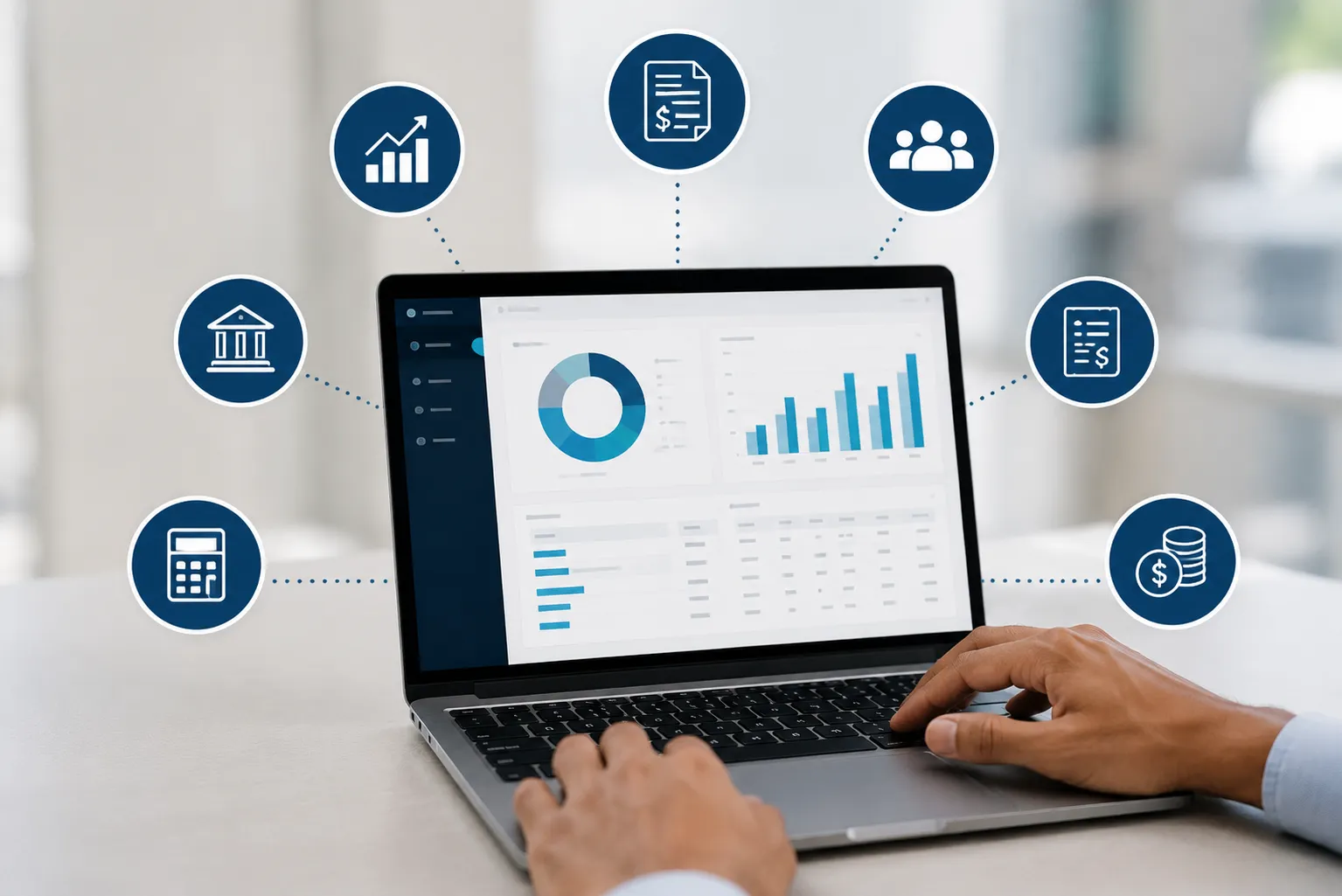
An integrated accounting platform combines core financial functions into a single system, rather than requiring separate tools that need manual syncing. This typically includes:
- Invoicing and billing
- Bank reconciliation
- Inventory and stock management
- Payroll processing
- Tax compliance and filing
- Real-time financial reporting
The key difference isn't just having these features — it's having them work together automatically, so a sale recorded in invoicing instantly reflects in inventory, tax liability, and financial reports without manual re-entry.
Why Businesses Are Making the Switch
1. Elimination of Duplicate Data Entry
In traditional setups, the same transaction often needs to be entered separately into billing software, inventory systems, and accounting ledgers. Integrated platforms record it once and update everywhere automatically, significantly reducing both time spent and the risk of mismatched records.
2. Real-Time Financial Visibility
Instead of waiting for month-end reconciliation, business owners get live dashboards showing cash flow, receivables, and profitability — enabling faster, more informed decisions.
3. Simplified Tax Compliance
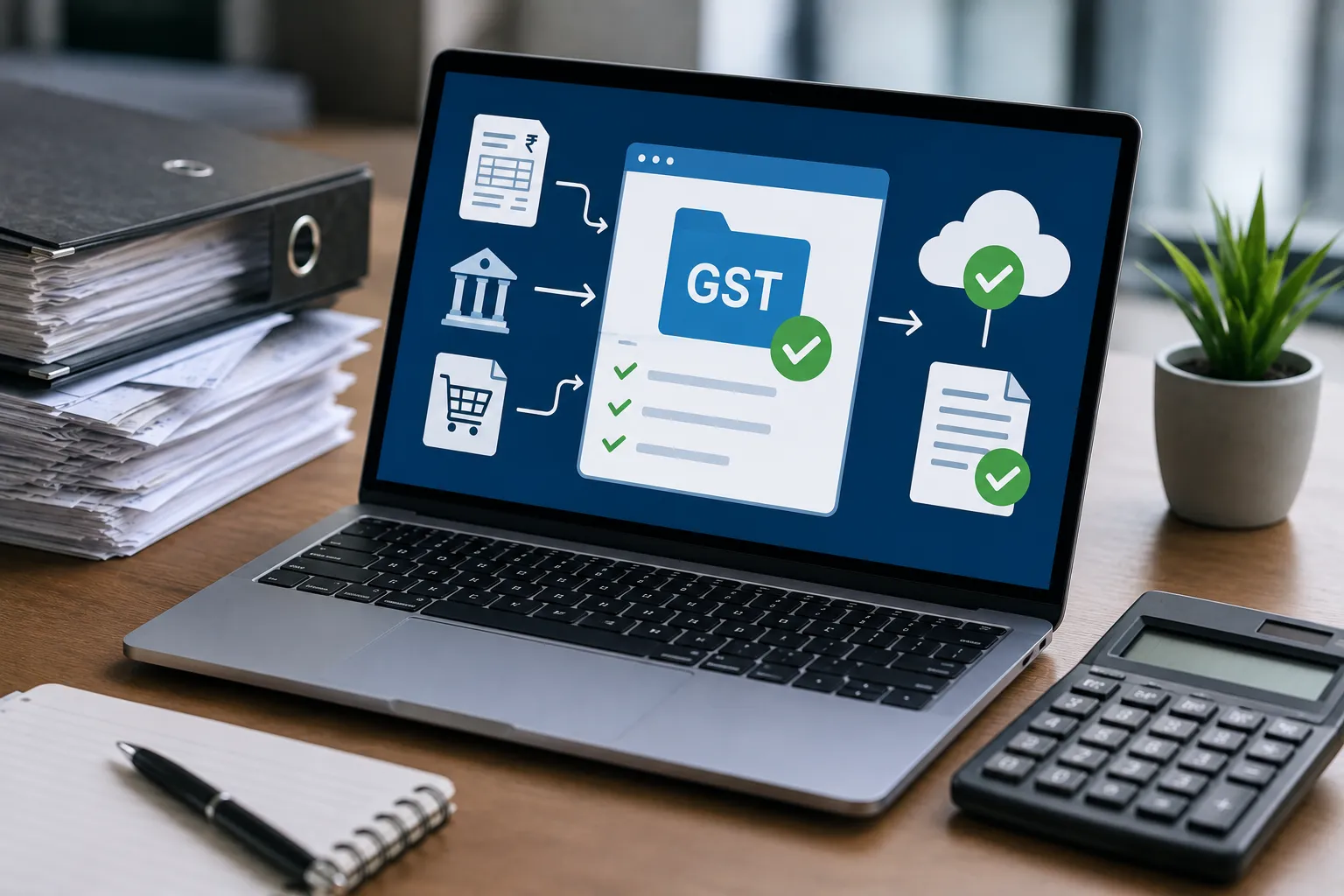
Manually tracking GST liability across separate sales and purchase records is time-consuming and error-prone. Platforms offering accounting software with GST filing built directly into the invoicing and reporting workflow automatically calculate tax liability and generate return-ready reports, removing a major source of compliance stress.
4. Reduced Dependency on a Single Person
Traditional bookkeeping often creates a bottleneck around one bookkeeper who understands how all the disconnected pieces fit together. Integrated systems make financial data accessible and understandable to multiple team members, reducing operational risk if that one person is unavailable.
5. Better Support for Inventory-Heavy and Manufacturing Businesses
For manufacturing MSMEs, disconnected inventory and accounting systems often lead to inaccurate cost tracking. Platforms offering manufacturing ERP software India capabilities — including bill of materials tracking and production-linked inventory — connect raw material costs directly to financial records, giving manufacturers accurate, real-time cost visibility that traditional bookkeeping simply can't match.
Traditional Bookkeeping vs Integrated Accounting Platforms
| Factor | Traditional Bookkeeping | Integrated Accounting Platform |
| Data entry | Manual, often duplicated across tools | Single entry, auto-synced |
| Tax compliance | Manual calculation and filing | Automated GST/TDS filing |
| Inventory tracking | Separate system, prone to mismatch | Directly linked to accounting |
| Reporting | Periodic, manually compiled | Real-time dashboards |
| Collaboration | Limited, bottlenecked | Multi-user, role-based access |
| Scalability | Requires overhauls as business grows | Built to scale with the business |
Core Integrated Accounting Software Features to Look For
When evaluating platforms, businesses should prioritize integrated accounting software features such as:
- Automated bank feed reconciliation
- GST and TDS compliance built into invoicing
- Inventory and BOM support for product-based businesses
- Payroll with statutory deduction calculations
- Real-time, customizable financial dashboards
- Role-based multi-user access
Choosing a platform based on these core capabilities, rather than surface-level branding, ensures the system actually reduces manual work instead of just relocating it.
Legal Importance of Integrated Financial Systems
Beyond convenience, moving to an integrated platform carries real legal significance for growing businesses.
Why It Matters Legally
- Accurate GST filings: Automated, linked data reduces the risk of mismatched sales and purchase records during tax audits.
- Udyam Registration compliance: MSMEs need consistent, verifiable financial records to retain registration benefits like collateral-free loans and priority lending.
- Stronger audit trails: Integrated systems automatically timestamp and log transactions, making regulatory audits and investor due diligence significantly smoother.
Business Advantages
- Improved credit access: Financial institutions increasingly favor businesses with clean, system-generated records over manually maintained books.
- Faster funding readiness: Investors can review consolidated, accurate financial data without lengthy clarification back-and-forth.
- Operational resilience: Reduced dependency on any single person or disconnected tool makes the business more stable as it scales.
Practical Example: Moving from Fragmented to Integrated Systems
Consider a small manufacturing business that used separate tools for invoicing, a spreadsheet for inventory, and a bookkeeper who manually reconciled everything monthly for GST filing. As order volume grew, this process began causing:
- Delayed GST filings due to manual data compilation
- Inventory mismatches between recorded stock and actual production usage
- Difficulty tracking true per-unit profitability
After switching to an integrated platform connecting invoicing, inventory, and GST compliance, the business was able to see real-time production costs, file GST returns without manual reconciliation delays, and free up the bookkeeper's time for more strategic financial analysis rather than repetitive data entry.
Integrated Platforms and Global Business Registration
Businesses planning to register or operate internationally also benefit significantly from integrated systems. These platforms increasingly support:
- Multi-currency invoicing and reporting
- Compliance tracking across multiple tax jurisdictions
- Integration with global business registration processes, such as incorporating an LLC or subsidiary abroad
- Consolidated reporting across domestic and international entities
For Indian businesses expanding into markets like the US, UK, or Singapore, having a single integrated system — rather than separate accounting setups per region — makes consolidated financial reporting far more manageable.
Common Concerns About Switching to Integrated Platforms
| Concern | Reality |
| "It will be too complex to learn" | Most platforms offer guided onboarding and intuitive dashboards |
| "Migration will be disruptive" | Reputable providers offer data migration support |
| "It's only for large businesses" | Many integrated platforms are specifically priced and designed for MSMEs |
| "We'll lose historical data" | Most systems support importing past records during setup |
Final Thoughts
Traditional, fragmented bookkeeping was never designed for the pace and compliance demands of today's growing businesses. Integrated accounting platforms solve this by connecting invoicing, inventory, payroll, and tax compliance into a single, real-time system — eliminating duplicate work, reducing errors, and giving business owners the financial visibility they need to make faster decisions.
As more MSMEs formalize through Udyam registration and increasingly look toward regional or global expansion, adopting an integrated approach to accounting isn't just a modern convenience — it's becoming the standard businesses need to stay compliant, competitive, and ready to scale.
Frequently Asked Questions (FAQs)
1. What is the main difference between traditional bookkeeping and an integrated accounting platform? Traditional bookkeeping typically relies on separate, manually synced tools for invoicing, inventory, and compliance, while integrated platforms combine these functions into a single system that updates automatically in real time.
2. Are integrated accounting platforms suitable for small businesses, or only large companies? Integrated platforms are increasingly designed with small and medium businesses in mind, offering scalable pricing and features that match different business sizes and complexity levels.
3. Can integrated accounting platforms handle GST compliance in India? Yes, most integrated platforms include automated GST filing directly linked to invoicing and sales data, reducing manual reconciliation and compliance risk.
4. Is switching from traditional bookkeeping to an integrated platform difficult? Most providers offer guided onboarding and data migration support, making the transition considerably smoother than businesses often expect.
5. Do integrated accounting platforms support manufacturing businesses specifically? Yes, many platforms offer manufacturing-specific features like bill of materials tracking and production-linked inventory, connecting production costs directly to financial records.
6. Can integrated accounting platforms support businesses expanding internationally? Yes. Many platforms support multi-currency invoicing and compliance tracking across different tax jurisdictions, making them well-suited for businesses managing operations or registrations in multiple countries.

























Sign in to leave a comment.