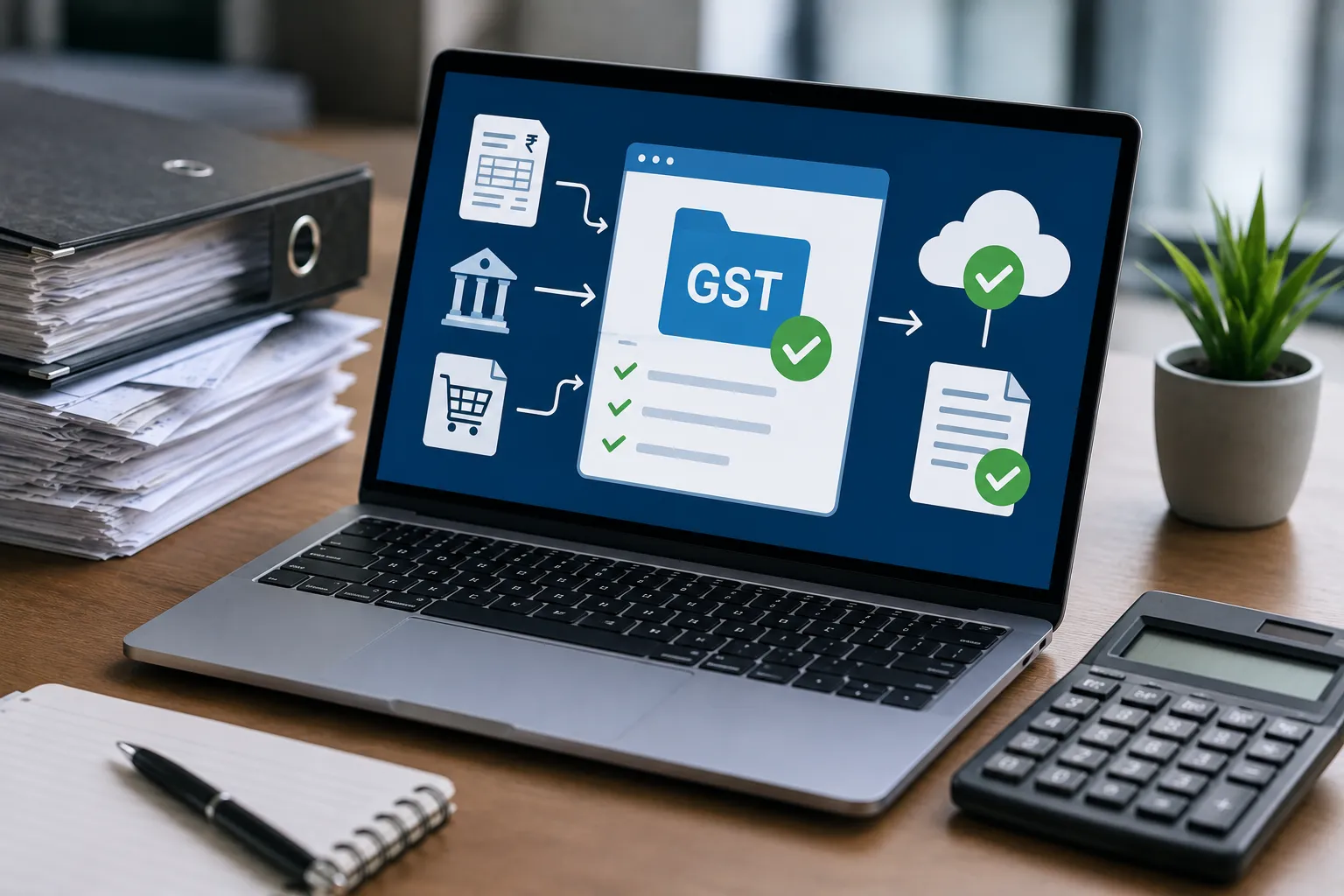

Ask any small business owner in India what part of running a company feels the most stressful, and GST compliance is almost always near the top of the list. Between tracking sales and purchase invoices, reconciling input tax credit, and hitting filing deadlines, manual GST management eats up hours that could be spent actually running the business — and one small mistake can mean penalties or a notice from the tax department.
This is exactly the problem automated GST filing software was built to solve. Instead of manually calculating tax liability and cross-checking invoices by hand, automated systems handle these repetitive, error-prone tasks in the background, letting business owners focus on growth instead of paperwork. In this guide, we'll break down how automated GST filing actually simplifies compliance, what to look for in the right software, and why getting this right matters for both legal and business reasons.
Why Manual GST Compliance Is So Time-Consuming
Before looking at how automation helps, it's worth understanding what makes manual GST filing so demanding in the first place. A typical filing cycle involves:
- Collecting and verifying every sales and purchase invoice
- Calculating GST liability across different tax slabs
- Reconciling input tax credit against supplier-reported data
- Preparing and validating return data before submission
- Correcting mismatches flagged after filing
For businesses with even a moderate volume of monthly transactions, doing all of this manually — often in spreadsheets — creates a high risk of errors and missed deadlines.
What Is Automated GST Filing Software?
Automated GST filing software connects directly to your invoicing and accounting data to calculate tax liability, reconcile input tax credit, and generate return-ready reports without manual data re-entry. Rather than compiling everything by hand at the end of each filing period, the system builds compliance into the everyday process of recording transactions.
Core Capabilities
- Automatic GST calculation at the point of invoicing
- Real-time reconciliation of input tax credit
- Auto-population of return data (GSTR-1, GSTR-3B, and related filings)
- Error and mismatch alerts before submission
- Audit trails with timestamps for every transaction
How Automated GST Filing Simplifies Compliance
1. Tax Calculations Happen Automatically
Instead of manually applying GST rates to each invoice, automated systems apply the correct rate at the moment an invoice is created, based on the goods or service category. This removes a major source of manual error right at the source.
2. Input Tax Credit Reconciliation Becomes Effortless
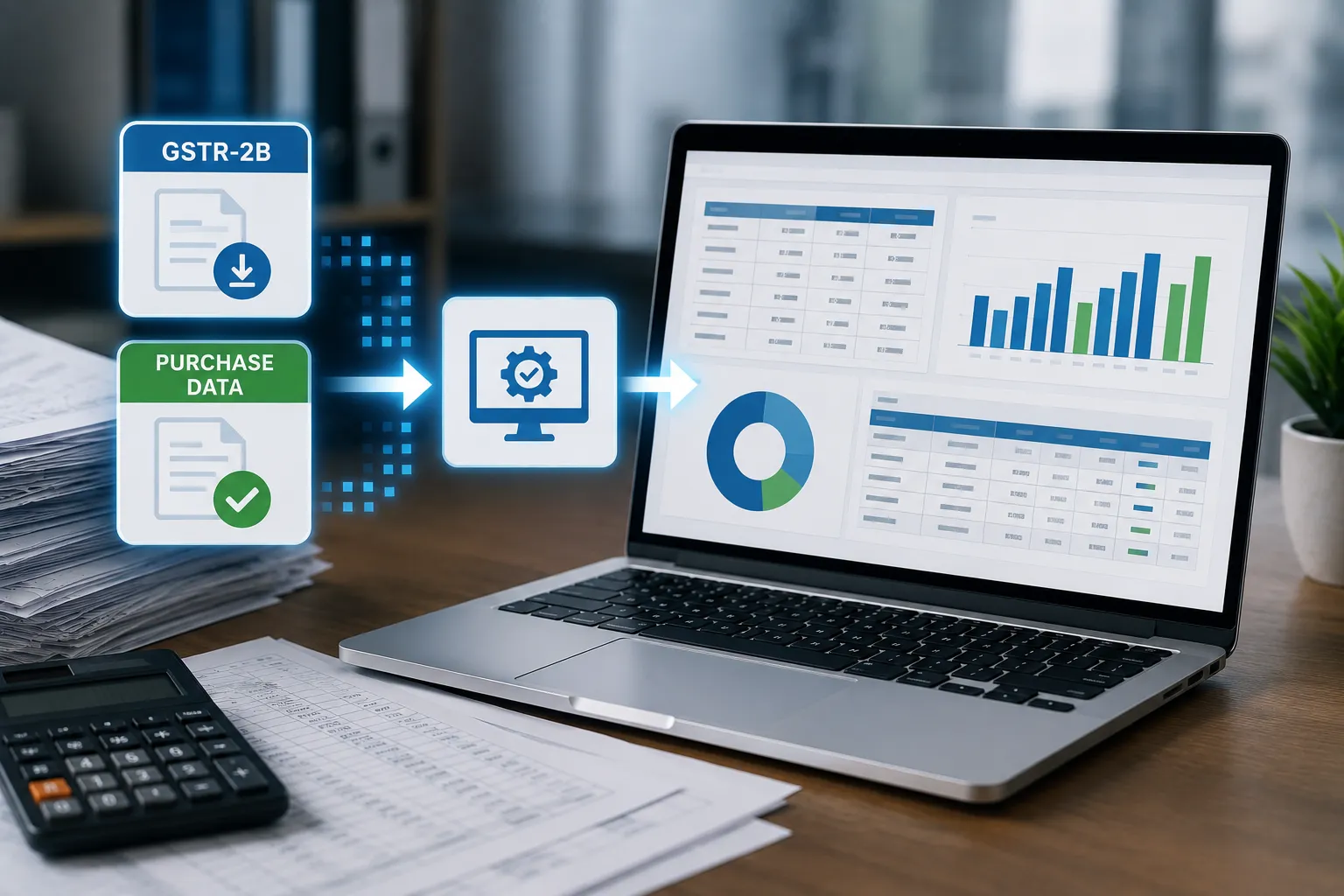
One of the most tedious parts of GST compliance is matching your purchase records against what suppliers have actually reported. Automated systems handle this reconciliation continuously, flagging mismatches early instead of leaving business owners to discover discrepancies only at filing time.
3. Return Preparation Is Nearly Instant
Because transaction data is already structured and validated throughout the month, generating return-ready reports becomes a matter of minutes rather than days of manual compilation.
4. Errors Are Flagged Before Filing, Not After
Manual filing often means errors surface only after submission — sometimes as a notice weeks later. Automated GST accounting software validates data in real time, catching mismatched GSTINs, incorrect tax rates, or missing details before they become compliance problems.
5. Deadlines Become Easier to Manage
With automated reminders and pre-filled return data ready well ahead of due dates, businesses avoid the last-minute scramble that often leads to rushed, error-prone filings.
6. Multi-GSTIN and Multi-Branch Compliance Is Streamlined
For businesses operating across multiple states or branches, automated software consolidates data across GSTINs, making combined turnover tracking and compliance far more manageable than juggling separate spreadsheets per location.
Manual vs Automated GST Compliance: A Quick Comparison
| Task | Manual GST Compliance | Automated GST Filing Software |
| Tax calculation | Manual, per invoice | Automatic at point of sale |
| ITC reconciliation | Manual cross-checking | Real-time, continuous |
| Return preparation | Hours to days | Minutes |
| Error detection | Often after filing | Before submission |
| Multi-GSTIN tracking | Complex, error-prone | Consolidated automatically |
| Deadline management | Manual tracking | Automated reminders |
What to Look for in GST Filing Software
Not all software handles GST compliance equally well. When evaluating options, look for genuine GST accounting software capabilities rather than surface-level invoicing tools that treat tax filing as an afterthought. Key features to check include:
- Automatic tax rate application based on HSN/SAC codes
- Real-time input tax credit reconciliation
- Auto-population of GSTR-1 and GSTR-3B data
- Error validation before submission to avoid rejected filings
- Support for multiple GSTINs under a single business
- Clear audit trails for every transaction
Choosing accounting software with GST filing built directly into the core platform — rather than as a bolted-on add-on — tends to reduce the manual reconciliation gaps that cause most compliance issues.
Legal Importance of Automated GST Compliance
Beyond convenience, automated GST filing has direct legal significance for Indian businesses.
Why It Matters Legally
- Avoiding penalties: Late or incorrect filings can result in interest charges and penalties that scale with the amount and duration of non-compliance.
- Protecting input tax credit claims: Errors in ITC reconciliation can lead to denied credit, directly affecting cash flow.
- Udyam Registration compliance: MSMEs registered under Udyam must maintain consistent, accurate financial records to retain eligibility for benefits like collateral-free loans and government tenders.
- Audit readiness: Automated systems provide clear, timestamped audit trails that make tax assessments significantly smoother than manually maintained records.
Business Advantages
- Stronger credibility with lenders and investors: Clean, automated GST records improve confidence during loan applications or funding conversations.
- Reduced compliance stress: Fewer manual steps mean less risk of costly last-minute errors during filing deadlines.
- More time for core business activities: Time saved on manual reconciliation can go directly toward sales, operations, and growth.
Practical Example: Simplifying Compliance for a Growing MSME
Consider a small trading business managing GST across two state registrations. Previously, the owner spent several days each month manually reconciling purchase invoices against supplier filings, often discovering mismatches only after submitting returns — sometimes resulting in denied input tax credit.
After switching to automated GST filing software India businesses increasingly rely on, the business was able to reconcile input tax credit continuously throughout the month, catch mismatches before filing, and consolidate reporting across both GSTINs in a single dashboard. What once took days of manual cross-checking was reduced to a quick review before submission — freeing up significant time each month.
GST Compliance and Company Registration
Proper GST compliance is closely tied to how a business is registered and structured. Whether operating as a sole proprietorship, partnership, LLP, or private limited company, each structure carries specific GST obligations tied to turnover, business activity, and state presence.
For MSMEs registered under Udyam, maintaining automated, accurate GST records isn't optional — it directly supports eligibility for government schemes, subsidies, and priority lending that require demonstrable compliance history. Businesses that treat GST automation as part of their registration and compliance strategy from the outset tend to avoid the retroactive cleanup many growing businesses face later.
GST Automation for Businesses Expanding Globally
For Indian MSMEs looking beyond domestic markets, automated compliance systems also support smoother global business registration and expansion. This includes:
- Multi-currency invoicing for export transactions
- Compliance tracking that complements international tax obligations
- Easier consolidation of domestic GST data alongside financial reporting for entities registered abroad, such as an LLC or subsidiary
This is particularly relevant for export-oriented MSMEs in sectors like textiles, IT services, and manufacturing, where domestic GST compliance and international financial reporting increasingly need to work together.
Common Mistakes Businesses Make With GST Compliance
| Mistake | Consequence |
| Relying on manual reconciliation for high invoice volumes | Increased error rate and missed ITC claims |
| Waiting until filing deadlines to review data | Rushed, error-prone submissions |
| Using software without real-time validation | Errors discovered only after filing |
| Ignoring multi-GSTIN consolidation needs | Fragmented, inconsistent compliance tracking |
| Not training staff on automated workflows | Continued manual habits despite having automation available |
Final Thoughts
GST compliance doesn't have to be the most stressful part of running a business. Automated GST filing software removes the repetitive, error-prone work of manual tax calculation and reconciliation, replacing it with real-time accuracy and significantly faster return preparation. For MSMEs, this isn't just a convenience — it directly protects input tax credit, reduces legal risk, and frees up valuable time that can be redirected toward growth.
As more Indian businesses formalize through Udyam registration and increasingly explore opportunities beyond domestic markets, building GST compliance around automation rather than manual effort isn't just smart operationally — it's becoming essential for staying compliant, credible, and ready to scale.
Frequently Asked Questions (FAQs)
1. How does automated GST filing software reduce compliance errors? It applies tax rates automatically at the point of invoicing, reconciles input tax credit in real time, and validates data before submission, catching mismatches that manual processes often miss until after filing.
2. Is automated GST filing software suitable for small businesses with low transaction volumes? Yes, many platforms offer scalable plans, making automated GST compliance accessible and beneficial even for businesses with relatively low monthly transaction volumes.
3. Can automated GST software handle multiple GST registrations for one business? Yes, most automated platforms support multi-GSTIN consolidation, making it significantly easier to manage combined compliance across multiple states or branches.
4. Does automated GST filing software replace the need for a chartered accountant? No. Automation handles repetitive calculations and reconciliation, but accountants remain valuable for strategic tax planning, complex compliance scenarios, and final review before filing.
5. How does GST automation help protect input tax credit claims? By continuously reconciling purchase records against supplier-reported data, automated systems catch mismatches early, reducing the risk of denied input tax credit due to unresolved discrepancies.
6. Is GST automation useful for businesses planning to expand internationally? Yes. Automated systems make it easier to maintain accurate domestic GST records while managing multi-currency transactions and financial reporting for international business operations.





















Sign in to leave a comment.