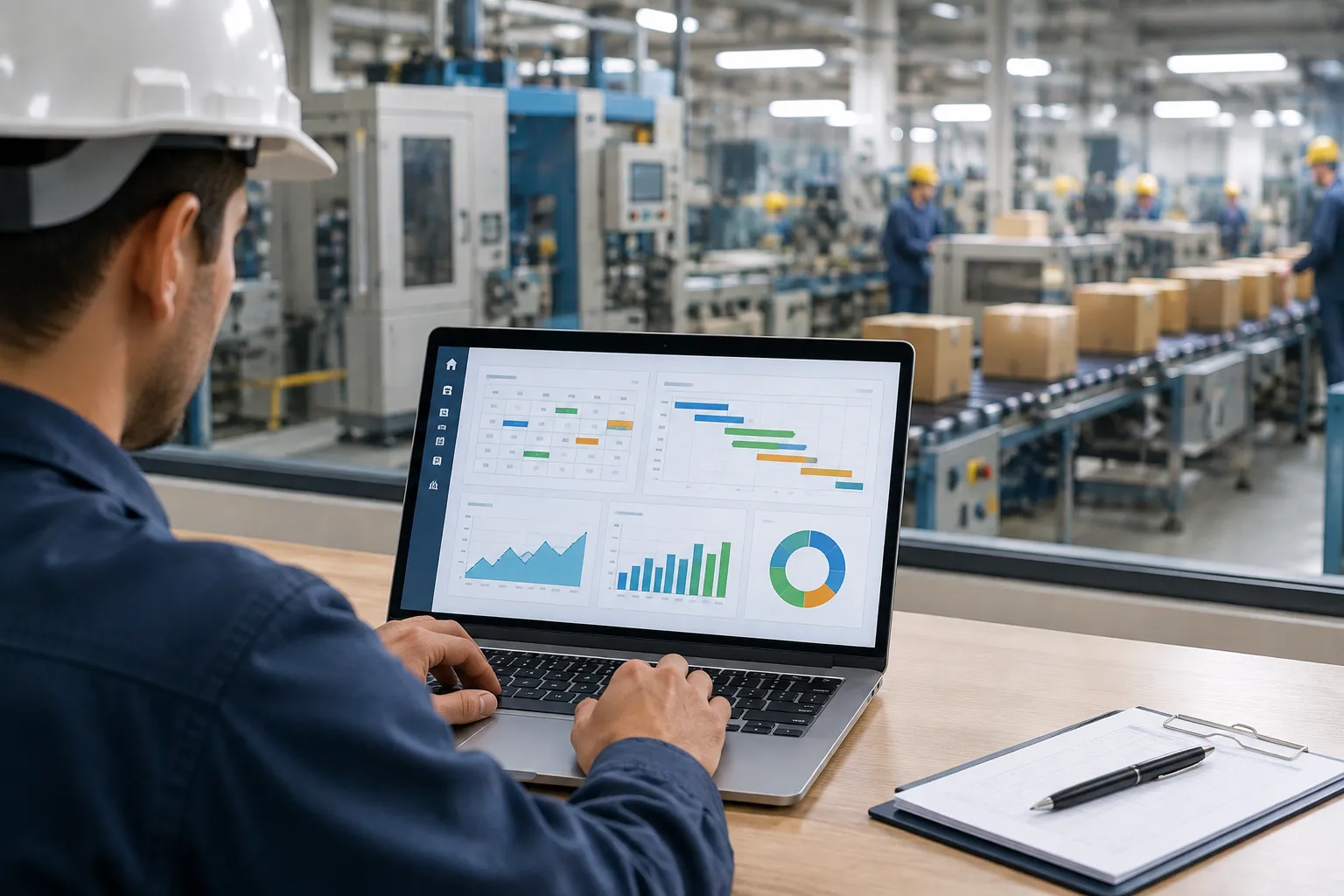

Production planning is one of those tasks that looks simple on a whiteboard and becomes genuinely complicated the moment real orders, material shortages, and machine downtime enter the picture. Manufacturers juggling spreadsheets, disconnected purchase records, and gut-feel scheduling often find themselves reacting to problems — a missing raw material, an overbooked machine — rather than preventing them in the first place.
This is exactly where manufacturing ERP production planning capabilities make a measurable difference. By connecting demand data, inventory levels, and production capacity into a single system, ERP software helps manufacturers plan proactively instead of scrambling reactively. This article breaks down exactly how ERP transforms production planning, the specific problems it solves, and what to look for when evaluating systems built for this purpose.
Why Traditional Production Planning Falls Short
Many small and mid-sized manufacturers still rely on manual planning methods — spreadsheets, whiteboards, or informal scheduling based on experience. While this can work at a small scale, it tends to break down as order volume and complexity grow, leading to common problems like:
- Production delays caused by unexpected material shortages
- Machines sitting idle while orders wait for available capacity elsewhere
- Inaccurate delivery estimates given to customers
- Difficulty identifying which orders should take priority when resources are limited
- Disconnected inventory and production data leading to planning based on outdated stock informatio
How Manufacturing ERP Transforms Production Planning
1. Real-Time Material Requirement Planning (MRP)
ERP systems calculate exactly what raw materials are needed for upcoming production, based on current orders and bill of materials data, and compare this against actual stock levels. This helps identify material shortages well before they disrupt the production schedule, rather than discovering them mid-process.
2. Accurate Capacity Planning
By tracking machine availability, labor capacity, and current workload, ERP systems help manufacturers understand exactly how much production capacity is actually available at any given time — preventing the common problem of over-committing to orders the shop floor can't realistically support.
3. Demand-Driven Scheduling
Rather than scheduling production based on guesswork, ERP systems use actual order data and historical demand patterns to help prioritize what should be produced first, reducing the risk of either overproduction or missed delivery deadlines.
4. Real-Time Shop Floor Visibility
Integrated systems provide live updates on production progress, allowing planners to adjust schedules dynamically when delays occur, rather than only discovering problems after they've already affected downstream orders.
5. Bottleneck Identification
By tracking production data across every stage, ERP systems help identify recurring bottlenecks — a specific machine, process step, or material dependency — that consistently slow down overall throughput, enabling targeted improvements rather than broad, unfocused changes.
6. Connected Inventory and Production Data
Production planning is only as good as the inventory data behind it. Using accounting with inventory management capabilities built into the ERP system ensures material availability reflects real, current stock levels rather than outdated or manually updated estimates.
7. Automated Purchase Order Triggers
When material requirement planning identifies a shortage, ERP systems can automatically generate purchase order suggestions, helping ensure raw materials arrive in time for scheduled production rather than being ordered reactively after a shortage is already causing delays.
Manual vs ERP-Driven Production Planning
| Factor | Manual Planning | ERP-Driven Planning |
| Material visibility | Often outdated or estimated | Real-time, accurate |
| Capacity awareness | Based on experience/guesswork | Data-driven, tracked continuously |
| Scheduling basis | Informal prioritization | Demand-driven, systematic |
| Shortage detection | Discovered during production | Identified in advance via MRP |
| Bottleneck identification | Difficult to pinpoint | Data-supported, trackable |
| Purchase order timing | Reactive | Proactive, automatically triggered |
Connecting Production Planning to Financial Data
Production planning doesn't exist in isolation from the rest of the business — every material purchase, production run, and completed order has direct financial implications. Manufacturers using dedicated accounting software for MSME operations that integrate with production planning gain a clearer picture of how scheduling decisions affect cash flow, procurement costs, and overall profitability, rather than treating production and finance as separate concerns.
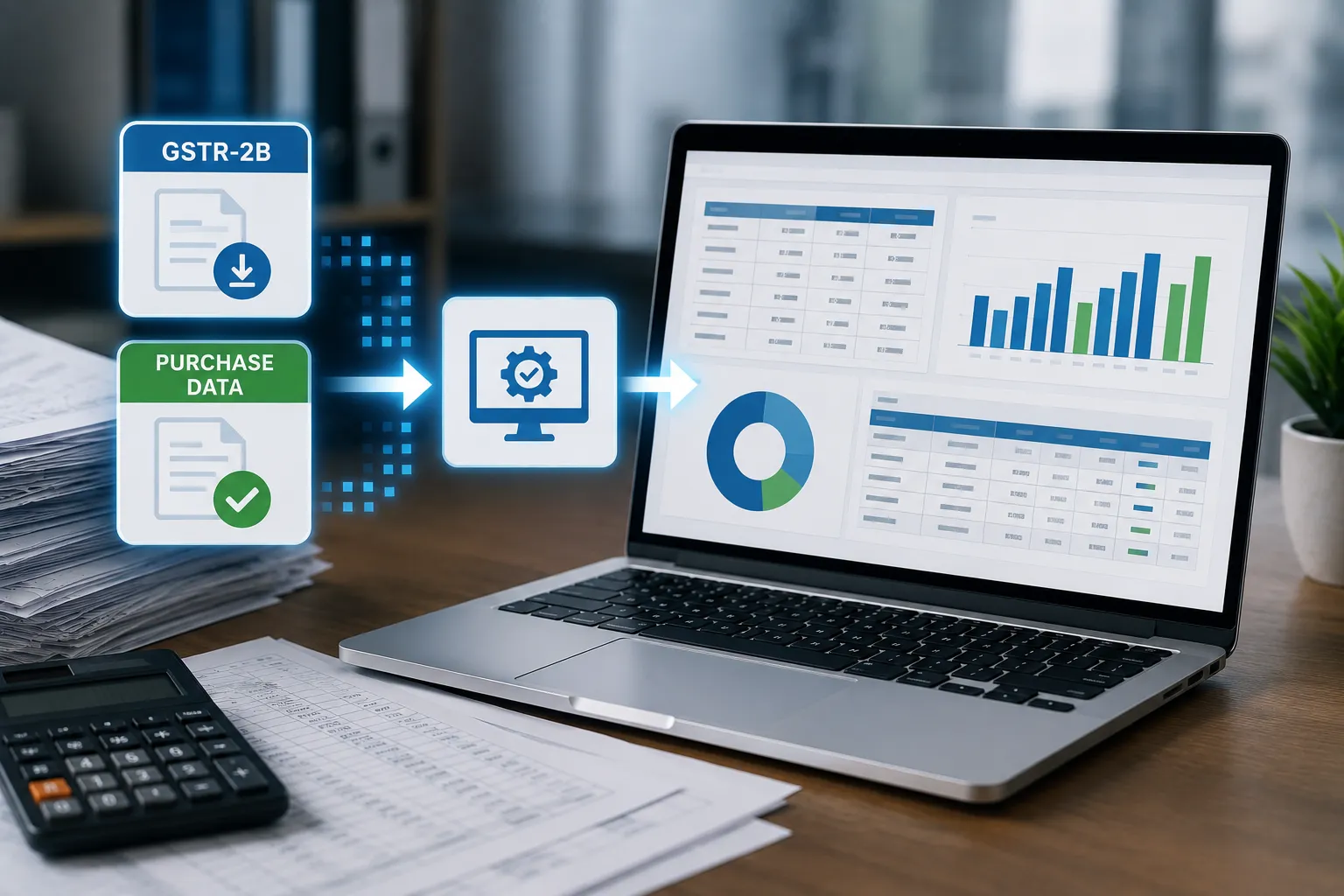
For Indian manufacturers, this connection also extends to GST compliance. Since raw material purchases and inter-state transfers tied to production planning carry specific tax implications, using automated GST filing software India manufacturers can rely on ensures these transactions are accurately reflected in compliance filings as production activity happens, rather than requiring separate manual reconciliation later.
Legal Importance of Accurate Production Planning Records
Beyond operational efficiency, well-documented production planning carries real legal and compliance significance for manufacturing MSMEs.
Why It Matters Legally
- Accurate GST compliance on raw material and job work transactions: Production planning tied directly to purchase and inventory records helps ensure GST calculations reflect actual material usage and movement.
- Udyam Registration requirements: Manufacturing MSMEs need consistent, accurate production and financial records to retain registration benefits like collateral-free loans and government tenders.
- Audit readiness: Detailed, system-generated production planning records make regulatory inspections and tax audits significantly smoother than reconstructing data from informal scheduling methods.
Business Advantages
- Improved customer trust: Accurate production planning leads to more reliable delivery estimates, strengthening customer relationships and repeat business.
- Reduced operational costs: Better capacity utilization and fewer material shortages directly reduce wasted time and expedited shipping costs.
- Stronger credit access: Lenders view manufacturers with organized, data-driven production and financial records more favorably during loan evaluations.
Practical Example: Solving Recurring Production Delays
Consider a small electronics component manufacturer that previously relied on a whiteboard and informal communication to schedule production across its two production lines. Frequent material shortages disrupted schedules, and the business regularly missed delivery deadlines because planners didn't have accurate, real-time visibility into raw material stock levels.
After implementing ERP-driven production planning with integrated material requirement planning, the business gained advance visibility into upcoming shortages, automatically triggered purchase orders before stockouts occurred, and significantly improved on-time delivery performance. Production planners could also identify a specific bottleneck machine that had been quietly limiting overall throughput — an issue that had gone unnoticed under the previous informal scheduling approach.
Production Planning and Company Registration
As manufacturing businesses formalize — registering as a Private Limited Company or under Udyam — the expectations around operational documentation increase significantly. Investors, banks, and regulators increasingly expect manufacturers to demonstrate structured, data-driven production processes, not just informal scheduling methods, particularly when evaluating loan applications or government scheme eligibility tied to MSME registration status.
Production Planning for Manufacturers Expanding Globally
Manufacturers with export operations or plans to establish facilities abroad should also consider how ERP-driven production planning supports international growth, including:
- Coordinating production schedules across domestic and international facilities
- Managing material sourcing and lead times for cross-border supply chains
- Supporting compliance documentation tied to global business registration processes, such as establishing a manufacturing subsidiary overseas
- Consolidated production and demand visibility across multiple countries
This is particularly relevant for Indian manufacturing MSMEs in export-oriented sectors like textiles, auto components, and engineering goods, where production planning increasingly needs to account for international customer demand and cross-border logistics timelines.
Common Mistakes Manufacturers Make With Production Planning
| Mistake | Consequence |
| Relying on informal, whiteboard-based scheduling | Missed shortages and unreliable delivery estimates |
| Disconnecting inventory data from production planning | Planning based on outdated stock information |
| Ignoring bottleneck identification | Recurring throughput limitations left unaddressed |
| Not linking production data to financial records | Limited visibility into how scheduling affects cash flow |
| Reacting to shortages instead of planning proactively | Increased costs from expedited shipping and delays |
Final Thoughts
Production planning built on spreadsheets, whiteboards, or informal scheduling inevitably struggles to keep pace as manufacturing operations grow more complex. Manufacturing ERP solves this by connecting material requirements, capacity data, and demand patterns into a single, real-time system — helping manufacturers plan proactively, avoid costly shortages, and identify bottlenecks before they consistently limit throughput.
As manufacturing MSMEs formalize through Udyam registration and increasingly look toward domestic growth or international expansion, investing in genuinely data-driven production planning isn't just an operational improvement — it's a foundation for reliable delivery performance, accurate compliance, and sustainable, well-coordinated growth.
Frequently Asked Questions (FAQs)
1. How does manufacturing ERP improve production planning compared to manual methods? ERP systems provide real-time visibility into material availability, capacity, and demand, allowing manufacturers to plan proactively rather than reacting to shortages or scheduling conflicts after they occur.
2. What is material requirement planning (MRP), and why does it matter? MRP calculates exactly what raw materials are needed for upcoming production based on orders and bill of materials data, helping identify potential shortages well before they disrupt the production schedule.
3. Can ERP-driven production planning help identify bottlenecks in manufacturing? Yes, by tracking production data across every stage, ERP systems help identify recurring bottlenecks, allowing manufacturers to make targeted improvements rather than broad, unfocused changes.
4. Does production planning ERP integrate with GST compliance for manufacturers? Yes, many systems connect production and inventory data directly to GST compliance features, ensuring tax calculations on raw material purchases and transfers reflect actual production activity accurately.
5. Is manufacturing ERP for production planning only useful for large manufacturers? No, small and medium manufacturers often benefit significantly as well, particularly as order volume or product complexity grows beyond what manual scheduling can reliably manage.
6. How does improved production planning benefit manufacturers financially? Better capacity utilization, fewer material shortages, and more accurate delivery estimates directly reduce wasted time, expedited shipping costs, and missed customer commitments.




























Sign in to leave a comment.