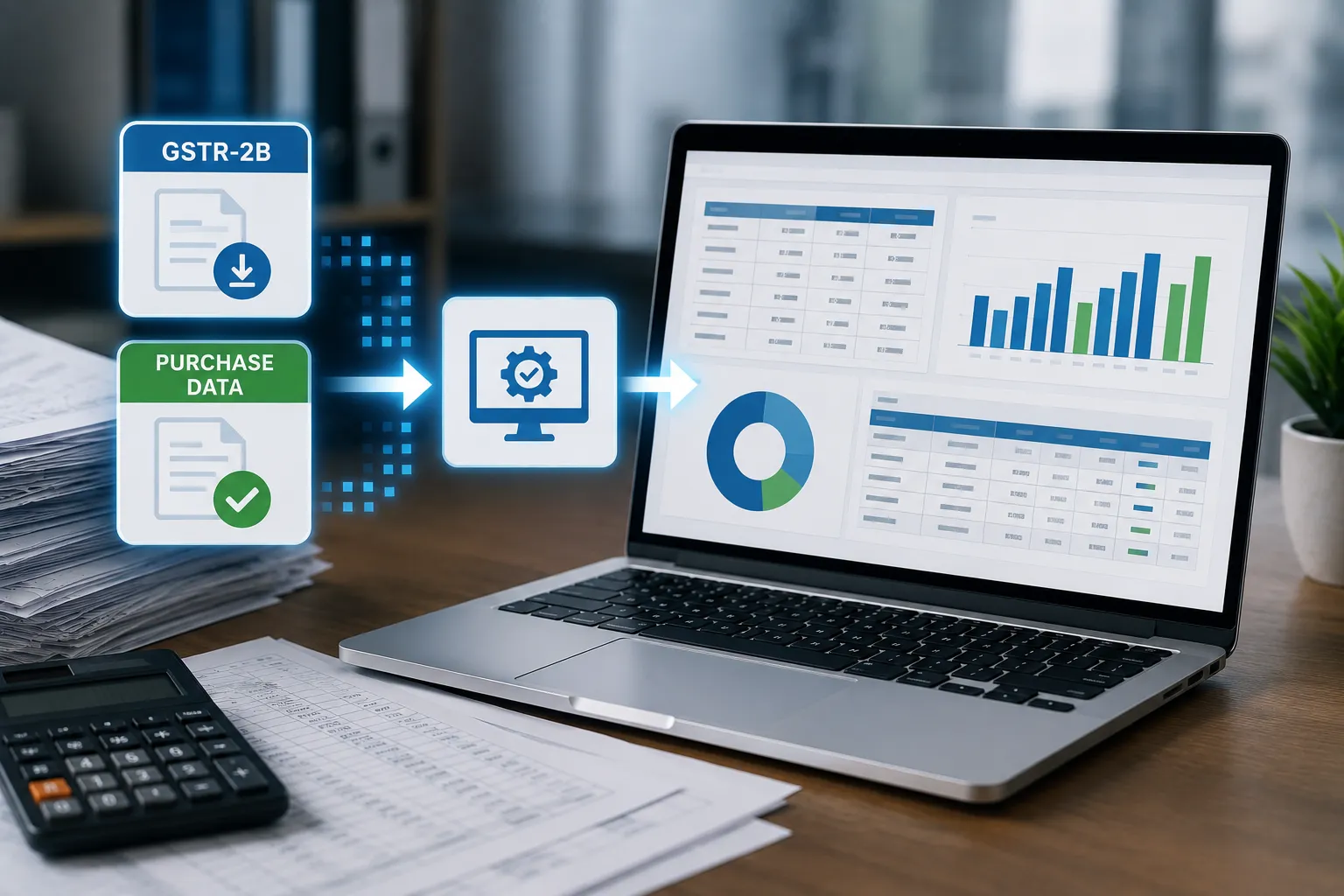

If you've ever spent hours cross-checking your purchase register against GSTR-2B, trying to figure out why your input tax credit doesn't match what the government portal shows, you already know how tedious and high-stakes this process can be. A single missed mismatch can mean denied input tax credit, unexpected interest charges, or a compliance notice that takes weeks to resolve.
This is exactly where GSTR-2B reconciliation software changes the equation. Instead of manually comparing invoice-by-invoice data every filing cycle, modern accounting platforms automate the matching process, flag discrepancies in real time, and keep your input tax credit claims accurate without the manual grind. This article explains how that automation actually works, why it matters so much for compliance, and what to look for when choosing software that handles it well.
What Is GSTR-2B and Why Reconciliation Matters
GSTR-2B is an auto-generated, static statement made available to every GST-registered taxpayer, summarizing the input tax credit available based on the invoices and documents uploaded by your suppliers. Unlike GSTR-2A, which updates continuously, GSTR-2B is generated once for a given period and stays fixed — making it the primary reference document businesses use to determine eligible input tax credit.
Reconciliation, in this context, means matching what you've recorded in your own purchase records against what your suppliers have actually reported to the GST system. When these two don't align, it usually points to one of a few common issues:
- A supplier hasn't filed their return on time
- An invoice was recorded with incorrect details
- A transaction was missed entirely by either party
- Duplicate or mismatched invoice numbers
Why Manual GSTR-2B Reconciliation Is So Difficult
For businesses with even a moderate number of monthly transactions, manually reconciling GSTR-2B against purchase records is a genuinely demanding task. It typically involves:
- Downloading GSTR-2B data from the GST portal
- Exporting purchase register data separately
- Manually cross-checking hundreds of line items
- Investigating and resolving every mismatch individually
- Repeating this process every single filing cycle
This isn't just time-consuming — it's also highly prone to human error, especially when done under deadline pressure.
How Accounting Software Automates This Process
1. Direct Data Pull From Both Sources
Rather than manually downloading and exporting spreadsheets, automated accounting software pulls GSTR-2B data and your recorded purchase invoices directly, eliminating the manual export-import cycle entirely.
2. Automatic Invoice-Level Matching
The software compares invoice number, GSTIN, invoice date, and tax amounts between your records and GSTR-2B data automatically, matching thousands of line items in a fraction of the time manual review would take.
3. Real-Time Mismatch Flagging
Instead of waiting until filing time to discover discrepancies, automated systems flag mismatches as they're identified — giving businesses time to follow up with suppliers well before deadlines.
4. Categorized Discrepancy Reports
Good reconciliation tools don't just flag a mismatch; they categorize it — missing invoice, amount mismatch, GSTIN error, or duplicate entry — making it far easier to know exactly what needs to be resolved and how.
5. Vendor-Wise Compliance Tracking
Automated systems can track which suppliers consistently file late or have recurring mismatches, helping businesses identify vendor relationships that may need closer follow-up or reconsideration.
6. Continuous Reconciliation, Not Just Monthly
Rather than treating reconciliation as a once-a-month scramble, many platforms support ongoing reconciliation as new data becomes available, spreading the workload more evenly and catching issues earlier.
Manual vs Automated GSTR-2B Reconciliation
| Factor | Manual Reconciliation | Automated Reconciliation |
| Data collection | Manual download and export | Direct data pull |
| Invoice matching | Manual, line by line | Automatic, system-matched |
| Mismatch detection | Often discovered late | Flagged in real time |
| Vendor tracking | Difficult to track patterns | Automated compliance history |
| Time required | Hours to days per cycle | Minutes to hours |
| Error risk | High | Significantly lower |
What to Look for in GSTR-2B Reconciliation Software
Not every accounting tool handles this well. When evaluating platforms, look for genuine accounting software features built specifically for reconciliation, rather than basic invoicing tools that treat GST matching as an afterthought. Key capabilities include:
- Automatic GSTR-2B data retrieval
- Invoice-level, field-by-field matching
- Clear categorization of mismatch types
- Vendor-wise compliance history and tracking
- Alerts for recurring discrepancies with specific suppliers
- Audit trails documenting reconciliation history
Choosing dedicated GST accounting software with strong reconciliation capabilities, rather than relying on spreadsheets supplemented by manual downloads, significantly reduces both the time and risk involved in this process.
Legal Importance of Accurate GSTR-2B Reconciliation
Beyond operational convenience, GSTR-2B reconciliation carries direct legal weight for businesses claiming input tax credit.
Why It Matters Legally
- Protecting ITC claims: Claiming input tax credit that doesn't match GSTR-2B data can result in credit reversal, along with interest charges.
- Avoiding compliance notices: Persistent mismatches can trigger scrutiny or notices from tax authorities, requiring time-consuming clarification.
- Udyam Registration compliance: MSMEs need consistent, accurate financial and tax records to retain registration benefits such as collateral-free loans and access to government tenders.
Business Advantages
- Improved cash flow: Accurately claimed input tax credit directly protects working capital that would otherwise be lost to reversed claims.
- Stronger vendor relationships: Identifying and addressing recurring supplier compliance issues early helps maintain smoother, more reliable vendor relationships.
- Audit readiness: Well-documented, automated reconciliation records make tax audits significantly smoother than reconstructing manual comparisons after the fact.
Practical Example: Automating Reconciliation for a Growing Business
Consider a small trading business managing purchases from over 50 suppliers each month. Previously, the finance team spent several days each filing cycle manually cross-checking invoices against GSTR-2B, often discovering mismatches only after filing — leading to reversed input tax credit on a few recurring supplier accounts.
After adopting accounting software with automated GSTR-2B reconciliation, the business began catching mismatches within days of a supplier's filing, rather than at month-end. This allowed the finance team to follow up with specific vendors proactively, significantly reducing the recurring ITC losses that had been quietly affecting cash flow for months.
Reconciliation as Part of a Broader Compliance Strategy
GSTR-2B reconciliation shouldn't be treated as an isolated task — it works best as part of a connected financial system. Using a genuinely integrated accounting platform that links purchase recording, invoicing, and GST compliance together ensures reconciliation data stays consistent with the rest of your financial records, rather than requiring separate tools that need to be manually cross-checked against each other.
For businesses formalizing their operations — registering as a Private Limited Company, LLP, or under Udyam — this kind of connected compliance approach also supports the accurate documentation that registered entities are expected to maintain for loans, tenders, and investor due diligence.
GSTR-2B Reconciliation for Businesses Expanding Globally
While GSTR-2B is specific to India's GST system, businesses planning to register or operate internationally should consider how domestic tax reconciliation fits into their broader financial reporting as they grow. This includes:
- Maintaining clean, reconciled domestic GST records as a foundation for consolidated global reporting
- Supporting due diligence requirements tied to global business registration processes, such as incorporating an LLC or subsidiary abroad
- Ensuring input tax credit accuracy doesn't get overlooked as international operations add complexity to overall financial management
A business with strong domestic reconciliation practices is generally far better positioned to manage the added complexity that comes with cross-border expansion.
Common Mistakes in GSTR-2B Reconciliation
| Mistake | Consequence |
| Reconciling only at filing time | Limited time to resolve mismatches before deadlines |
| Ignoring recurring vendor mismatches | Repeated ITC losses from the same suppliers |
| Relying on manual spreadsheet matching | Higher error rate and slower resolution |
| Not maintaining reconciliation audit trails | Difficulty responding to compliance notices |
| Treating reconciliation as separate from core accounting | Inconsistent data across systems |
Final Thoughts
GSTR-2B reconciliation is one of those compliance tasks that seems manageable with a handful of invoices but becomes genuinely overwhelming as transaction volume grows. Automating this process through dedicated accounting software doesn't just save time — it directly protects input tax credit, reduces the risk of compliance notices, and gives businesses much earlier visibility into supplier-related issues that would otherwise go unnoticed until filing.
As MSMEs formalize through Udyam registration and increasingly look toward growth, whether scaling domestically or exploring international markets, building automated, reliable reconciliation into everyday accounting practices isn't just a compliance checkbox — it's a genuine safeguard for cash flow and long-term financial accuracy.
Frequently Asked Questions (FAQs)
1. What is the difference between GSTR-2A and GSTR-2B? GSTR-2A updates continuously as suppliers file their returns, while GSTR-2B is a static, auto-generated statement fixed for a specific period, making it the standard reference document for claiming input tax credit.
2. Why is GSTR-2B reconciliation important for businesses? It ensures that the input tax credit a business claims matches what suppliers have actually reported, helping avoid credit reversals, interest charges, and potential compliance notices.
3. Can accounting software fully automate GSTR-2B reconciliation? Yes, most modern GST-compliant accounting platforms automate data retrieval and invoice-level matching, significantly reducing the manual effort required compared to spreadsheet-based reconciliation.
4. What happens if there's a mismatch between purchase records and GSTR-2B? Mismatches typically require follow-up with the relevant supplier to resolve missing or incorrect filings, and unresolved mismatches can result in denied or reversed input tax credit.
5. How often should businesses reconcile GSTR-2B? While GSTR-2B is generated monthly, reconciling continuously or at least weekly, rather than only at filing time, gives businesses more time to resolve discrepancies before compliance deadlines.
6. Does GSTR-2B reconciliation matter for businesses planning to expand internationally? While GSTR-2B itself is India-specific, maintaining clean, reconciled domestic tax records supports stronger financial reporting practices that become especially valuable as businesses take on the added complexity of international operations.


















Sign in to leave a comment.