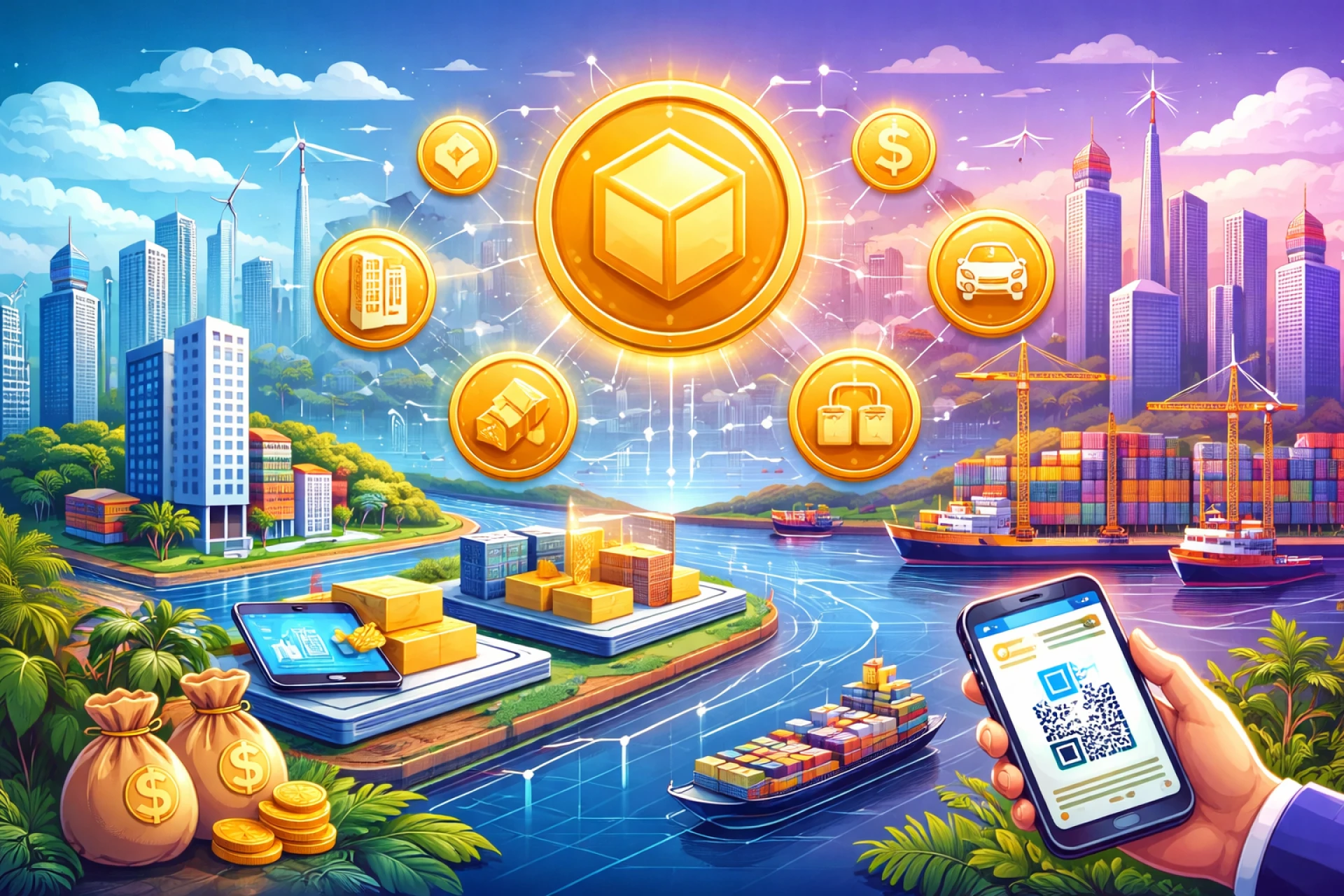

The global financial system is undergoing a structural transformation, and emerging markets are no longer passive observers of this change. Instead, they are becoming primary drivers of innovation, especially in the realm of Real World Asset Tokenization Offerings. What was once considered a niche concept within blockchain experimentation is now evolving into a powerful financial mechanism capable of reshaping capital markets, asset ownership, and investment accessibility across developing economies.
Emerging markets face long standing challenges such as limited access to global capital, inefficient financial infrastructure, low liquidity in traditional assets, and high entry barriers for investors. Real World Asset Tokenization Offerings are uniquely positioned to address these issues by converting physical and off chain assets into digital tokens that can be traded, fractionalized, and settled with unprecedented efficiency.
As global investors search for yield and diversification, emerging markets are leveraging tokenization to unlock dormant asset value, democratize investment opportunities, and integrate with the global digital economy faster than many developed regions.
Understanding Real World Asset Tokenization Offerings
Real World Asset Tokenization Offerings refer to the process of digitally representing tangible or legally enforceable assets on blockchain networks. These assets may include real estate, infrastructure projects, commodities, carbon credits, agricultural output, invoices, bonds, or even intellectual property. Each token represents a fractional or whole ownership interest in the underlying asset, backed by legal frameworks and compliance mechanisms.
What differentiates modern Real World Asset Tokenization Offerings from earlier digital asset experiments is the increasing focus on regulatory alignment, institutional grade custody, and real economic utility. These offerings are not speculative abstractions but are anchored in physical assets that generate cash flows or hold intrinsic value.
Emerging markets, with their abundance of underutilized assets and growing digital adoption, are uniquely suited to accelerate this model.
Why Emerging Markets Are Moving Faster Than Expected
One of the key reasons emerging markets are advancing Real World Asset Tokenization Offerings at speed is necessity. Traditional financial systems in many developing economies remain fragmented, expensive, and exclusionary. Tokenization offers a way to bypass decades of legacy inefficiencies without rebuilding entire systems from scratch.
In many emerging regions, mobile adoption has leapfrogged traditional banking infrastructure. This same leapfrogging effect is now visible in digital finance. Instead of modernizing outdated systems, governments, startups, and financial institutions are embracing blockchain based infrastructure as a foundation for future growth.
Additionally, emerging markets often have more flexible regulatory environments. While this does not imply weaker oversight, it allows regulators to experiment with sandboxes, pilot programs, and innovation friendly frameworks that encourage tokenization without stifling growth.
Democratizing Access to Capital Through Tokenization
Access to capital has historically been one of the biggest constraints for asset owners in emerging markets. Small and mid sized property developers, infrastructure operators, and commodity producers often struggle to attract institutional investors due to scale, transparency, or liquidity constraints.
Real World Asset Tokenization Offerings change this equation by enabling fractional ownership. Assets that were previously too large, illiquid, or opaque can now be broken into smaller, tradable units accessible to a global investor base.
This democratization benefits both sides of the market. Asset owners gain access to new funding channels, while investors gain exposure to high growth markets without committing large amounts of capital or navigating complex local processes.
Unlocking Illiquid Assets at Scale
Emerging markets hold vast amounts of illiquid assets. These include land, real estate, infrastructure projects, natural resources, and private credit instruments that are difficult to trade through traditional means. Tokenization introduces liquidity where none previously existed.
By digitizing ownership and embedding transferability into smart contracts, Real World Asset Tokenization Offerings enable assets to be traded on secondary markets with reduced friction. Settlement times are shortened, transaction costs are lowered, and price discovery becomes more transparent.
This liquidity transformation is particularly impactful in emerging economies, where asset value often remains locked due to limited exit options.
Strengthening Transparency and Trust
Trust deficits remain a critical challenge in many emerging markets. Investors often hesitate due to concerns around governance, asset verification, and enforcement. Tokenization addresses these issues by introducing transparent and immutable records of ownership, transactions, and asset performance.
Blockchain based ledgers provide real time visibility into asset data, reducing information asymmetry between issuers and investors. When combined with third party audits, legal frameworks, and compliance controls, Real World Asset Tokenization Offerings can significantly enhance investor confidence.
This transparency is not only beneficial for international investors but also strengthens domestic markets by promoting accountability and reducing corruption.
Government and Regulatory Momentum
Governments in emerging markets are increasingly recognizing the strategic value of tokenization. Many view Real World Asset Tokenization Offerings as tools for financial inclusion, infrastructure funding, and economic modernization.
Regulators are exploring frameworks that allow tokenized securities, digital registries, and blockchain based settlement systems to operate within controlled environments. Public private partnerships are emerging to tokenize government owned assets such as land registries, renewable energy projects, and municipal bonds.
This proactive regulatory engagement is accelerating adoption while ensuring that investor protection and systemic stability remain priorities.
Real Estate as a Leading Use Case
Among all asset classes, real estate has emerged as a dominant driver of Real World Asset Tokenization Offerings in emerging markets. Property markets in developing economies often suffer from low liquidity, high transaction costs, and limited access for retail investors.
Tokenization allows real estate assets to be fractionalized, enabling investors to participate with smaller capital commitments. Rental income and capital appreciation can be distributed programmatically, while ownership records remain transparent and secure.
For developers, tokenization offers an alternative to traditional financing models, reducing dependence on banks and enabling direct engagement with investors.
Infrastructure and Development Financing
Infrastructure gaps remain a major constraint on economic growth in emerging markets. Roads, energy projects, water systems, and telecommunications infrastructure require massive capital investment, often beyond the reach of public budgets alone.
Real World Asset Tokenization Offerings are emerging as innovative financing tools for infrastructure development. By tokenizing revenue generating projects, governments and private operators can attract global investors while aligning incentives through transparent cash flow distribution.
This model allows long term investors to participate in nation building projects while earning predictable returns backed by real assets.
Commodities and Agricultural Assets
Many emerging economies are rich in commodities and agricultural output. However, producers often face price volatility, limited financing options, and inefficient supply chains. Tokenization offers a way to standardize, track, and trade these assets more efficiently.
Tokenized commodities can represent ownership of stored goods, future production, or revenue rights. This enhances liquidity, enables hedging strategies, and improves access to working capital for producers.
In agriculture, tokenization can support traceability, sustainability initiatives, and fair pricing by linking digital tokens directly to physical output.
Expanding Financial Inclusion
One of the most profound impacts of Real World Asset Tokenization Offerings in emerging markets is financial inclusion. Millions of individuals remain excluded from traditional investment opportunities due to high minimums, lack of documentation, or geographic barriers.
Tokenization lowers entry thresholds and enables participation through digital wallets and mobile platforms. Retail investors can gain exposure to diversified asset classes that were previously reserved for institutions or high net worth individuals.
This inclusion fosters wealth creation, financial literacy, and broader participation in economic growth.
Attracting Global Capital Flows
Global investors are increasingly seeking exposure to emerging markets while managing risk and operational complexity. Real World Asset Tokenization Offerings provide a standardized and transparent gateway to these markets.
By aligning tokenized assets with international compliance standards, emerging market issuers can attract institutional capital that would otherwise remain sidelined. Cross border investment becomes more efficient, reducing settlement risk and administrative overhead.
This inflow of capital supports local development while integrating emerging economies into global financial networks.
Technological Ecosystem Growth
The acceleration of tokenization in emerging markets is also driving growth across the broader technology ecosystem. Blockchain developers, legal experts, compliance providers, custodians, and fintech platforms are collaborating to build end to end solutions.
This ecosystem development creates high skilled jobs, fosters innovation, and positions emerging markets as contributors rather than consumers of financial technology.
Local startups are increasingly competing on a global stage, offering tokenization platforms tailored to regional needs while meeting international standards.
Overcoming Challenges and Risks
Despite the momentum, challenges remain. Legal clarity around asset ownership, investor rights, and dispute resolution varies across jurisdictions. Education and awareness among investors and asset owners are still evolving.
Market fragmentation, cybersecurity risks, and infrastructure scalability also require careful management. However, these challenges are not unique to emerging markets and are being actively addressed through collaboration between regulators, industry participants, and technology providers.
The pace of learning and adaptation in emerging economies suggests that these obstacles will continue to diminish over time.
The Road Ahead for Tokenization in Emerging Markets
As Real World Asset Tokenization Offerings mature, their role in emerging markets will expand beyond experimentation into mainstream financial infrastructure. Tokenized assets are likely to coexist with traditional instruments, gradually transforming how capital is raised, allocated, and managed.
Emerging markets may ultimately set global benchmarks for tokenization innovation, driven by necessity, agility, and scale. Their ability to adopt new models quickly positions them at the forefront of this financial evolution.
The convergence of digital infrastructure, regulatory innovation, and asset abundance creates a powerful foundation for sustained growth.
Conclusion
Emerging markets are no longer waiting for financial innovation to arrive from developed economies. Through Real World Asset Tokenization Offerings, they are actively shaping the future of asset ownership, investment accessibility, and capital formation.
By unlocking illiquid assets, democratizing investment, enhancing transparency, and attracting global capital, tokenization is addressing long standing structural challenges while opening new pathways for growth.
As this momentum continues, emerging markets will play a defining role in the global tokenized economy, proving that the next chapter of financial transformation is being written far beyond traditional financial centers.





























Sign in to leave a comment.