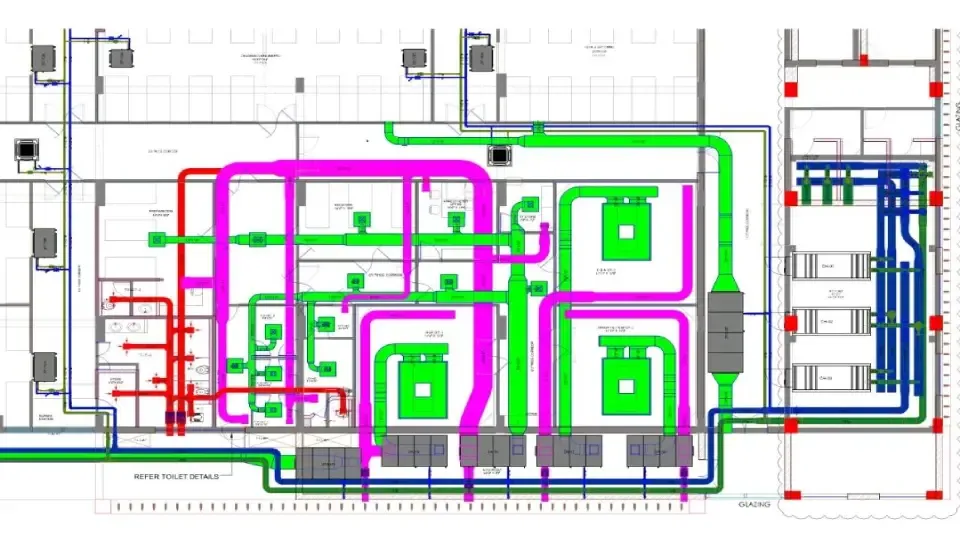

In today’s construction landscape, sustainability is no longer optional—it is a necessity. Modern buildings are expected to be energy-efficient, environmentally responsible, and cost-effective. One of the most critical aspects of achieving these goals lies in integrating energy-efficient HVAC design within sustainable MEP designs. HVAC (Heating, Ventilation, and Air Conditioning) systems are among the largest energy consumers in buildings, making their optimisation essential for sustainable development.
Understanding Energy Efficient HVAC Design
Energy-efficient HVAC design focuses on minimising energy consumption while maintaining optimal indoor comfort and air quality. It involves selecting advanced equipment, optimising system layouts, and leveraging smart technologies to reduce energy wastage. Key elements include high-efficiency chillers, variable refrigerant flow (VRF) systems, energy recovery ventilators, and smart controls.
By reducing unnecessary energy usage, these systems not only lower operational costs but also contribute to environmental conservation by reducing carbon emissions.
Role of HVAC in Sustainable MEP Designs
MEP (Mechanical, Electrical, and Plumbing) designs are the backbone of any building’s infrastructure. HVAC systems form a major component of MEP designs, directly influencing energy performance, indoor air quality, and occupant comfort.
Integrating energy-efficient HVAC design into MEP planning ensures:
- Reduced overall energy demand
- Optimised building performance
- Lower lifecycle costs
- Compliance with green building standards
A well-coordinated MEP design ensures that HVAC systems work seamlessly with electrical and plumbing systems, avoiding inefficiencies and redundancies.
Key Benefits of Energy-Efficient HVAC in MEP Designs
1. Reduced Energy Consumption
Energy-efficient HVAC systems significantly lower electricity usage by optimising cooling and heating loads. This leads to substantial cost savings, especially in large commercial buildings.
2. Improved Indoor Air Quality
Advanced HVAC designs incorporate better ventilation and filtration systems, ensuring a healthier indoor environment. This is particularly important in offices, hospitals, and residential complexes.
3. Lower Carbon Footprint
By consuming less energy, these systems contribute to reduced greenhouse gas emissions, aligning with global sustainability goals and green building certifications.
4. Enhanced System Performance
Efficient HVAC systems are designed for optimal performance, reducing wear and tear and extending the lifespan of equipment.
5. Cost Efficiency Over Time
Although the initial investment may be higher, energy-efficient HVAC systems deliver long-term savings through reduced energy bills and maintenance costs.
Strategies for Integrating Energy-Efficient HVAC Design
To fully leverage the benefits, it is essential to incorporate HVAC efficiency at the design stage of MEP systems. Here are some effective strategies:
- Load Calculation Optimisation: Accurate load calculations prevent oversizing or undersizing of HVAC systems.
- Zoning Systems: Dividing spaces into zones allows better temperature control and energy savings.
- Use of Smart Controls: Automated systems adjust temperature and airflow based on occupancy and usage patterns.
- Energy Recovery Systems: Reusing waste energy improves overall system efficiency.
- Integration with Building Management Systems (BMS): Centralised control enhances monitoring and optimisation.
Importance of Green Building Certifications
Energy-efficient HVAC design plays a vital role in achieving certifications such as LEED (Leadership in Energy and Environmental Design) and IGBC (Indian Green Building Council). These certifications prioritise energy performance, indoor environmental quality, and sustainability.
Buildings with optimised HVAC and MEP designs often score higher in these rating systems, increasing property value and market appeal.
Future Trends in HVAC and MEP Design
The future of sustainable MEP designs is driven by innovation and technology. Some emerging trends include:
- AI-driven HVAC systems for predictive maintenance
- Integration of renewable energy sources like solar power
- IoT-enabled smart HVAC systems
- Net-zero energy building designs
These advancements further enhance the role of HVAC systems in creating energy-efficient and sustainable infrastructure.
Energy-efficient HVAC design is a cornerstone of sustainable MEP designs, offering a perfect balance between performance, cost savings, and environmental responsibility. By integrating advanced HVAC solutions into MEP planning, buildings can achieve higher efficiency, improved comfort, and long-term sustainability. As the demand for green buildings continues to rise, adopting energy-efficient HVAC strategies will be essential for future-ready construction.





















Sign in to leave a comment.