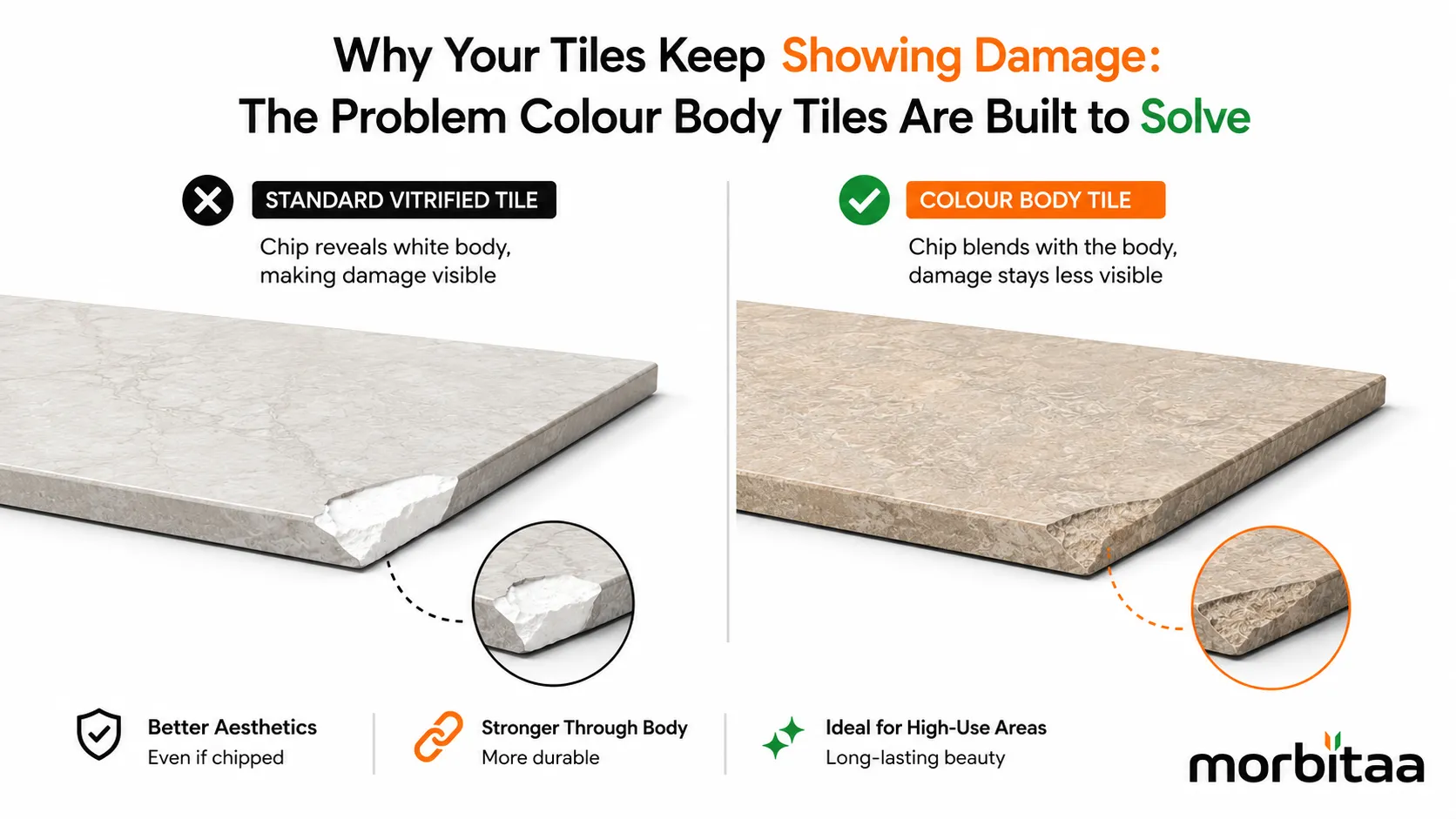

You spend weeks selecting the right tile, pay for professional installation, and the floor looks exactly as planned. Then six months later, a furniture leg drags across the surface or a pot drops. What you see afterward is a bright white or grey gash in the middle of the tile. The rest of the floor is fine. That one spot looks like a wound.
This is not bad luck. It is a design limitation of standard glazed vitrified tiles.
Why Regular Tiles Show Damage So Clearly
In a standard GVT tile, the colour and pattern exist only in the top glaze layer. Beneath that layer is a plain clay body, usually white or grey. When the surface chips, the exposed biscuit underneath has no colour. The contrast between the patterned surface and the plain interior is sharp and permanent.
The tile itself is not damaged in any structural sense. It still performs. But it looks damaged, and there is no easy fix.
What Colour Body Tiles Do Differently
A colour body tile solves this by pigmenting the clay biscuit itself before pressing. The pigment is not applied on top. It is blended into the raw material. After firing at around 1200 degrees Celsius, the biscuit underneath the surface carries a colour that is close to the finished top design.
When the tile chips, the exposed layer blends in rather than contrasting. The damage is still there, but it does not announce itself.
This is not a claim that colour body tiles are indestructible. All tiles can be damaged. What colour body tiles offer is visual discretion when damage does happen.
Where This Matters Most
High-footfall spaces are where this benefit shows up most clearly. Hotel lobbies, retail store floors, busy residential living rooms, and commercial corridors all see the kind of daily use that puts regular tiles under visible stress.
Colour Body Tiles From Morbi are specifically sorted and manufactured for export-grade consistency, which means tighter size tolerances and higher sorting standards than most domestic supply chains offer.
The Limitation to Know About
Colour body tiles are not the same as full body vitrified tiles. In a full body tile, the exact pattern runs through the entire thickness. Colour body matches the tone without always matching the texture through the full depth. For most buyers, this distinction does not matter. For projects where absolute zero chip-visibility is required, full body is the stronger option.
What Most Buyers Get Wrong About Finish Selection
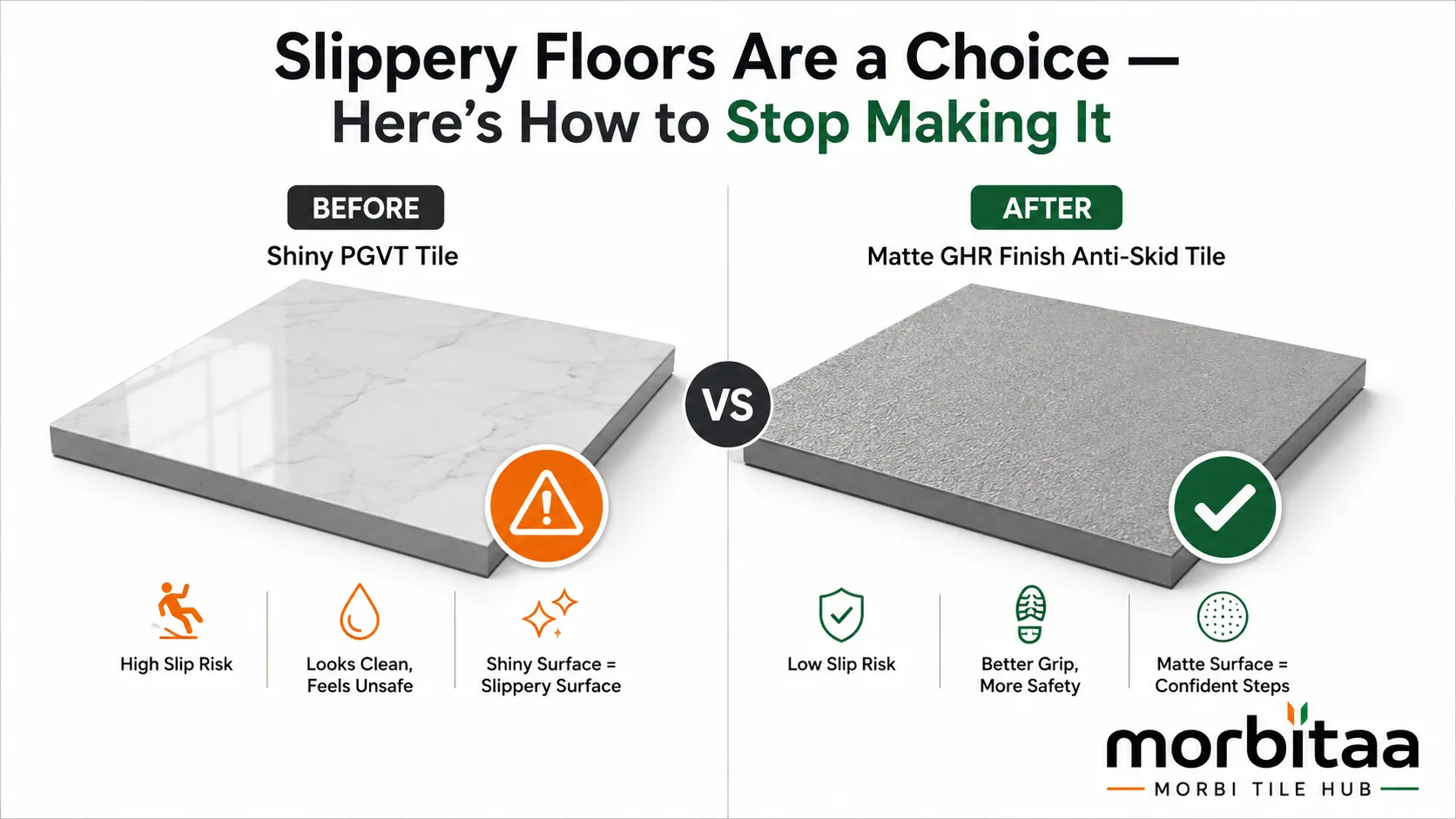
The chip-hiding benefit of colour body tiles is most effective when the tile surface is matte or textured. Polished and lappato finishes look premium, but the mechanical polishing process opens micro-pores on the surface. In wet areas, this reduces slip resistance to below-safe levels.
Buyers often pick the polished variant because it looks better in the showroom. On a wet-zone floor, that decision creates a safety problem that no amount of sealing fully corrects.
The Batch Problem No One Warns You About
The most common complaint on real projects is not about the tile itself. It is about the batch.
Two consignments with the same product name and shade label can show a visible tone mismatch if they came from different production runs. On a large commercial floor, that mismatch means a strip-out-and-redo situation. The fix is simple: lock the full quantity from one production batch before any tiles are loaded. Get the shade code and batch confirmation in writing.
The tile rarely fails buyers. The paperwork around it usually does.























Sign in to leave a comment.