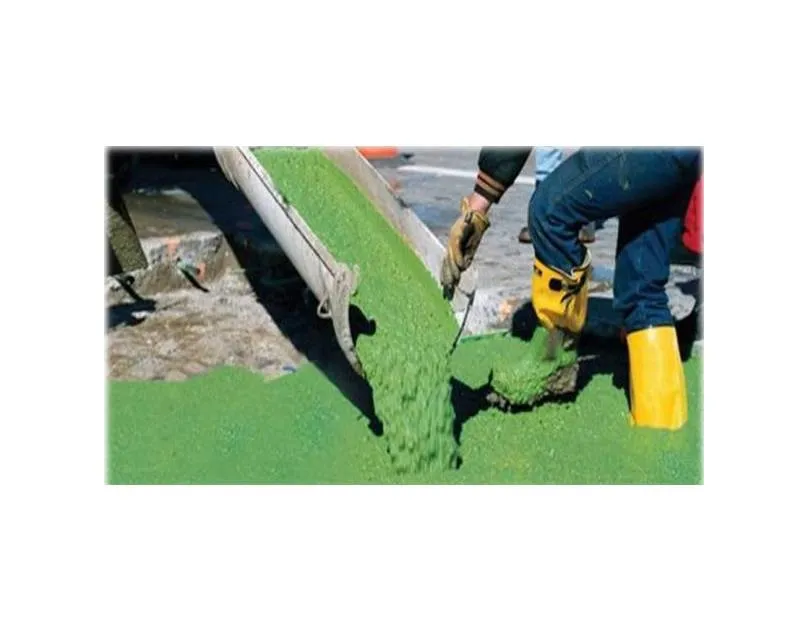

The construction industry is undergoing a significant transformation as sustainability becomes a core priority for developers, architects, engineers and policymakers. With buildings accounting for a substantial share of global carbon emissions, the demand for environmentally responsible construction materials continues to rise. Among the most promising innovations are green cement and Glass Fibre Reinforced Concrete (GFRC), two materials that are helping reduce environmental impact while delivering exceptional performance and design flexibility.
As governments tighten environmental regulations and the industry moves toward net-zero construction, these sustainable materials are rapidly gaining popularity across residential, commercial and infrastructure projects.
The Need for Sustainable Construction Materials
Traditional construction materials, particularly Ordinary Portland Cement (OPC), contribute significantly to greenhouse gas emissions during manufacturing. Cement production alone accounts for a considerable portion of global CO₂ emissions due to the energy-intensive clinker production process.
To address these challenges, the industry is adopting alternative materials that reduce embodied carbon, conserve natural resources and improve long-term building performance. Green cement and GFRC are at the forefront of this transition, offering practical solutions for creating durable, energy-efficient and environmentally responsible structures.
What Is Green Cement?
Green cement refers to cement manufactured using sustainable production methods or alternative raw materials that significantly reduce carbon emissions compared to conventional cement. It often incorporates industrial by-products such as fly ash, ground granulated blast furnace slag (GGBS), silica fume or calcined clay, reducing the dependence on clinker.
Key benefits of green cement include:
- Lower carbon footprint during production
- Reduced consumption of natural resources
- Improved durability and resistance to chemical attack
- Better long-term performance in aggressive environments
- Support for green building certifications such as LEED and IGBC
As sustainability becomes a key criterion in project planning, green cement is increasingly being specified for commercial buildings, industrial facilities, bridges and large-scale infrastructure developments.
Understanding Glass Fiber Reinforced Concrete (GFRC)
Glass Fiber Reinforced Concrete (GFRC) is a high-performance composite material made by combining cement, fine aggregates, water, polymers and alkali-resistant glass fibers. These fibers significantly improve the tensile strength and crack resistance of concrete while allowing manufacturers to produce lightweight, thin yet durable components.
GFRC has become a preferred material for architects due to its ability to create complex shapes, decorative facades and aesthetically appealing architectural elements without compromising structural performance.
Advantages of GFRC
- Lightweight compared to conventional precast concrete
- High strength-to-weight ratio
- Excellent durability and weather resistance
- Superior design flexibility for intricate architectural details
- Reduced transportation and installation costs
- Minimal maintenance requirements
Its versatility makes GFRC suitable for façades, cladding panels, decorative elements, landscaping products, urban furniture and restoration projects.
Why Green Cement and GFRC Are Gaining Popularity
Reduced Environmental Impact
One of the primary reasons behind the growing adoption of these materials is their ability to reduce the environmental footprint of construction projects. Green cement lowers CO₂ emissions during production, while GFRC requires less material due to its lightweight design, resulting in lower resource consumption and transportation emissions.
Enhanced Durability
Both materials offer excellent durability, enabling structures to withstand harsh weather conditions, moisture exposure and chemical attacks. Longer service life means fewer repairs, lower maintenance costs and reduced material consumption over the building's lifecycle.
Improved Design Freedom
Modern architecture increasingly demands innovative building forms and visually appealing façades. GFRC enables architects to produce curved, textured and customised panels that would be difficult or expensive to achieve with conventional concrete.
Better Construction Efficiency
Lightweight GFRC panels simplify transportation, handling and installation, reducing labour requirements and accelerating project completion. Green cement also contributes to sustainable construction by improving the overall environmental performance of buildings without sacrificing quality.
Compliance with Green Building Standards
Projects pursuing sustainable certifications increasingly specify environmentally responsible materials. The use of green cement and GFRC supports compliance with green building rating systems by reducing embodied carbon and promoting resource efficiency.
Applications Across the Construction Industry
The combination of green cement and GFRC is being adopted across a wide range of sectors, including:
- Commercial office buildings
- High-rise residential developments
- Educational institutions
- Healthcare facilities
- Airports and metro stations
- Hospitality projects
- Public infrastructure
- Architectural façades and cladding systems
- Landscape architecture and urban furniture
Their versatility allows designers to achieve sustainability goals while maintaining structural integrity and architectural excellence.
The Future of Sustainable Construction
As the global construction industry accelerates its transition toward low-carbon development, sustainable materials will become increasingly important in project design and execution. Continuous innovations in cement technology, recycling practices and composite materials are expected to further improve the performance and environmental benefits of green cement and GFRC.
With increasing awareness among developers, architects and policymakers, these materials are no longer considered niche alternatives but practical solutions for mainstream construction.
Conclusion
Sustainable construction is no longer an option—it is becoming an industry standard. Green cement and Glass Fibre Reinforced Concrete represent two of the most effective innovations helping the construction sector reduce carbon emissions while improving durability, efficiency and design flexibility.
By combining environmental responsibility with high-performance engineering, these materials enable the development of resilient, aesthetically appealing and future-ready buildings. As sustainable construction practices continue to evolve, green cement and GFRC are expected to play a pivotal role in shaping the next generation of infrastructure worldwide.























Sign in to leave a comment.