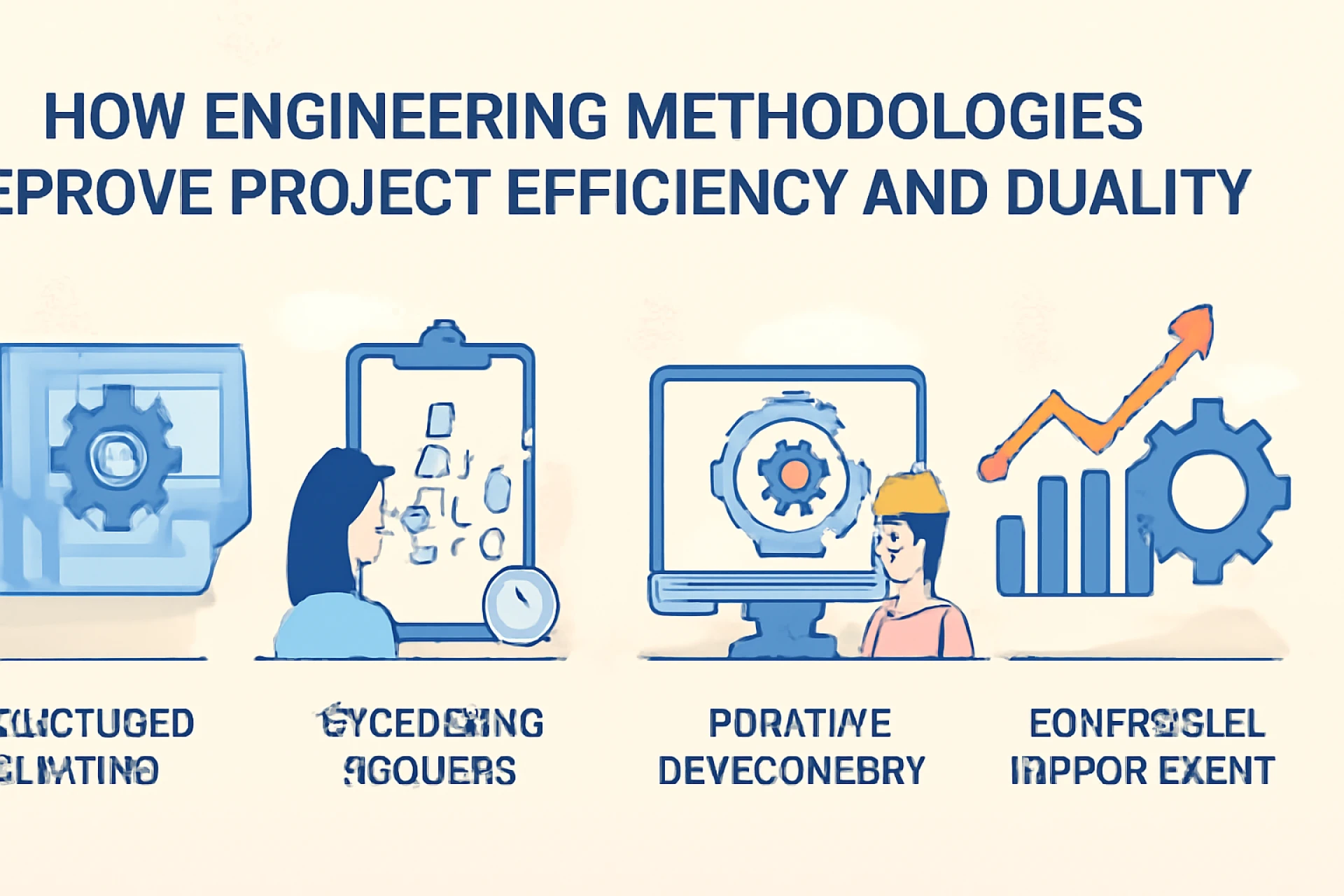

In today’s fast-paced world, delivering successful projects on time and within budget is more crucial than ever. Whether it’s building a bridge, designing software, or creating a new product, the way projects are managed directly impacts their outcome. This is where engineering methodologies come into play. They provide structured approaches and best practices that help teams streamline their work, reduce errors, and enhance overall quality.
Project efficiency and quality don’t happen by accident—they are the result of careful planning, consistent processes, and clear communication. Engineering methodologies offer a blueprint that guides teams from the initial concept to the final delivery, ensuring each step is executed with precision. By applying these methodologies, organizations can avoid common pitfalls such as scope creep, missed deadlines, and budget overruns, all while maintaining high standards.
The value of an effective engineering methodology cannot be overstated. These frameworks are designed to organize complex tasks into manageable phases, fostering better collaboration among team members and stakeholders. This not only accelerates project timelines but also promotes a culture of continuous improvement, which is vital for innovation and long-term success.
Structured Planning for Clear Roadmaps
One of the primary benefits of engineering methodologies is their emphasis on structured planning. Every successful project begins with a detailed roadmap that outlines objectives, deliverables, timelines, and resources. By adhering to a proven methodology, teams avoid ambiguity and ensure everyone is aligned from day one.
Structured planning helps break down large projects into smaller, achievable milestones. This approach allows teams to monitor progress closely, quickly identify risks, and make necessary adjustments without derailing the entire project. Additionally, it provides stakeholders with transparent updates, building trust and facilitating better decision-making.
Enhanced Risk Management
Unanticipated challenges are inevitable in any project. However, engineering methodologies equip teams with tools to anticipate, assess, and mitigate risks early on. Risk management is integrated into each phase, encouraging proactive rather than reactive responses.
Through techniques like risk assessments and contingency planning, teams minimize disruptions and avoid costly rework. This proactive stance not only saves time and money but also improves the project's resilience to external factors such as supply chain issues or regulatory changes.
Consistency Through Standardization
Consistency is a key ingredient in delivering high-quality outcomes, and engineering methodologies promote this through standardization. By following set processes and templates, teams reduce variability in their work, making outputs more predictable and reliable.
Standardization also simplifies training and onboarding, as new team members quickly understand their roles and expectations. This uniformity fosters a professional environment where quality is maintained across all projects, regardless of complexity or scale.
Improved Communication and Collaboration
Clear communication is often cited as one of the biggest challenges in project management. Engineering methodologies provide frameworks that encourage regular, structured communication among team members and stakeholders. This ensures everyone is on the same page and potential misunderstandings are addressed promptly.
Collaborative tools and practices embedded in these methodologies promote information sharing and collective problem-solving. When teams communicate effectively, they can innovate faster, adapt to changes seamlessly, and maintain morale throughout the project lifecycle.
Continuous Improvement and Feedback Loops
A significant advantage of adopting engineering methodologies is the focus on continuous improvement. Rather than treating projects as isolated efforts, these frameworks promote iterative feedback loops and reflection.
After each phase or milestone, teams review performance, gather feedback, and implement lessons learned into the next cycle. This ongoing process of refinement leads to higher efficiency and better quality over time, enabling organizations to evolve and stay competitive in dynamic markets.
Clear Roles and Responsibilities
Ambiguity in roles often leads to duplicated efforts or neglected tasks, which can hinder project progress. Engineering methodologies clearly define roles and responsibilities, ensuring accountability and efficient task management.
With clearly assigned duties, team members know exactly what is expected of them and how their work contributes to the bigger picture. This clarity reduces confusion, boosts productivity, and fosters a sense of ownership, all of which are crucial for project success.
Efficient Resource Management
Optimizing resources—whether human, financial, or material—is critical for project efficiency. Engineering methodologies provide frameworks for resource allocation and tracking, helping managers use assets wisely without waste or shortage.
By analyzing project requirements and timelines, these methodologies help balance workload, avoid burnout, and maximize productivity. Effective resource management also reduces costs and keeps projects within budget, making the entire process smoother and more predictable.
Enhanced Quality Control
Quality control is integral to any engineering project, and methodologies embed quality assurance activities throughout the process. From initial design reviews to final inspections, each step incorporates checkpoints that maintain high standards.
This systematic approach ensures defects are caught early, reducing the risk of major failures or costly corrections later. By prioritizing quality, teams build trust with clients and users, ultimately leading to better satisfaction and long-term success.
Adaptability and Scalability
Projects vary widely in scope and complexity, so flexibility is essential. Many engineering methodologies are designed to be adaptable and scalable, making them suitable for different industries and project sizes.
Whether working on a small prototype or a large infrastructure project, teams can tailor the methodology to meet specific needs without compromising efficiency or quality. This adaptability allows organizations to handle diverse challenges while maintaining a consistent approach.
Transparency and Accountability
Transparency throughout the project lifecycle fosters accountability and trust among stakeholders. Engineering methodologies encourage documentation and reporting practices that make project status, decisions, and challenges visible to all involved.
This openness helps identify bottlenecks early, facilitates timely interventions, and improves overall governance. When everyone understands how the project is progressing, collaboration and commitment naturally increase.
Innovation and Creativity
Contrary to the misconception that methodologies stifle creativity, they actually create an environment where innovation can thrive. By managing routine tasks efficiently, methodologies free up time and mental space for creative problem-solving and experimentation.
Teams are encouraged to explore new ideas within a structured framework that mitigates risk, allowing for bold yet calculated innovations that push project boundaries while maintaining control.
Better Client Satisfaction
Ultimately, the success of any project is measured by how well it meets client needs. Engineering methodologies help deliver projects that align closely with client expectations through clear requirements gathering, regular updates, and quality assurance.
Clients benefit from predictable timelines, consistent quality, and transparent communication, which builds confidence and fosters long-term partnerships.
Conclusion
Engineering methodologies are more than just processes; they are powerful enablers that improve project efficiency and quality. By providing structured planning, risk management, communication frameworks, and continuous improvement, these methodologies help teams deliver superior results with less hassle and greater confidence.
Organizations that embrace engineering methodologies experience fewer delays, reduced costs, and higher-quality outcomes, making them better equipped to thrive in today’s competitive landscape. Whether you’re managing a complex engineering project or a simple product development task, adopting a robust methodology is a smart investment that pays off in every stage of the project lifecycle.
For those interested in exploring various approaches, visiting https://innovation.world/methodologies/ offers a wealth of knowledge on different engineering methodologies to find the best fit for any project.
































Sign in to leave a comment.