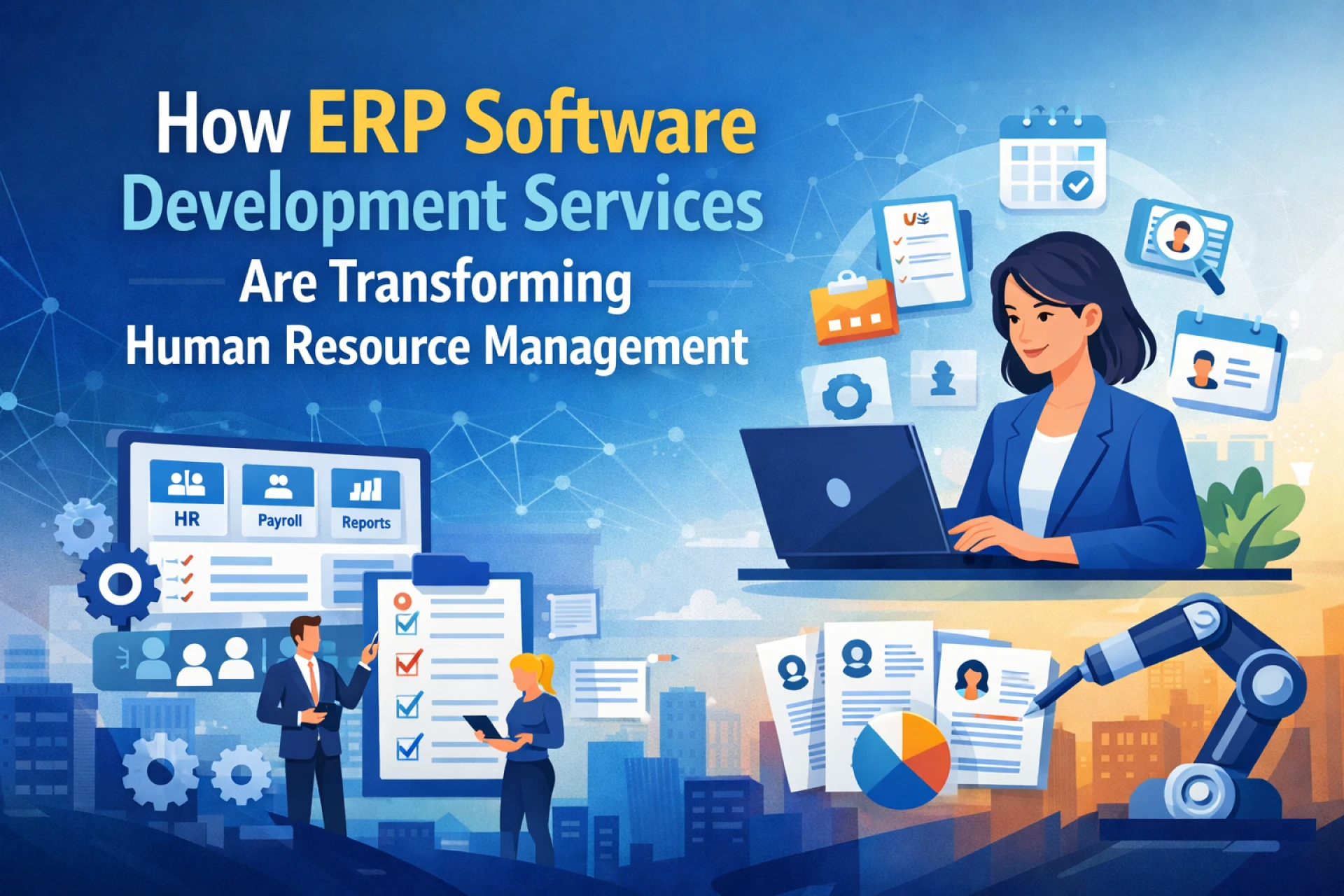

Human Resource Management (HRM) is undergoing a major transformation as organizations shift from traditional, manual processes to digital-first operations. In today’s competitive business environment, HR teams are expected to do more than administrative tasks; they are now strategic contributors to organizational growth.
However, outdated systems, fragmented data, and manual workflows often limit HR efficiency. To overcome these challenges, businesses are increasingly adopting ERP software development services to modernize and streamline their HR functions.
The Growing Need for Digital HR Transformation
Modern workplaces demand agility, accuracy, and data-driven decision-making. Traditional HR systems, often dependent on spreadsheets or disconnected tools, struggle to meet these expectations.
Some of the most common challenges include:
- Inefficient manual processes
- Lack of centralized employee data
- Limited visibility into workforce performance
- Payroll inaccuracies and compliance risks
These limitations reduce productivity and negatively impact employee satisfaction. As a result, organizations are prioritizing digital transformation in HR, with ERP systems playing a central role.
Understanding ERP in Human Resource Management
Enterprise Resource Planning (ERP) systems bring together multiple business processes into a single, unified platform. In the context of HR, ERP enables seamless management of functions such as recruitment, onboarding, payroll, attendance, performance tracking, and employee records.
With the help of ERP software development services, businesses can design and implement customized solutions that align with their specific HR workflows and operational needs.
Unlike standalone HR tools, ERP systems offer:
- A centralized database for all employee information
- Real-time data access and reporting
- Integration with finance, operations, and other departments
- Automation of routine administrative tasks
How ERP Software Development Services Are Transforming HR
1. Automation of Routine Tasks
One of the most significant advantages of ERP systems is automation. Tasks such as payroll processing, leave management, and attendance tracking can be handled automatically, reducing manual effort and minimizing errors.
2. Centralized Employee Data
ERP systems eliminate data silos by consolidating all employee information into a single platform. This ensures consistency, improves data accuracy, and makes it easier for HR teams to access critical information when needed.
3. Real-Time Insights and Analytics
Access to real-time data enables HR professionals to make informed decisions. From workforce planning to performance evaluation, ERP systems provide valuable insights that support strategic initiatives.
4. Improved Compliance Management
Managing compliance with labor laws and regulations can be complex. ERP systems help automate compliance-related processes, reducing the risk of errors and ensuring that organizations stay aligned with legal requirements.
5. Enhanced Employee Experience
Modern ERP solutions often include self-service portals where employees can update their information, apply for leave, access payslips, and track performance. This improves transparency and overall employee satisfaction.
Key Benefits of ERP in Human Resource Management
Increased Operational Efficiency
By automating repetitive tasks, HR teams can focus on strategic activities such as talent development and organizational planning.
Better Decision-Making
Data-driven insights enable organizations to make informed decisions related to hiring, retention, and workforce optimization.
Scalability for Growing Businesses
ERP systems are designed to scale with business growth, making them a long-term solution for organizations of all sizes.
Reduced Errors and Improved Accuracy
Automation minimizes the risk of human error, particularly in critical areas such as payroll and compliance.
Seamless Cross-Department Integration
ERP connects HR with other business functions, ensuring smooth communication and collaboration across departments.
Real-World Applications of ERP in HR
ERP systems are widely used across industries to enhance HR operations. Some practical applications include:
- Recruitment Management: Streamlining candidate tracking and hiring workflows
- Onboarding Processes: Automating documentation and employee setup
- Attendance Tracking: Monitoring employee work hours and leave requests
- Payroll Processing: Ensuring accurate and timely salary disbursement
- Performance Evaluation: Tracking employee goals and performance metrics
These capabilities allow organizations to build more efficient and responsive HR systems.
Custom ERP vs. Off-the-Shelf Solutions
While off-the-shelf ERP solutions may offer quick deployment, they often lack flexibility. Businesses with unique HR processes may find it challenging to adapt these generic systems to their needs.
Custom ERP solutions, developed through specialized ERP software development services, provide:
- Greater flexibility and customization
- Better alignment with business processes
- Improved user experience
- Easier integration with existing systems
This makes custom ERP a preferred choice for organizations seeking long-term efficiency and scalability.
The Role of the Right Technology Partner
Implementing an ERP system requires careful planning, technical expertise, and a clear understanding of business requirements. Choosing the right development partner plays a crucial role in the success of ERP implementation.
A reliable technology partner can help:
- Assess business needs and recommend suitable solutions
- Develop customized ERP systems tailored to HR workflows
- Ensure seamless integration with existing tools
- Provide ongoing support and optimization
Organizations that invest in the right expertise are more likely to achieve successful digital transformation in HR.
Conclusion
As businesses continue to evolve, the role of HR is becoming increasingly strategic. To meet modern demands, organizations must move beyond traditional systems and adopt integrated, technology-driven solutions.
ERP systems are transforming Human Resource Management by enabling automation, improving data visibility, and enhancing overall efficiency. By leveraging ERP software development services, businesses can build scalable and customized solutions that align with their growth objectives.
For organizations looking to modernize their HR operations and stay competitive in a rapidly changing landscape, now is the time to embrace ERP-driven transformation. If you're planning to take the next step, contact Nextbrain today to explore tailored ERP solutions for your business.
FAQs
1. What are ERP software development services?
ERP software development services involve designing and building customized ERP systems that integrate various business processes, including HR, into a unified platform.
2. How does ERP benefit HR departments?
ERP helps HR teams automate tasks, centralize employee data, improve accuracy, and gain real-time insights for better decision-making.
3. Can ERP systems be customized for specific HR needs?
Yes, ERP systems can be tailored to match unique HR workflows, making them more effective than generic solutions.
4. Is ERP suitable for small and medium-sized businesses?
Absolutely. ERP solutions can be scaled and customized to meet the needs of businesses of all sizes.
5. How do ERP systems improve employee experience?
ERP systems provide self-service features, transparency, and faster processes, leading to improved employee satisfaction.





























Sign in to leave a comment.