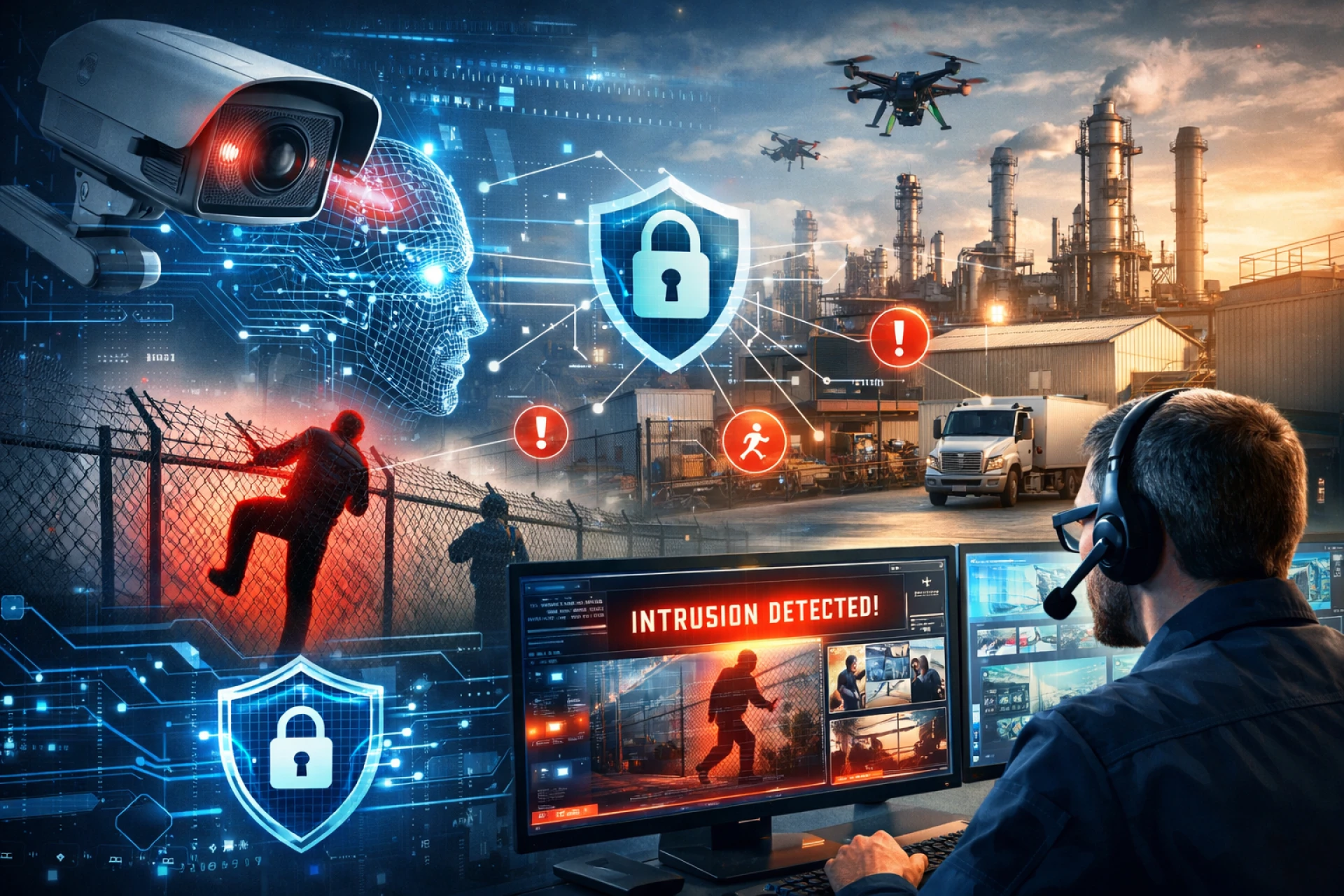

Industrial facilities are increasingly becoming prime targets for security threats such as unauthorized access, theft, vandalism, sabotage, and internal breaches. With vast premises, multiple entry points, and valuable assets, maintaining security through traditional surveillance methods alone is no longer sufficient.
This is where AI Intrusion Detection Software is redefining industrial security. By leveraging artificial intelligence, computer vision, and real-time video analytics, industries can now detect threats instantly and prevent incidents before they escalate.
In this article, we explore how AI-based intrusion detection is transforming industrial safety and why it is becoming essential for modern facilities.
What is AI Intrusion Detection Software?
AI Intrusion Detection Software is an advanced security solution that uses artificial intelligence to monitor surveillance camera feeds and identify unauthorized or suspicious activities in real time.
Unlike conventional CCTV systems that only record footage for later review, AI-powered systems actively analyze live video streams to detect threats as they happen.
It can identify:
- Unauthorized entry into restricted zones
- Perimeter breaches and fence jumping
- Suspicious loitering or unusual movement
- Object or vehicle intrusion in secured areas
- Behavioral anomalies indicating potential threats
This proactive capability makes it a critical upgrade for industrial security systems.
Why Industrial Facilities Are Highly Vulnerable
Industrial environments present unique security challenges, including:
- Large geographic areas that are difficult to monitor manually
- Multiple access points for workers, vendors, and vehicles
- High-value equipment, raw materials, and inventory
- Limited security manpower for continuous monitoring
- Risk of internal threats from employees or contractors
Traditional surveillance systems rely heavily on human operators, who may miss critical incidents due to fatigue, distraction, or overload. AI solves this problem by providing continuous, automated monitoring.
How AI Intrusion Detection Software Works
AI-based intrusion detection systems follow a structured, intelligent workflow:
1. Continuous Video Monitoring
Cameras installed across the facility capture real-time video feeds from sensitive and restricted zones.
2. AI-Based Frame Analysis
Machine learning algorithms analyze each frame to detect human presence, movement patterns, and objects.
3. Behavior Recognition
The system distinguishes between normal activity and suspicious behavior, such as:
- Entry into restricted areas
- Unusual loitering near sensitive assets
- Movement against defined security rules
4. Instant Alert Generation
When a potential threat is detected, the system triggers immediate alerts via dashboards, mobile notifications, or control room systems.
Key Benefits of AI Intrusion Detection in Industrial Security
1. Real-Time Threat Prevention
AI enables immediate detection and response, reducing the risk of security breaches.
2. 24/7 Continuous Monitoring
Unlike human guards, AI systems operate without fatigue, ensuring round-the-clock surveillance.
3. Reduced Human Dependency
Automation minimizes reliance on manual monitoring and improves operational efficiency.
4. Lower False Alarm Rates
AI filters irrelevant motion and focuses only on genuine security threats.
5. Faster Incident Response
Security teams receive instant alerts, enabling quicker decision-making and action.
6. Cost-Effective Security Scaling
Organizations can expand surveillance coverage without significantly increasing manpower costs.
Industrial Use Cases of AI Intrusion Detection
AI intrusion detection is widely adopted across multiple industrial sectors, including:
- Manufacturing plants – Protecting production lines and machinery
- Warehouses – Securing inventory and storage zones
- Oil & gas facilities – Monitoring hazardous and restricted areas
- Construction sites – Preventing equipment theft and unauthorized entry
- Power plants – Safeguarding critical infrastructure
- Logistics hubs – Controlling access to loading and unloading zones
Each of these environments benefits from enhanced visibility and automated threat detection.
Challenges Solved by AI-Based Security Systems
AI intrusion detection effectively addresses major limitations of traditional surveillance:
- Missed incidents due to human error
- Delayed response to security breaches
- Inefficient monitoring of large areas
- High false alarm rates from motion sensors
- Lack of real-time intelligence in security systems
By introducing automation and intelligence, AI significantly improves security accuracy and reliability.
Visionfacts: Advancing Industrial Security with AI
Visionfacts delivers next-generation AI-powered surveillance solutions designed specifically for industrial environments. Its advanced AI Intrusion Detection Software helps organizations strengthen perimeter security and prevent unauthorized access in real time.
Built with deep learning and computer vision technologies, Visionfacts solutions seamlessly integrate with existing CCTV infrastructure, making deployment efficient and cost-effective.
With Visionfacts, industries can:
- Detect intrusions in real time
- Monitor restricted and sensitive zones
- Reduce dependency on manual surveillance
- Improve emergency response speed
- Strengthen overall facility security posture
Visionfacts enables organizations to transition from reactive security systems to intelligent, proactive protection frameworks.
The Future of Industrial Security
The future of industrial security is moving toward fully intelligent, automated ecosystems. AI intrusion detection will continue to evolve with capabilities such as:
- Predictive threat detection before incidents occur
- Integration with IoT-based sensors and smart devices
- Autonomous surveillance using drones and robotics
- Centralized AI security command centers
- Advanced object, face, and behavior recognition
Industries that adopt these technologies early will benefit from stronger protection and improved operational resilience.
Conclusion
AI Intrusion Detection Software is transforming industrial security by enabling real-time threat detection, reducing human dependency, and enhancing overall safety. It empowers organizations to move beyond traditional CCTV systems and adopt intelligent, automated surveillance solutions.
For industries seeking to strengthen their security infrastructure, AI-driven systems are no longer optional, they are essential.
To enhance your facility’s protection with advanced AI surveillance technology, contact Visionfacts today and implement a smarter, more secure future for your industrial operations.
FAQs
1. What makes AI intrusion detection better than traditional CCTV?
AI systems actively analyze live video feeds to detect threats in real time, while traditional CCTV only records footage for later review.
2. Can AI intrusion detection reduce security staffing needs?
Yes, it reduces dependency on large security teams by automating monitoring and alert generation.
3. Does AI intrusion detection work in low-light or night conditions?
Yes, modern AI systems can integrate with infrared and night-vision cameras for 24/7 monitoring.
4. Can existing CCTV systems be upgraded with AI features?
In many cases, yes. AI software like Visionfacts can integrate with existing surveillance infrastructure.
5. Which industries benefit most from AI intrusion detection?
Manufacturing, warehouses, oil & gas, construction, logistics, and power plants benefit significantly from AI-based security systems.


























Sign in to leave a comment.