A hospital can technically have enough parking and still create a frustrating arrival experience. A patient arriving during a busy morning may encounter unclear entrances, short queues at drop-off areas, and limited guidance, even when overall capacity exists. In projects supported by traffic engineering services in Palm Beach County, these early observations often show that transportation challenges are not only about volume, but about how access, parking, and circulation work together.
A common situation occurs during a morning shift change at a medical campus. A patient arrives for an appointment at the same time employees are reporting for duty. The main entrance is not immediately obvious due to multiple driveways and competing signage. Near the front door, a brief queue forms at the drop-off zone as several vehicles unload at once. The closest parking spaces appear full, leading the patient to circle the lot. Meanwhile, less convenient parking areas still have available spaces, but they are not clearly visible or well directed. In this moment, traffic flow, parking distribution, and wayfinding combine to create the impression of congestion even when capacity exists elsewhere on the site.
Why Early Traffic and Parking Coordination Matters
Healthcare campuses generate overlapping transportation demands. Patient arrivals, visitor activity, staff shifts, emergency access, and service deliveries all occur on different schedules but often intersect during peak periods. In the second phase of planning, teams supported by traffic engineering services in Palm Beach County typically evaluate how these patterns interact rather than reviewing them separately.
Without this coordination, a site plan may meet code requirements but still perform poorly in practice. Visitors may circle the site unnecessarily, or staff may compete with patients for convenient parking. These conditions can affect efficiency, patient experience, and staff operations.
Why Shift Changes Distort Traffic Conditions
Shift changes are a key driver of peak demand in healthcare environments. Unlike typical office uses, hospitals experience concentrated arrival and departure periods tied to staffing schedules. These surges can temporarily exceed normal traffic assumptions.
Traffic impact analyses often focus on peak-hour conditions, but healthcare peaks may not align with standard commuter patterns. When traffic engineering services in Pinellas County review similar facilities, they frequently identify overlapping peaks where staff arrivals coincide with patient appointments and visitor activity, creating short but intense demand periods.
Understanding these timing differences helps avoid underestimating infrastructure needs or overbuilding unnecessary capacity.
When a Parking Shortage Is Really an Allocation Issue
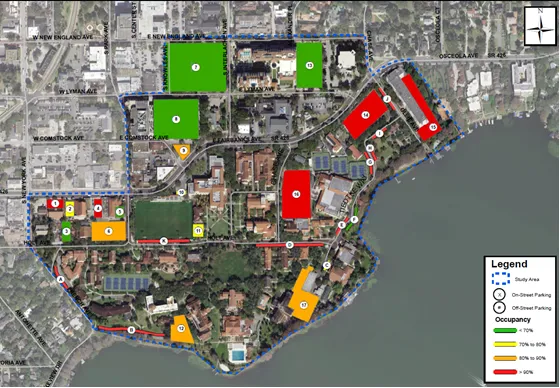
What appears to be insufficient parking is often a distribution problem. Spaces near main entrances tend to fill first, while remote areas remain underused. This imbalance can create the perception of shortage even when total supply is adequate.
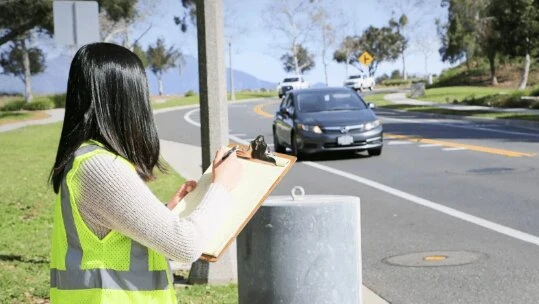
Parking demand studies evaluate how spaces are used, who occupies them, and when demand peaks occur. Staff parking in visitor areas or unclear wayfinding can further reduce efficiency. Improving allocation and guidance often resolves issues without expanding supply.
Why Emergency and Service Access Must Be Separate
Emergency and service access require uninterrupted circulation that cannot be affected by general traffic. Ambulances, deliveries, and waste removal operate under different constraints and must be evaluated independently.
Traffic studies review access points, turning movements, and potential conflicts. Even short-term obstructions near drop-off or service lanes can impact critical operations, making separation essential in design.
What to Review Before Approval
Before finalizing a site plan, healthcare teams should evaluate:
- Peak-hour traffic and intersection performance
- Drop-off and pickup activity
- Staff shift-change demand
- Internal circulation and queues
- Visitor parking distribution
- Accessible routes and entrance proximity
- Connections between parking and buildings
- Agency review considerations
These are typically addressed through traffic impact analyses, parking studies, and circulation reviews, each offering a different perspective on site performance.
How Integrated Planning Reduces Risk
Traffic, parking, and access should be evaluated together. A project may meet parking ratios but still struggle with circulation, or manage traffic flow while overlooking pedestrian access.
An integrated approach considers all users—patients, visitors, staff, and service providers—and how they move through the campus. It also accounts for future growth and operational changes.
For example, one healthcare campus found that entrance-adjacent parking was consistently full while remote areas were underused. Drop-off queues also affected circulation during peak periods. By improving wayfinding, adjusting allocation, and refining circulation, the campus improved performance without expanding its footprint.
Conclusion
Healthcare expansion projects require early coordination of traffic, parking, and access systems. Support from traffic engineering services in Palm Beach County and traffic engineering services in Pinellas County helps identify operational risks and clarify demand patterns. While conditions vary by location, healthcare transportation challenges are often similar. Integrated, user-focused planning reduces approval uncertainty and improves how campuses function for patients, staff, and visitors.




















Sign in to leave a comment.