
Introduction
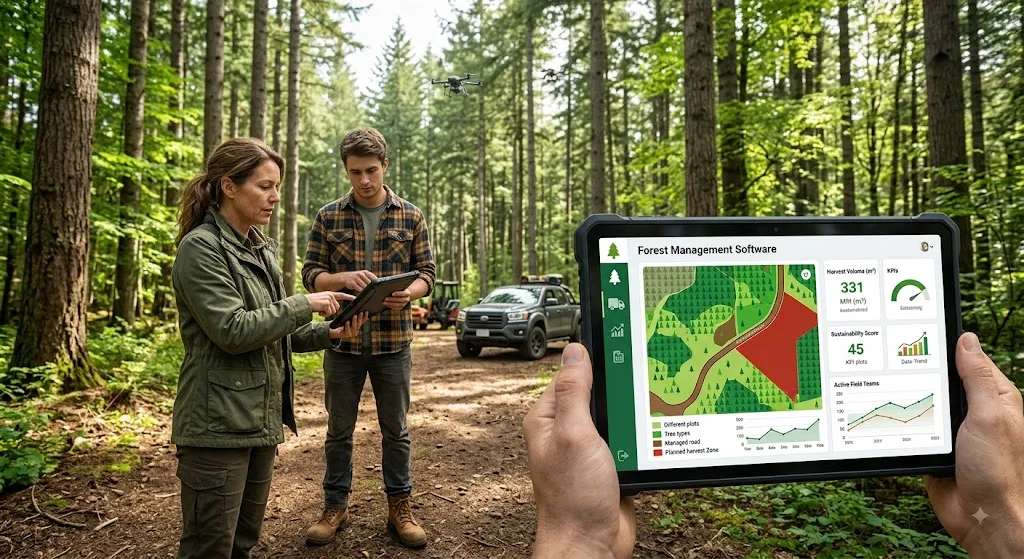
Forestry operations have become increasingly complex as businesses balance productivity, sustainability, regulatory compliance, and long-term resource management. Beyond managing trees and timber, organizations must oversee forest inventories, harvesting schedules, land resources, field teams, equipment, environmental responsibilities, and operational reporting—often across large geographic areas.
For many organizations, managing these activities through spreadsheets, paper records, or disconnected software creates unnecessary challenges. Information becomes scattered, communication slows down, reporting takes longer, and decision-makers often lack real-time visibility into what is happening across different forest sites.
As the forestry industry continues to embrace digital transformation, forest management software has become an important tool for improving operational efficiency. Instead of relying on multiple systems, businesses can centralize their data, streamline daily workflows, and gain better control over planning and field operations.
In this article, we'll explore how forest management software improves forestry operations, helping organizations work more efficiently while supporting sustainable forest management and long-term business growth.
1. Centralizing Forestry Operations
One of the biggest operational challenges in forestry is managing information that comes from different departments and field locations. Forest managers, survey teams, harvesting crews, supervisors, compliance officers, and administrative staff all generate valuable data throughout the day. When this information is stored in separate spreadsheets, paper documents, or isolated software systems, it becomes difficult to maintain consistency and coordinate activities effectively.
Forest management software addresses this challenge by bringing operational information into one centralized platform. Instead of searching through multiple files or requesting updates from different teams, businesses can access the information they need from a single system. This creates greater transparency across operations and allows everyone to work with accurate, up-to-date data.
Before selecting a solution, it's important to understand the options available in the market. The guide on Top 10 Forest Management Software explores some of the leading platforms, their capabilities, and the types of forestry organizations they support. Reviewing different solutions can help businesses better understand which features align with their operational needs before making an investment.
For organizations looking for a customizable platform, Triple Minds develops Forest Management Software that helps forestry businesses centralize operations, streamline workflows, and adapt the system to their specific management requirements.
Managing Operations from One Platform
Forestry operations involve far more than tracking tree inventories. Businesses manage land parcels, harvesting zones, road networks, equipment, workforce schedules, permits, inspections, and environmental records throughout the year.
When this information exists across different systems, teams often spend unnecessary time searching for data, updating duplicate records, or verifying information before making decisions.
A centralized platform brings these operational components together, allowing managers to monitor activities, organize records, and coordinate departments from one place. Whether reviewing harvesting schedules, checking inventory updates, or monitoring operational progress, having all information connected improves efficiency across the organization.
This centralized approach also creates greater accountability. Teams can work from consistent information, reducing misunderstandings while improving coordination between planning, field operations, and administrative departments.
Connecting Office and Field Teams
Communication between office staff and field personnel has always been one of the most important aspects of forestry management.
Traditional reporting methods often rely on handwritten notes, printed documents, phone calls, or emails that may not provide immediate visibility into ongoing operations. Delays in communication can affect planning, resource allocation, and operational decision-making.
Forest management software creates a direct connection between office teams and field personnel by allowing information to be shared digitally. Operational updates, completed activities, inspection results, and field observations can be recorded and made available to relevant teams without waiting for manual reporting cycles.
This improves collaboration across departments while ensuring that managers have a clearer understanding of what is happening throughout the organization.
As operations become larger and more geographically distributed, maintaining this level of communication becomes increasingly valuable.
Reducing Manual Processes
Manual administration consumes a significant amount of time in forestry businesses. Maintaining paper records, updating spreadsheets, preparing reports, organizing documents, and transferring information between departments all require continuous effort.
Many of these repetitive activities can be simplified through digital workflows.
Instead of entering the same information multiple times, businesses can capture data once and use it across different operational processes. Reports can be generated more efficiently, records remain organized, and administrative workloads become easier to manage.
Reducing manual work not only improves productivity but also minimizes the risk of human error. Consistent digital records make it easier to maintain accurate operational information while supporting better planning and reporting across the organization.
Centralized operations ultimately create a stronger foundation for every other aspect of forestry management. Once reliable information is available in one place, businesses are better positioned to improve planning, optimize resource utilization, and make more informed operational decisions.
2. Improving Forest Planning and Resource Management
Successful forestry depends on effective planning. Every operational decision—from managing forest inventories to scheduling harvesting activities and allocating resources—affects productivity, sustainability, and long-term profitability. Without accurate information, businesses often react to situations instead of planning proactively.
Forest management software provides organizations with the tools needed to organize resources, monitor forest conditions, and support more informed decision-making throughout the planning process.
Digital Forest Inventory Management
A reliable forest inventory is the foundation of effective forestry operations. Managers need accurate information about tree species, stand conditions, timber volumes, plantation areas, growth stages, and land characteristics to make confident operational decisions.
Maintaining this information manually can become increasingly difficult as forests expand and data changes over time.
Forest management software digitizes inventory management by storing operational data in a structured, centralized system. Updates can be recorded more efficiently, historical records remain accessible, and managers gain a clearer understanding of available forest resources.
With accurate inventory data readily available, organizations can plan harvesting activities, monitor forest development, and allocate resources with greater confidence.
Smarter Harvest Planning
Harvest planning involves balancing operational efficiency with sustainable forest management. Managers must determine where harvesting should occur, how resources should be allocated, and how activities can be scheduled while meeting environmental and business objectives.
Using forest management software, harvesting plans can be developed using current inventory data and operational information instead of relying on fragmented records or outdated reports.
Digital planning makes it easier to organize harvesting schedules, coordinate field activities, and adjust operational plans when conditions change. This improves resource utilization while helping businesses maintain consistent productivity across different forestry operations.
Better Land and Resource Management
Forestry businesses oversee a wide range of valuable resources, including land areas, forest compartments, access roads, machinery, equipment, and field personnel. Managing these assets efficiently becomes increasingly important as operations expand across multiple locations.
Forest management software provides better visibility into these resources by organizing operational information within one system. Managers can allocate equipment more effectively, monitor land usage, coordinate workforce activities, and maintain accurate records for different operational areas.
This structured approach reduces operational complexity while helping businesses use their available resources more efficiently.
Supporting Long-Term Planning
Forestry is built around long-term planning. Decisions made today often influence forest productivity, harvesting schedules, and resource availability for many years to come.
With access to historical records, current operational data, and centralized reporting, forest management software helps organizations make more informed strategic decisions. Managers can identify long-term trends, evaluate operational performance, and adjust future plans based on reliable information rather than assumptions.
As business needs, environmental conditions, and market demands continue to evolve, having a digital planning system allows forestry organizations to remain flexible while supporting sustainable growth over the long term.
3. Enhancing Field Operations with Digital Tools
Planning and resource management establish the foundation for efficient forestry operations, but the real work happens in the field. Forestry teams spend much of their time surveying land, monitoring forest conditions, supervising harvesting activities, conducting inspections, and collecting operational data from locations that are often remote and spread across large areas.
Relying on paper forms, manual reporting, or delayed communication can make these activities slower and less efficient. Information may take hours or even days to reach decision-makers, making it difficult to respond quickly when operational changes are needed.
Forest management software bridges this gap by connecting field teams with office operations through digital tools that improve communication, reporting, and overall efficiency.
Mobile Access for Field Teams
Field personnel need access to operational information wherever work is taking place. Whether they are inspecting plantation areas, recording harvest progress, or monitoring equipment, waiting until they return to the office to update records can delay important decisions.
Modern forest management software allows field teams to use smartphones or tablets to access and update operational data directly from the work site. They can record observations, upload photographs, complete inspection reports, log completed activities, and review assigned tasks without relying on paper-based documentation.
This not only improves reporting accuracy but also saves valuable time by eliminating duplicate data entry. Information entered in the field becomes immediately available to managers, creating a smoother flow of communication across the organization.
GPS and GIS Integration
Location plays a critical role in forestry management. Every harvesting zone, plantation, access road, conservation area, and forest compartment needs to be accurately mapped and monitored.
By integrating GPS and Geographic Information Systems (GIS), forest management software provides organizations with detailed digital maps that support better operational planning.
Managers can visualize forest boundaries, identify operational zones, monitor harvesting locations, and track field activities with greater accuracy. Instead of relying solely on printed maps or verbal instructions, field teams can navigate using location-based information that reflects current operational conditions.
GIS integration also supports better land management by helping businesses organize forest resources geographically, making planning more efficient while reducing operational errors.
Digital Inspections and Surveys
Routine inspections are an important part of forestry management. Organizations regularly assess forest health, monitor plantation growth, inspect harvesting activities, evaluate equipment conditions, and document environmental observations.
With digital inspection tools, these assessments become faster and more organized.
Instead of carrying paper checklists, field teams can complete inspections electronically, attach photographs, record GPS locations, and submit reports directly through the software. This reduces paperwork while creating a consistent digital record for future reference.
Digital surveys also make it easier to compare information collected over time, helping organizations identify trends, monitor changes, and support long-term forest management strategies.
Real-Time Reporting
One of the greatest advantages of digital forestry software is the ability to receive information as operations are taking place.
Managers no longer need to wait until the end of the day—or longer—for reports from the field. Operational updates can be shared in real time, providing greater visibility into harvesting progress, completed inspections, workforce activities, and resource utilization.
This allows supervisors to respond more quickly when unexpected situations arise. If weather conditions change, equipment issues occur, or operational priorities shift, decisions can be made using current information rather than outdated reports.
Real-time reporting also improves accountability, as every activity is documented within the system and can be reviewed whenever necessary.
Faster Communication Across Teams
Forestry operations involve multiple teams working toward common objectives. Field staff, supervisors, planners, environmental specialists, and management all depend on timely information to perform their roles effectively.
Forest management software improves communication by ensuring that updates are shared through one connected platform rather than across multiple emails, phone calls, or handwritten notes.
When everyone has access to the same operational information, collaboration becomes more efficient. Tasks can be assigned more clearly, operational changes can be communicated faster, and teams spend less time searching for information.
Improved communication not only increases operational efficiency but also helps organizations respond more effectively to changing field conditions.
4. Better Decision-Making Through Data and Analytics
Every forestry operation generates valuable information. From inventory updates and harvesting activities to equipment usage and workforce performance, data is continuously created across the organization.
The challenge is not collecting information—it is turning that information into meaningful insights that support better business decisions.
Forest management software helps organizations transform operational data into actionable intelligence through dashboards, reporting tools, and analytics that provide a clear picture of how the business is performing.
Centralized Dashboards
Managing multiple forestry operations becomes significantly easier when important information is presented in one place.
Centralized dashboards provide managers with an overview of key operational metrics, allowing them to monitor harvesting activities, inventory levels, workforce productivity, equipment utilization, and ongoing projects without gathering information from multiple sources.
Having immediate access to this information allows businesses to identify operational trends, monitor progress, and prioritize activities more effectively.
Performance Monitoring
Continuous improvement depends on understanding how operations perform over time.
Forest management software enables businesses to track performance across different operational areas by measuring key indicators such as harvesting progress, project completion, workforce productivity, equipment availability, and resource utilization.
Rather than relying on assumptions, managers can evaluate actual performance data and identify opportunities to improve efficiency across the organization.
Resource Utilization Analysis
Efficient use of land, equipment, and personnel directly impacts operational costs and productivity.
Analytics tools help businesses understand how resources are being utilized, identify underused assets, optimize workforce allocation, and improve equipment scheduling.
These insights support better operational planning while reducing unnecessary expenses and improving overall efficiency.
Forecasting and Predictive Planning
Historical data provides valuable context for future planning.
By analyzing previous operational performance, seasonal patterns, and resource usage, forestry businesses can make more informed forecasts about future harvesting schedules, workforce requirements, and operational capacity.
This proactive approach reduces uncertainty and helps organizations prepare for future challenges before they affect day-to-day operations.
Ultimately, data-driven decision-making allows forestry businesses to move beyond reactive management and build more efficient, sustainable, and strategically planned operations.
5. Supporting Compliance and Sustainable Forestry
Forestry businesses operate within a framework of environmental regulations, safety standards, and sustainable management practices. Whether managing commercial forests, plantations, or conservation areas, maintaining compliance is essential—not only to meet legal obligations but also to protect natural resources and strengthen long-term business credibility.
Managing compliance through paper records or disconnected systems can quickly become difficult, especially when operations span multiple locations. Forest management software simplifies this process by organizing documentation, tracking activities, and maintaining accurate records that are easy to access whenever required.
Simplifying Regulatory Compliance
Forestry regulations often require businesses to maintain detailed records of harvesting activities, land usage, permits, inspections, and environmental practices.
With a centralized digital system, these records can be stored in one place instead of being scattered across multiple files or departments. This makes it easier to retrieve information during audits, inspections, or regulatory reviews while reducing the time spent searching for documents.
By maintaining accurate and organized records, businesses can demonstrate compliance more efficiently and reduce the administrative burden on their teams.
Supporting Environmental Monitoring
Sustainable forestry depends on continuously monitoring forest conditions and understanding how operations affect the surrounding environment.
Forest management software allows organizations to document environmental observations, monitor protected areas, record reforestation activities, and track conservation initiatives over time.
Having reliable environmental data enables businesses to make better operational decisions while supporting responsible forest management practices.
Managing Certification Requirements
Many forestry organizations work toward industry certifications that demonstrate responsible forest management. Achieving and maintaining these certifications often requires detailed documentation, operational transparency, and consistent reporting.
Digital management systems simplify this process by keeping operational records organized and ensuring important information remains accessible whenever certification reviews or assessments take place.
This reduces the effort required to prepare documentation while improving confidence in the accuracy of business records.
Creating Audit-Ready Documentation
Audits become far easier when operational information is stored digitally.
Instead of collecting records from multiple departments, businesses can quickly generate reports, review historical activities, and verify operational information through one centralized platform.
Audit-ready documentation not only saves time but also improves transparency across the organization.
Reducing Operational Risks
Accurate information plays a major role in reducing operational risk.
When managers have better visibility into field activities, resource utilization, compliance requirements, and operational performance, they can identify potential issues before they become larger problems.
Whether responding to environmental concerns, equipment challenges, or regulatory requirements, access to reliable information supports faster and more informed decision-making.
Ultimately, forest management software helps organizations build more resilient forestry operations by combining operational efficiency with responsible resource management and regulatory compliance.
6. Preparing Forestry Businesses for Future Growth
The forestry industry continues to evolve as technology, environmental expectations, and operational demands become more advanced. Businesses that invest in digital systems today are better positioned to adapt to future opportunities while maintaining efficient and sustainable operations.
Moving Toward Cloud-Based Operations
Cloud technology allows forestry organizations to access operational information from virtually anywhere while keeping data synchronized across multiple teams and locations.
As businesses expand into new regions or manage multiple forest sites, cloud-based platforms provide the flexibility needed to support continued growth without significantly increasing administrative complexity.
Embracing AI and Automation
Artificial intelligence is becoming an increasingly valuable part of modern forestry management.
AI-powered capabilities can assist with analyzing operational data, identifying trends, supporting harvest planning, improving resource allocation, and generating predictive insights that help businesses make more informed decisions.
Automation can also simplify repetitive administrative tasks, allowing forestry professionals to spend more time focusing on strategic planning and field operations.
Scaling with Business Growth
As forestry businesses grow, so do their operational requirements.
A scalable forest management platform can support additional users, larger forest inventories, expanding land areas, and increased operational activity without requiring businesses to replace their existing systems.
This flexibility allows organizations to continue growing while maintaining operational consistency across all locations.
Building a Future-Ready Forestry Operation
Digital transformation is no longer simply about replacing paper records. It is about creating an operational environment where planning, field activities, reporting, analytics, and compliance work together through one connected system.
Businesses that invest in modern forestry technology today are better prepared to respond to changing regulations, evolving customer expectations, and future industry innovations while continuing to improve efficiency and sustainability.
Conclusion
Modern forestry operations require more than traditional management methods. As businesses oversee larger forest areas, more complex operations, and increasing regulatory responsibilities, having access to accurate information becomes essential for maintaining efficiency and supporting sustainable growth.
Forest management software helps organizations centralize operations, improve planning, strengthen communication between field and office teams, make better use of operational data, and simplify compliance management. By replacing disconnected processes with a unified digital platform, businesses can improve productivity while making more informed decisions across every stage of forestry management.
As the industry continues to evolve, investing in the right technology provides a strong foundation for long-term success. Triple Minds helps forestry organizations build scalable, customizable Forest Management Software designed to streamline operations, support sustainable forestry practices, and prepare businesses for future growth.
Frequently Asked Questions
1. What is forest management software?
Forest management software is a digital platform that helps forestry organizations manage forest inventories, land resources, harvesting operations, field activities, compliance, reporting, and overall operational planning from a centralized system.
2. How does forest management software improve forestry operations?
It improves efficiency by centralizing data, streamlining planning, enhancing communication between field and office teams, providing real-time reporting, and supporting better decision-making through analytics.
3. What are the key features of forest management software?
Common features include forest inventory management, harvest planning, GIS mapping, mobile field reporting, resource management, compliance tracking, analytics dashboards, and document management.
4. Can forest management software help with regulatory compliance?
Yes. It helps organizations maintain organized records, generate reports, manage permits, monitor environmental activities, and prepare documentation for audits and regulatory inspections.
5. Why is GIS integration important in forestry software?
GIS provides location-based insights that help organizations map forest areas, monitor land usage, plan harvesting activities, manage resources, and improve operational accuracy.
























Sign in to leave a comment.