Introduction
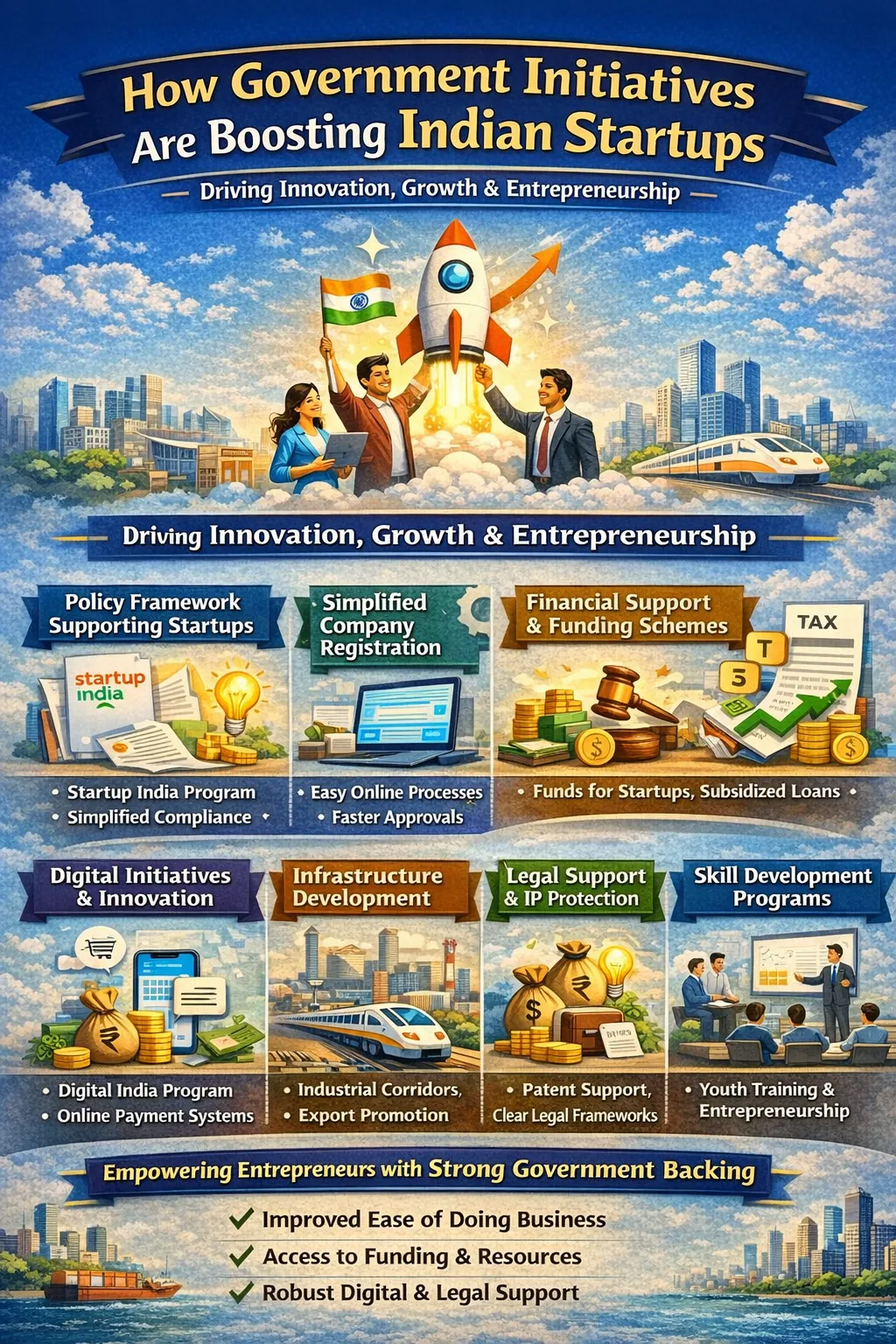
India has witnessed a remarkable rise in startup activity over the past decade. A key driver behind this growth is strong government support. Policy reforms, financial incentives, and digital programmes have created a favourable environment for entrepreneurs. These initiatives aim to reduce barriers, improve access to funding, and encourage innovation across sectors.
Today, India stands as one of the fastest growing startup ecosystems in the world. Government action continues to play a central role in shaping this progress.
Policy Framework Supporting Startups
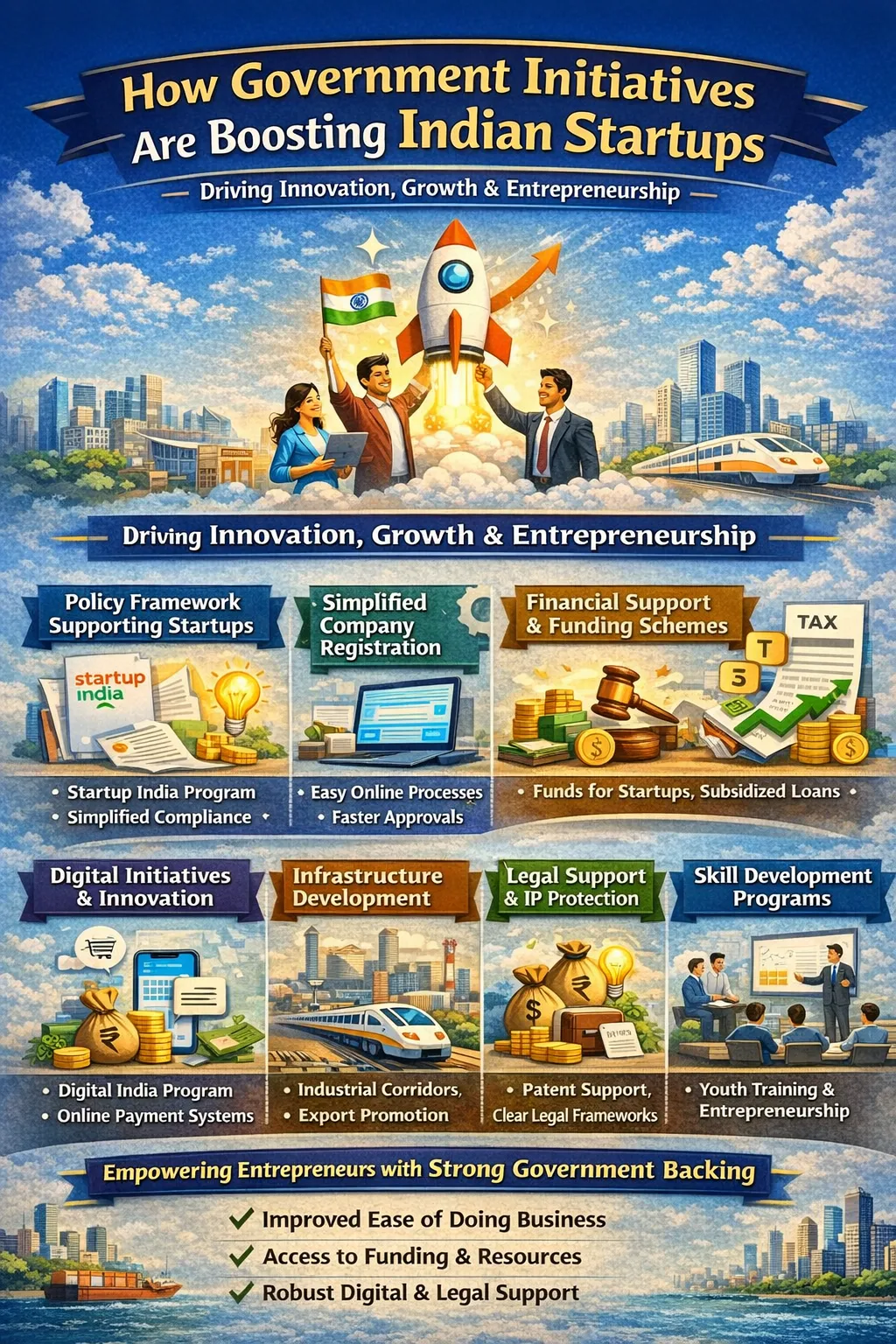
The Indian government has introduced several policies to support entrepreneurship. These policies focus on simplifying regulations and improving ease of doing business. Clear guidelines help founders understand legal requirements and reduce compliance challenges.
Programmes such as Startup India provide recognition and benefits to eligible startups. These include tax exemptions, easier compliance, and faster patent processing. Such measures encourage founders to bring innovative ideas to market.
A structured policy framework builds confidence among investors and entrepreneurs. It ensures stability and long term growth.
Simplified Company Registration and Compliance
One of the major improvements in recent years is the simplification of company registration. Online portals and digital documentation have reduced processing time. Entrepreneurs can now register businesses with greater ease.
Compliance procedures have also become more streamlined. Digital filing systems allow companies to manage regulatory requirements efficiently. This reduces administrative burden and allows founders to focus on growth.
For those considering setting up a new company in India, these reforms provide a clear and efficient pathway. The process is now more transparent and accessible than before.
Financial Support and Funding Schemes
Access to capital is essential for startup success. The government has introduced various funding schemes to support early stage ventures. Initiatives such as the Fund of Funds for Startups provide financial backing through venture capital firms.
Startups also benefit from credit guarantee schemes and subsidised loans. These programmes reduce financial risk and encourage innovation.
Public sector banks and financial institutions have increased their focus on startup financing. This ensures wider access to funding across different regions.
Grants and incentives are also available for research driven startups. This promotes technological advancement and product development.
Tax Benefits and Incentives
Tax incentives play a significant role in supporting startups. Eligible startups can avail income tax exemptions for a specified period. This helps reduce financial pressure during the initial stages.
The government has also relaxed norms related to angel tax. This encourages investment from domestic investors. Startups can raise capital without facing excessive tax burdens.
Incentives for research and development further support innovation. These benefits create a more attractive environment for entrepreneurs.
Digital Initiatives and Innovation Support
Digital transformation has been a major focus of government policy. Initiatives such as Digital India have improved internet access and digital infrastructure. This enables startups to operate efficiently and reach wider markets.
Digital payment systems have simplified transactions. E commerce and online platforms continue to grow rapidly. Startups can scale operations without heavy infrastructure costs.
Innovation hubs and incubation centres provide support for new ideas. These centres offer mentorship, technical guidance, and networking opportunities.
The focus on digital growth has opened new avenues for startups in sectors such as fintech, healthtech, and edtech.
Infrastructure Development and Market Access
Government investment in infrastructure supports business growth. Improved transport, logistics, and communication systems enhance operational efficiency.
Industrial corridors and special economic zones provide dedicated spaces for business activity. These zones offer tax benefits and simplified regulations.
Startups gain easier access to domestic and international markets. This improves competitiveness and supports expansion.
Export promotion schemes also help startups enter global markets. Entrepreneurs can explore opportunities beyond India with government support.
Legal Support and Intellectual Property Protection
Strong legal support is essential for startup success. The government has taken steps to protect intellectual property rights. Faster patent registration and reduced fees benefit startups.
Legal frameworks ensure fair competition and dispute resolution. Entrepreneurs can operate with confidence in a secure legal environment.
Awareness programmes educate founders about compliance and legal obligations. This reduces the risk of errors and penalties.
For businesses planning the formation of public limited company in india, clear legal structures provide guidance. This supports large scale growth and access to public investment.
Skill Development and Talent Support
The government has launched several programmes to improve skill development. Initiatives focus on training youth in technical and professional skills. This creates a strong talent pool for startups.
Entrepreneurs benefit from access to skilled employees. Training programmes also encourage innovation and problem solving.
Collaboration between educational institutions and industry supports research and development. This strengthens the startup ecosystem.
Challenges and Areas for Improvement
Despite strong support, certain challenges remain. Regulatory processes can still be complex in some sectors. Access to funding may vary across regions.
Infrastructure gaps exist in smaller cities. Awareness about government schemes is also limited in some areas.
However, continuous reforms aim to address these issues. The government is working towards improving implementation and outreach.
Conclusion
Government initiatives have played a crucial role in boosting Indian startups. Policy reforms, financial support, and digital programmes have created a favourable business environment. Entrepreneurs now have better access to funding, infrastructure, and legal support.
India’s startup ecosystem continues to grow with strong government backing. As policies evolve and implementation improves, the country is set to remain a leading hub for innovation and entrepreneurship.




























Sign in to leave a comment.