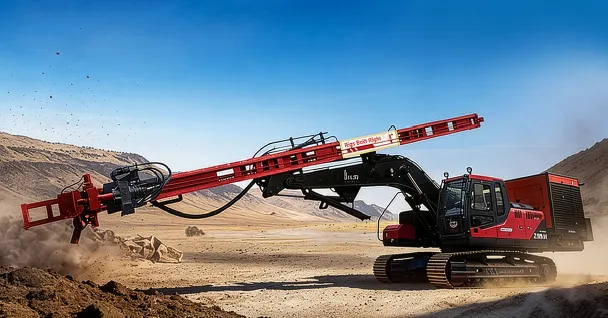

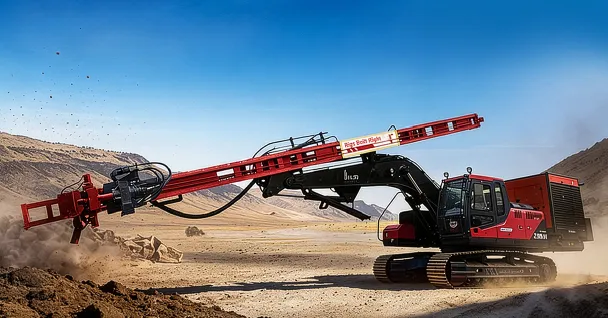
In modern surface mining operations, drilling performance plays a critical role in determining overall productivity and operational efficiency. The quality and speed of drilling directly affect downstream activities such as blasting, excavation, hauling, and crushing. When drilling is efficient and accurate, mining operations experience better fragmentation, lower operational costs, and improved safety outcomes.
Strong drilling performance is influenced by multiple factors, including geological conditions, equipment capability, and operational practices. In particular, the selection of high-performance mining drilling rigs and properly configured blasthole drills can significantly impact drilling productivity. Advanced surface drilling rigs are engineered to deliver consistent penetration rates and reliable operation even in demanding geological environments.
Understanding the factors that influence surface drilling rigs' performance allows mining operators to optimize drilling strategies and achieve better cost per meter drilled. Modern drilling technology and equipment design have therefore become central to improving efficiency in large-scale surface mining projects.
Understanding Drilling Performance in Surface Mining
In the context of surface mining, drilling performance refers to how effectively a drilling system penetrates rock while maintaining accuracy, stability, and operational uptime. Key indicators of drilling performance include penetration rate, drilling accuracy, equipment reliability, and productivity over time.
Several metrics are commonly used to evaluate surface drilling rigs' performance, such as:
- Penetration rate – the speed at which the drill advances into the rock
- Drilling rate per hour – the amount of rock drilled within a specific timeframe
- Equipment uptime – the percentage of time the rig is actively drilling
- Cost per meter drilled – an important indicator of operational efficiency
Efficient drilling performance improves blasting results because accurately drilled holes allow explosives to distribute energy evenly throughout the rock mass. When drilling accuracy is compromised, blast fragmentation becomes inconsistent, which can increase crushing costs and reduce overall productivity in the mine.
Geological Conditions and Rock Hardness
Among all influencing factors, rock hardness and geological variability are some of the most important determinants of drilling efficiency. Harder rock formations require greater drilling power, stronger tools, and higher torque to maintain consistent penetration.
The geological conditions in surface mining sites can vary significantly. Factors that affect drilling include:
- Rock hardness and compressive strength
- Rock abrasiveness, which influences tool wear
- Formation variability, including layered rock structures
- Fractured versus compact formations
For example, fractured rock formations may allow faster drilling but can also cause hole deviation, while compact formations often require higher drilling force and more robust equipment.
Understanding rock hardness helps operators select the correct mining drilling rigs and drilling tools. Matching the rig’s power and drilling method to geological conditions ensures consistent drilling performance and prevents excessive wear on equipment.
Drilling Rig Capacity and Machine Specifications
The capability of drilling equipment is another major factor that determines drilling rig capacity and performance in surface mines. Drilling rigs must provide sufficient power, torque, and structural stability to penetrate rock efficiently while maintaining hole accuracy.
Key machine specifications that influence drilling performance include:
- Engine power, which determines overall drilling strength
- Air compressor output, which supports flushing and hammer operation
- Hydraulic system efficiency, which drives the feed force and rotation
- Structural stability, which maintains drilling precision
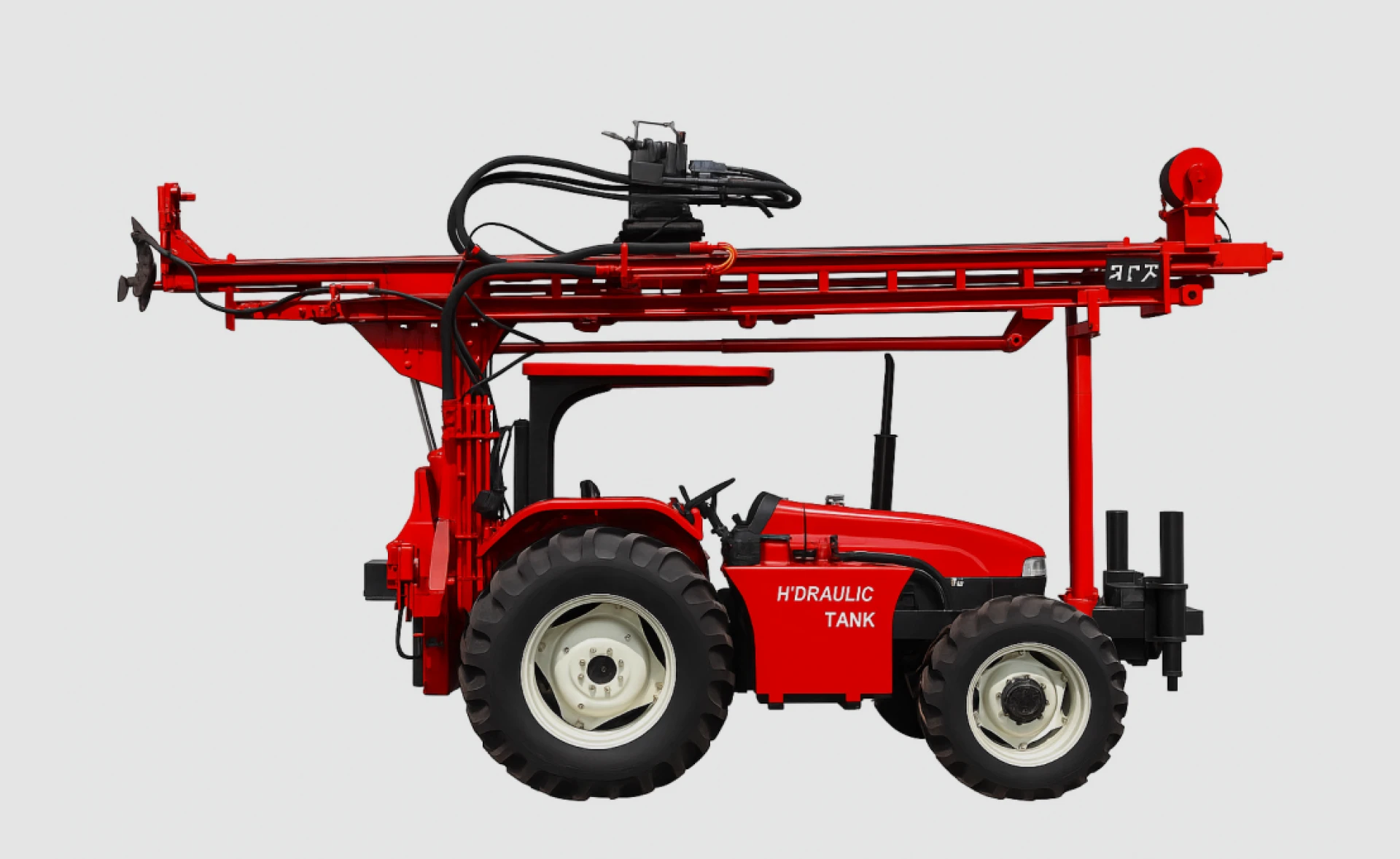
High-capacity mining drilling rigs are designed to maintain consistent productivity even in difficult formations. In particular, the performance of a hydraulic drilling rig is often determined by how efficiently hydraulic power is transferred to the drilling system.
Modern surface drilling rigs also incorporate advanced control systems and durable mechanical components that allow operators to maintain stable drilling operations over extended periods.
Rig Torque and Penetration Rate
The relationship between rig torque and penetration rate is another critical element affecting drilling performance. Torque refers to the rotational force applied by the drilling rig, which helps the drill bit cut through rock formations.
Higher torque levels enable the drilling system to maintain penetration in harder formations where resistance is greater. However, improper torque settings can lead to several operational problems:
- Reduced drilling efficiency
- Excessive bit wear
- Hole instability or deviation
Optimizing rig torque and penetration rate ensures that drilling progresses at an efficient speed without damaging equipment. In many surface mining operations, operators continuously monitor torque levels and drilling speed to maintain optimal performance.
Maintaining the correct balance between torque and penetration helps improve hydraulic drilling rig performance, particularly when working in formations with varying rock hardness.
Type of Drilling Equipment Used
The type of drilling equipment used has a significant impact on the overall surface drilling rigs performance. Different mining applications require different drilling configurations, depending on rock conditions, hole depth, and production requirements.
Common equipment types used in surface mining include:
- Surface drilling rigs designed for large-scale mining and quarry operations
- Blasthole drills, which create holes for explosive placement
- Crawler-mounted rigs, which provide mobility across uneven terrain
The design of the machine influences drilling stability, penetration rate, and operational efficiency. For example, crawler-mounted rigs often demonstrate strong crawler drill rig performance because they provide stable positioning during drilling operations.
Selecting the appropriate blasthole drills and drilling systems for the mining environment ensures better drilling productivity and more predictable blasting results.
Operational and Maintenance Factors
Even the most advanced drilling equipment requires proper operational practices to maintain optimal drilling performance. Operator skill, equipment monitoring, and preventive maintenance all contribute to consistent drilling productivity.
Key operational considerations include:
- Proper drill rod and bit selection for specific rock formations
- Continuous monitoring of drilling parameters
- Preventive maintenance schedules to reduce equipment downtime
- Correct alignment and positioning of drilling rigs
When maintenance is neglected, equipment downtime increases, and surface drilling rigs' performance declines. Regular inspection and servicing help maintain equipment utilization and extend the operational life of drilling systems.
Well-trained operators also play an important role in maintaining mining drilling rigs efficiency by adjusting drilling parameters based on changing geological conditions.
Optimizing Drilling Performance in Surface Mines
Improving drilling performance requires a strategic approach that considers both equipment and operational factors. Mining companies often implement optimization strategies to increase drilling efficiency and reduce costs.
Key strategies include:
- Matching drilling equipment with local geology
- Selecting high-performance surface drilling rigs suited to the project
- Monitoring rig torque and penetration rate during drilling operations
- Improving drilling accuracy to reduce explosive waste
- Reducing the cost per meter drilled through better equipment utilization
When these factors are managed effectively, mining operations can significantly improve overall productivity while maintaining safe working conditions.
Why Equipment Choice Matters in Surface Mining Projects
Selecting the right drilling equipment is one of the most important decisions in any surface mining project. Reliable mining drilling rigs must operate efficiently in harsh environments while maintaining precision and durability.
High-quality surface drilling rigs offer several advantages:
- Consistent hydraulic drilling rig performance
- High equipment uptime in demanding conditions
- Efficient fuel consumption and operational stability
- Strong structural design for heavy-duty applications
Manufacturers such as KLR Universal develop drilling solutions designed specifically for surface mining environments. Their drilling systems are engineered to deliver reliable crawler drill rig performance, accurate drilling results, and long-term operational durability.
For mining operators seeking dependable blasthole drills and high-performance surface drilling rigs, selecting well-engineered equipment can significantly improve drilling productivity and overall mine efficiency.























Sign in to leave a comment.