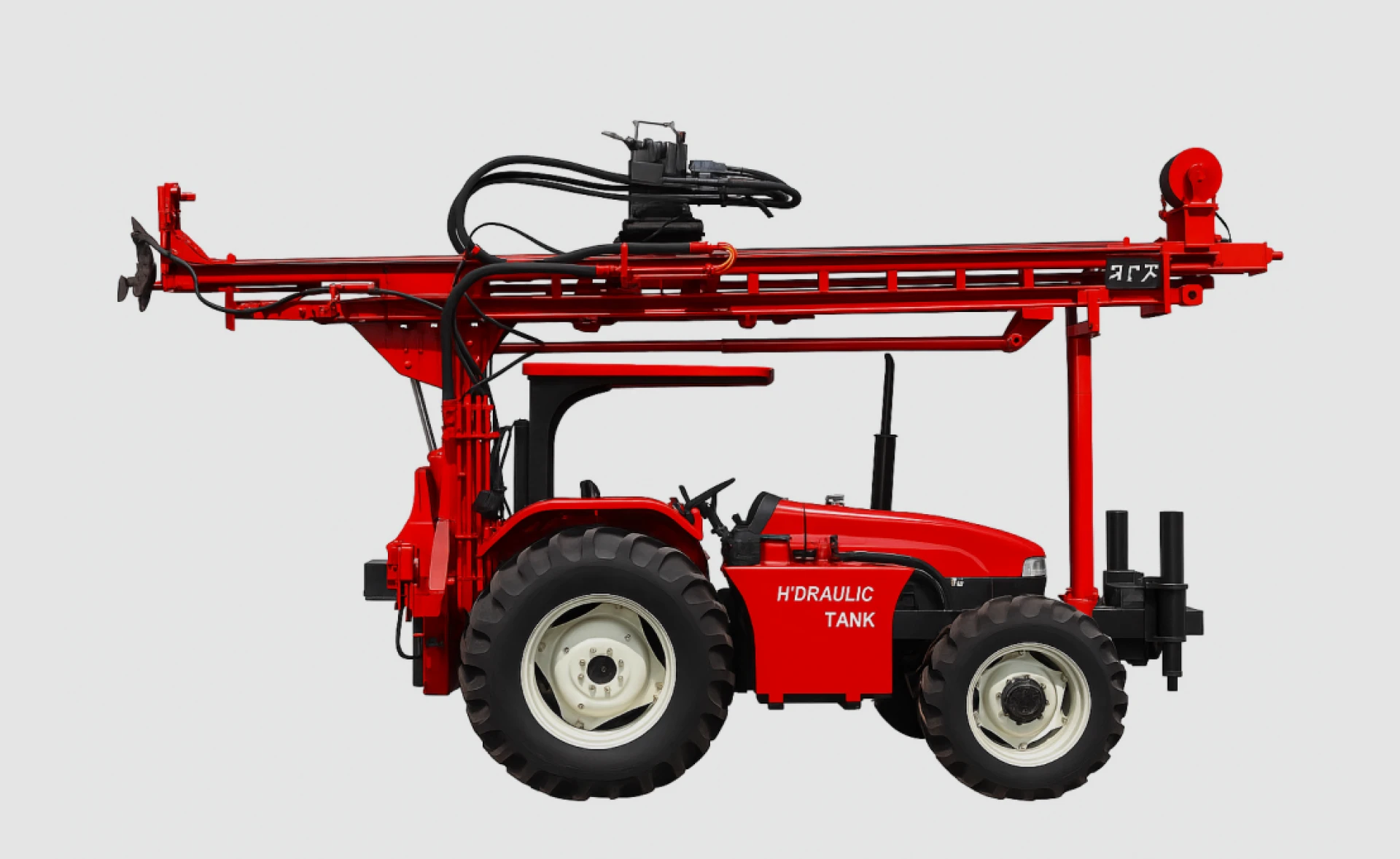

Borewell drilling in hard rock regions such as granite and basalt can be technically demanding. Dense rock formations reduce drilling speed, increase tool wear, and raise overall operational costs.
For drilling contractors and infrastructure projects, selecting the right water borewell machine or borewell drilling machine becomes critical. The right water well drilling rig improves penetration rate, reduces equipment stress, and ensures reliable borehole accuracy even in challenging geological conditions.
Selecting the right drilling rig, therefore, plays a key role in the long-term efficiency and success of borehole projects.
Understanding Borewell Drilling Technologies for Hard Rock
Drilling through hard rock requires equipment that can deliver high impact energy, strong torque, and stable drilling performance. Modern well drilling equipment uses a combination of pneumatic and hydraulic systems to achieve efficient rock penetration.
Two major drilling technologies are commonly used in borehole drilling.
DTH Drilling Technology
A DTH drilling machine uses a pneumatic hammer located at the bottom of the borehole to break rock through high-frequency impact. Because the hammer operates directly at the drilling point, energy loss is minimized, and penetration rates increase significantly.
Rotary Drilling Technology
Rotary drilling uses rotational force to grind and cut through rock layers. While effective in softer formations, rotary systems may experience slower penetration in dense rock structures.
Role of Hydraulic Systems in Hard Rock Drilling
A hydraulic drilling machine provides the torque and thrust required to drive drilling tools through tough formations. Hydraulic systems improve drilling stability and maintain consistent pressure during operation.
Importance of Compressor Compatibility
Air compressors are essential for powering DTH hammers and clearing debris from the borehole. Proper compressor capacity ensures:
- Efficient rock fragmentation
- Faster removal of drill cuttings
- Reduced drilling downtime
- Stable performance of the DTH drilling machine
Because of these advantages, DTH drilling systems combined with strong hydraulic rigs are widely preferred for hard rock borehole projects.
Types of Water Well Drilling Rigs Suitable for Hard Rock
Various types of drilling rigs are used for borewell projects depending on terrain conditions, drilling depth, and mobility requirements.
Truck-Mounted Borewell Rigs
Truck-mounted rigs are widely used for large-scale borehole drilling operations. They provide high power capacity and easy transportation between drilling sites.
Crawler-Mounted Drilling Rigs
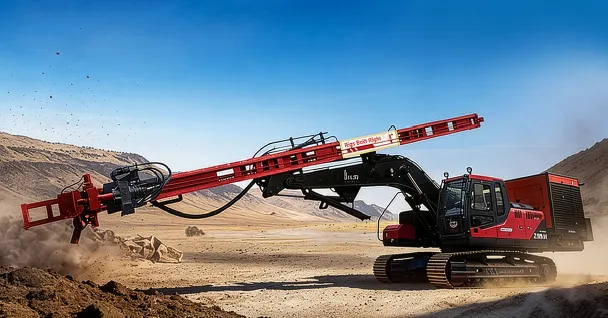
Crawler-mounted rigs are ideal for rough and uneven terrain. Their tracked mobility allows them to operate efficiently in remote drilling locations.
Skid-Mounted Drilling Rigs
Skid-mounted rigs are compact and portable, making them suitable for confined drilling areas.
Hydraulic Drilling Rigs
Hydraulic rigs are designed to deliver high torque and thrust, making them effective water well drilling machines for hard rock environments.
Comparison of Borewell Drilling Rig Types
| Rig Type | Best Use Case | Depth Capacity | Mobility |
|---|---|---|---|
| Truck-mounted rig | Large-scale borewell drilling | High depth capability | High road mobility |
| Crawler-mounted rig | Rough terrain and remote areas | Medium to high depth | Excellent terrain adaptability |
| Skid-mounted rig | Compact drilling sites | Medium depth | Portable but with limited mobility |
| Hydraulic drilling rig | Hard rock drilling | High depth capability | Depends on the mounting structure |
Key Technical Factors to Consider Before Selecting a Rig
Selecting the right water boring machine requires careful evaluation of multiple technical parameters.
Rock Hardness and Geological Survey
Understanding rock composition helps determine the required drilling power and equipment type.
Required Borewell Depth
The rig should be capable of drilling beyond the target depth to ensure operational flexibility.
Air Pressure and Compressor Capacity
Adequate compressor capacity is essential for powering DTH hammers and clearing debris.
Torque and Rotation Speed
High torque and optimized rotation speed improve drilling performance in dense rock.
Drill Rod Strength and Bit Compatibility
Strong drill rods and compatible bits help maintain borehole stability.
Fuel Efficiency and Operational Cost
Energy-efficient rigs reduce long-term operational expenses.
DTH Drilling Machine vs Rotary Rig: Which Performs Better in Hard Rock?
In granite and basalt formations, drilling efficiency depends heavily on the drilling method used.
A DTH drilling machine delivers high-frequency impact directly at the rock face, resulting in faster penetration rates and better drilling accuracy.
A water well drilling machine using rotary technology relies mainly on cutting action, which can slow down in extremely dense formations.
Key differences include:
- DTH drilling offers faster penetration in hard rock
- Rotary drilling works better in softer formations.
- DTH systems produce straighter boreholes
- Rotary systems generally require lower compressor power
Because of these factors, DTH drilling is often preferred for deep borewell projects in hard rock areas.
Borewell Machine Price in India: What Influences the Cost?
The borewell machine price in India varies depending on drilling capacity, rig configuration, and technology features.
Typical Price Categories:
- Entry-level rigs for shallow drilling projects
- Mid-range rigs for moderate depth operations
- Heavy-duty rigs for deep borewell drilling
Key Cost Influencing Factors:
- Brand reputation and engineering quality
- Maximum drilling depth capability
- Strength of the hydraulic system
- Automation and control technology
- Availability of spare parts and after-sales support
Balancing equipment performance with overall project cost is essential for selecting the right drilling solution.
Do’s and Don’ts When Choosing a Borewell Drilling Rig
Do’s:
- Match rig power with rock hardness
- Ensure compressor compatibility with drilling equipment
- Use drill bits designed for hard rock drilling
- Select durable well drilling equipment from reliable manufacturers
Don’ts
- Do not compromise on hydraulic system quality
- Avoid selecting rigs with insufficient depth capacity
- Do not use underpowered rigs in dense rock formations
Maintenance & Performance Optimization in Hard Rock Drilling
Proper maintenance helps extend the lifespan of drilling equipment and ensures consistent performance.
Important maintenance practices include:
- Regular replacement of worn drill bits
- Inspection of air compressor and pneumatic systems
- Monitoring hydraulic pressure and fluid quality
- Lubrication of moving components
- Checking drill rods for structural damage
Preventive maintenance reduces downtime and improves the reliability of borewell drilling machines.
Making the Right Investment for Long-Term Borewell Projects
Investing in the right water boring machine requires a long-term perspective. Borewell contractors must evaluate equipment performance, durability, and service support before purchasing drilling equipment.
Key factors to consider when investing in drilling rigs include:
- Return on investment (ROI): High-capacity rigs reduce drilling time and improve productivity
- Technical support availability: Access to expert support and spare parts ensures uninterrupted operations
- Equipment durability: Strong engineering reduces breakdowns in harsh drilling environments
- Operational scalability: Versatile rigs allow contractors to handle deeper or more complex drilling projects in the future
Choosing equipment from manufacturers with strong engineering expertise and service support helps ensure reliable performance and long-term operational success.
Conclusion: Selecting the Ideal Water Borewell Machine for Hard Rock Areas
Borewell drilling in hard rock environments requires robust equipment capable of handling dense and abrasive formations. Factors such as rock hardness, drilling depth, compressor capacity, and hydraulic performance must all be considered when selecting drilling equipment. A reliable water borewell machine or borewell drilling machine designed for hard rock drilling, like the KLR Universal Borewell Drilling Machine, can significantly improve drilling speed, reduce operational costs, and ensure consistent performance.


















Sign in to leave a comment.