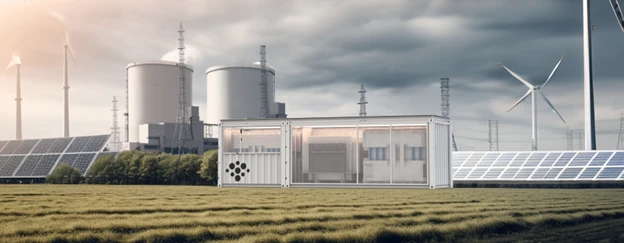

Imagine a future where the sun powers your car, the wind fuels your factory, and your lights never go out—even at night or on a windless day. Now, imagine all of that driving hydrogen production, storing energy for months, and creating a cycle so clean, it only gives off water.
That’s not a sci-fi vision. That’s today’s green hydrogen project—where solar, wind, and battery storage work in perfect harmony to produce, store, and deliver energy with zero emissions.
As the world accelerates toward decarbonisation, this powerful trio is emerging as the blueprint for sustainable, scalable, and round-the-clock clean energy. Let’s unpack how it works—and why it’s changing everything.
1. Solar Power: The Daytime Workhorse
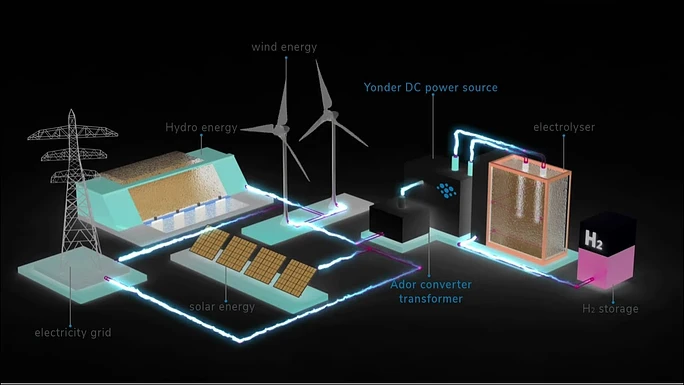
Solar is the backbone of many green hydrogen setups. It’s abundant, increasingly affordable, and simple to deploy across both small- and large-scale installations. When sunlight hits photovoltaic (PV) panels, they generate electricity. That electricity is either:
· Sent directly to electrolysers to split water into hydrogen and oxygen
· Stored in batteries for later use
· Or routed into the grid, offsetting peak demand
But there’s a catch—solar only works when the sun is shining. That’s where its twin comes in.
2. Wind Power: Nighttime and Seasonal Companion
Wind and solar make a dream team. While solar dominates during the day, wind energy often peaks at night or during cloudy seasons. Wind turbines generate electricity even in low-light conditions, keeping hydrogen electrolysers running when solar can’t.
In places like Gujarat, Tamil Nadu, or coastal Europe, hybrid renewable zones are being built specifically to balance these two forces.
Together, solar and wind feed a green hydrogen project with a more consistent, 24/7 renewable power supply—crucial for maintaining steady hydrogen output.


























Sign in to leave a comment.