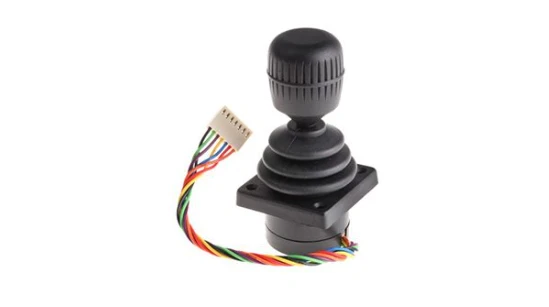
The demand for precision and reliability in industrial controls has never been higher. Whether it’s controlling machinery in a manufacturing plant, operating robotic arms in automated systems, or managing complex industrial equipment, precise control is essential. One technology that is significantly improving joystick precision is Hall Effect Joystick technology. This innovative approach to joystick design is transforming industrial automation by providing more accurate, durable, and efficient control solutions.
In this article, we’ll dive into how Hall Effect Joystick technology works, its advantages over traditional potentiometer-based joysticks, and how it is revolutionizing industrial controls. As industries push toward smarter, more efficient automation, understanding the impact of Hall Effect Joysticks is crucial for businesses looking to stay ahead in a competitive market.
What is a Hall Effect Joystick?
Hall Effect Joysticks use the principle of the Hall Effect to provide precise control in industrial applications. The Hall Effect is a phenomenon that occurs when a magnetic field is applied to an electrical conductor, causing a voltage difference perpendicular to both the magnetic field and the current flow. This voltage difference is then used to detect the position of the joystick and translate it into electrical signals for precise movement control.
Unlike traditional joysticks that use potentiometers to measure resistance and control movement, Hall Effect Joysticks are non-contact sensors. This means that there are no moving parts that can wear out or degrade over time, resulting in increased durability and longevity.
Advantages of Hall Effect Joysticks Over Traditional Potentiometer-Based Joysticks
1. Enhanced Durability and Reliability
One of the main advantages of Hall Effect Joysticks is their durability. Traditional potentiometer-based joysticks rely on mechanical components that can wear out due to friction over time, leading to reduced performance and reliability. In contrast, Hall Effect Joysticks have no moving parts, which eliminates wear and tear. This non-contact technology ensures that Hall Effect Joysticks can withstand harsh conditions, including exposure to dust, dirt, moisture, and extreme temperatures, making them ideal for industrial environments.
2. Higher Precision and Accuracy
Hall Effect Joysticks offer higher precision compared to potentiometer-based joysticks. The magnetic field used in Hall Effect Joysticks provides smoother and more accurate feedback, translating to precise control over movements. In industries where every millimeter matters, such as robotics or aerospace, the precision offered by Hall Effect Joysticks is essential for ensuring flawless operation.
3. Longer Lifespan
Because Hall Effect Joysticks have no physical contact points, they are less prone to wear and tear. This results in a longer lifespan, often making them more cost-effective over time. Industries that rely on continuous, high-use equipment benefit greatly from the longevity and reliability of Hall Effect Joysticks, as they reduce the need for frequent replacements.
Applications of Hall Effect Joysticks in Industrial Controls
1. Robotics and Automation
In robotics, precision and smooth control are critical. Hall Effect Joysticks provide the fine-tuned control needed to operate robotic arms and other automated systems with accuracy. These joysticks allow operators to adjust movements in real-time, whether they’re handling delicate materials or performing complex tasks.
2. Material Handling and Manufacturing
In manufacturing plants, material handling systems require precise control of machines to move items from one place to another. Hall Effect Joysticks are used to operate cranes, hoists, and conveyor systems, providing smooth, reliable control even in challenging environments. These joysticks enhance the safety and efficiency of operations by offering precise, real-time adjustments.
3. Aerospace and Defense
Aerospace applications require extreme precision and reliability. Hall Effect Joysticks are commonly used in aircraft controls, offering precise navigation for avionics and flight control systems. Additionally, in defense applications, these joysticks provide smooth control for various systems, ensuring performance in critical and high-pressure environments.
Why Hall Effect Joysticks Are the Future of Industrial Controls
As industries continue to embrace automation, the demand for more accurate, durable, and reliable control systems increases. Hall Effect Joysticks are meeting these needs by offering a robust and long-lasting solution for industrial applications.
Why Hall Effect Joysticks are expected to play a pivotal role in the future of industrial controls:
- Increased Automation and Efficiency: As more industries adopt automation, the need for precise and reliable control systems grows. Hall Effect Joysticks provide the accuracy needed to operate complex machinery with ease, enhancing overall system efficiency.
- Enhanced Safety Features: The smooth, non-contact nature of Hall Effect Joysticks reduces the risk of mechanical failure, which in turn minimizes the potential for accidents. Their precision ensures that machinery operates safely, even in high-risk environments.
- Adaptability to Harsh Environments: Many industrial settings involve extreme conditions, such as high heat, moisture, or dust. Hall Effect Joysticks are designed to function in these challenging environments, offering consistent performance without degradation.
The Future of Hall Effect Joysticks in Industrial Automation
As automation technology continues to advance, the role of Hall Effect Joysticks in industrial control systems will only grow. These joysticks are already helping businesses streamline operations, reduce downtime, and improve overall efficiency. With the ongoing integration of IoT and smart technologies in industrial systems, Hall Effect Joysticks are well-positioned to be a key component of future automation solutions.
Frequently Asked Questions
- What is a Hall Effect Joystick?
- A Hall Effect Joystick uses non-contact magnetic sensing technology to provide precise, smooth control in industrial applications.
- How do Hall Effect Joysticks differ from traditional potentiometer-based joysticks?
- Unlike traditional joysticks, Hall Effect Joysticks have no moving parts, offering greater durability and precision.
- In which industries are Hall Effect Joysticks used?
- Hall Effect Joysticks are commonly used in robotics, material handling, aerospace, and defense, providing precise control in challenging environments.
Hall Effect Joysticks Leading the Way in Industrial Automation
The advancements in Hall Effect Joystick technology are shaping the future of industrial controls by offering superior precision, durability, and performance. As industries continue to rely on automation for enhanced productivity, the demand for high-quality, reliable control systems will only increase. Hall Effect Joysticks are at the forefront of this revolution, providing the control and accuracy needed to operate complex systems smoothly and efficiently.
For businesses looking to upgrade their industrial control systems with the latest joystick technology, ETI Systems offers a range of Hall Effect Joysticks designed to meet the demands of various industries. Get in touch with us today to learn more about how our advanced joystick solutions can enhance your operations.
Contact ETI Systems Today to Explore Our Hall Effect Joystick Solutions for Your Industrial Needs!






























Sign in to leave a comment.