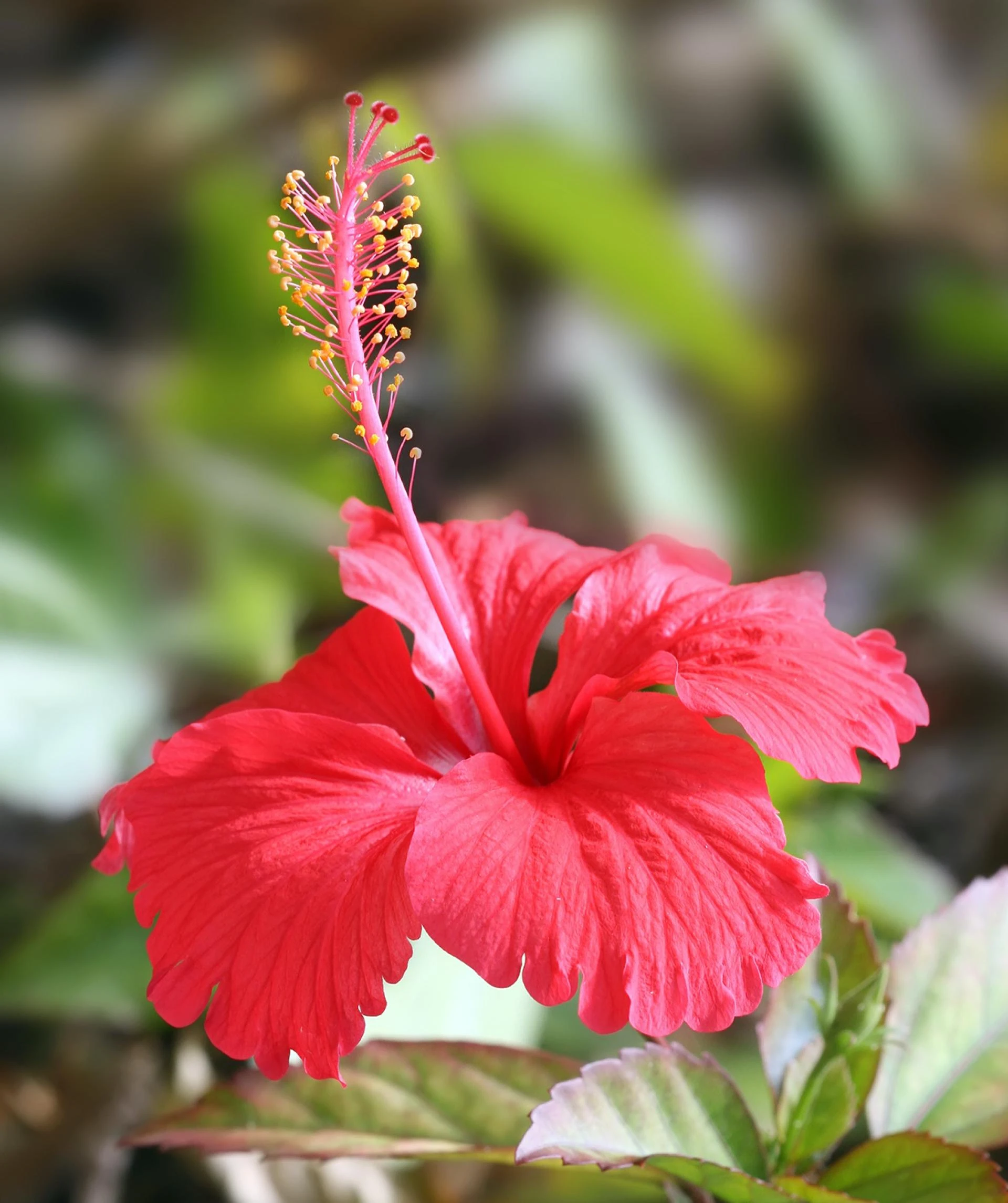

Hibiscus (Hibiscus spp.) is an angiosperm (flowering plant) that can reproduce in various ways. Naturally, hibiscus reproduces generatively. Because hibiscus is a perfect flower, it can perform self-pollination (autogamy). Pollination can be assisted by hummingbirds (ornithogamy), wind (anemogamy), and insects such as butterflies and bees (entomogamy). After the pollen successfully lands on the stigma, fertilization occurs, producing hibiscus seeds encased in a pod. After the pod dries, it will break open, releasing all the seeds inside. The seeds will fall to the ground and germinate to produce new individuals.
In addition to generative reproduction, hibiscus can be cultivated using various types of artificial vegetative propagation such as cuttings, grafting, budding (oculation), and layering. Hibiscus can grow simply by sticking the stem of a hibiscus plant into prepared soil. After sticking the stem, keep it moist until roots sprout and produce new individuals. Another way to propagate hibiscus is by bending a stem into the soil and placing a brick on it to keep it in contact with the ground. After roots grow, remove the brick. Separate the new individual and plant it elsewhere.
References:
9168116a



























Sign in to leave a comment.