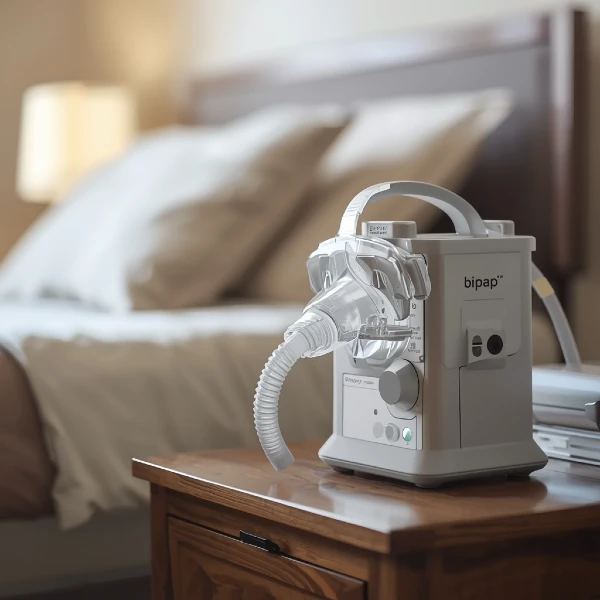

Breathing disorders such as sleep apnea, COPD, and respiratory weakness can make everyday life challenging. To help patients breathe comfortably, doctors often prescribe CPAP or BiPAP machines. While both devices look similar and serve a similar purpose, their working mechanisms and medical uses are quite different. Understanding these differences helps patients choose the right therapy and ensures better long-term results.
Understanding CPAP Therapy
A CPAP machine applies Continuous Positive Airway Pressure, meaning it delivers one constant level of air pressure. This steady airflow keeps the upper airway from collapsing during sleep, which is especially helpful for people with obstructive sleep apnea (OSA). By preventing interruptions in breathing, CPAP improves sleep quality, reduces snoring, and keeps oxygen levels stable throughout the night.
CPAP is usually the first choice for patients with mild or moderate sleep apnea. Because it provides a single pressure level, it is simpler to use and more affordable than BiPAP. However, some users find it slightly uncomfortable because exhaling against constant pressure can feel forceful or unnatural.
What Makes BiPAP Different?
A BiPAP machine operates with two pressure levels, a higher pressure during inhalation (IPAP) and a lower pressure during exhalation (EPAP). This dual setting makes breathing easier and more natural, especially for individuals with lung diseases, severe sleep apnea, or respiratory muscle weakness.
BiPAP is commonly recommended for conditions such as COPD, neuromuscular disorders, obesity hypoventilation syndrome, and respiratory failure. Some advanced BiPAP models also have a backup breathing rate, which automatically triggers a breath if the patient stops breathing momentarily. This feature makes BiPAP a safer option for people with serious breathing difficulties.
Because of its advanced support, BiPAP is more comfortable for long-term use but also more expensive than a CPAP machine.
Key Differences Between CPAP and BiPAP
Although both machines help improve breathing, the major difference lies in air pressure control. CPAP uses one constant pressure, while BiPAP uses two different pressures. As a result, CPAP is ideal for simple airway obstruction, whereas BiPAP is suitable for more complex respiratory issues.
Another important difference is comfort. Many patients who struggle with CPAP therapy often switch to BiPAP because it reduces the effort needed to exhale. This improves tolerance during long sleep hours. BiPAP also benefits patients whose breathing patterns need additional support beyond just keeping the airway open.
If You Want to Rent a BiPAP Machine in Delhi
If you want to rent BiPAP Machine in Delhi, you can trust My Health Mart for quick, reliable, and affordable home healthcare services. They provide high-quality BiPAP machines from leading brands and ensure proper installation, setup guidance, and 24/7 customer support.
Whether you need a device for short-term therapy or long-term breathing assistance, My Health Mart guarantees clean, well-maintained equipment, timely delivery, and complete support for patients across Delhi NCR. It is one of the most trusted services for home medical equipment.
Must Read: 7 Benefits of Using a BiPAP Machine
Which Machine Should You Use?
Choosing between CPAP and BiPAP depends entirely on the patient’s medical condition and comfort level. CPAP is usually sufficient for people who only need help keeping their airway open during sleep. It is simple, cost-effective, and highly effective for obstructive sleep apnea.
BiPAP is more suitable if the patient requires additional help with inhalation and exhalation, has weak respiratory muscles, or suffers from chronic lung diseases. Because BiPAP reduces breathing effort, it provides better comfort for patients who find CPAP too forceful.
It is important to undergo a sleep study or doctor evaluation before selecting a machine. Using the wrong device may lead to discomfort or ineffective therapy.
Comfort, Mask Fit, and Maintenance
Both CPAP and BiPAP machines use similar types of masks, nasal masks, nasal pillows, or full-face masks. The right mask plays a major role in therapy success. BiPAP users often need a more secure mask due to higher pressure during inhalation.
Proper maintenance is essential for both devices. The mask, tubing, and humidifier chamber should be cleaned regularly to prevent infections. Filters must be replaced on time, and the machine should be kept in a dry, dust-free space. Regular follow-ups with a doctor help ensure that the pressure settings are correct and the therapy is effective.
Wrapping Up
CPAP and BiPAP machines are both important tools in respiratory care, but they are designed for different needs. CPAP provides continuous pressure to prevent airway collapse, making it ideal for mild to moderate sleep apnea.
BiPAP offers two pressure levels that support both inhalation and exhalation, making it suitable for more serious breathing disorders. Understanding the difference helps patients and caregivers make informed decisions. And for those in Delhi looking to rent a BiPAP machine, My Health Mart offers a dependable and professional solution.
Don’t Miss: How to Choose the Right Oxygen Concentrator on Rent in Delhi























Sign in to leave a comment.