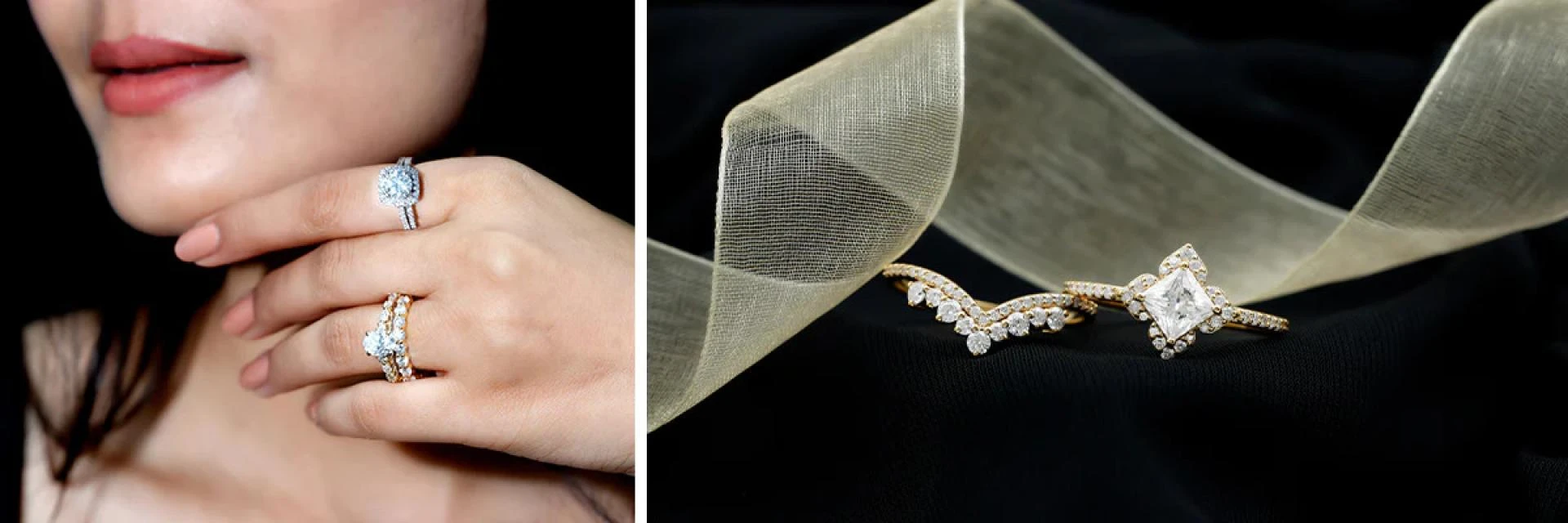

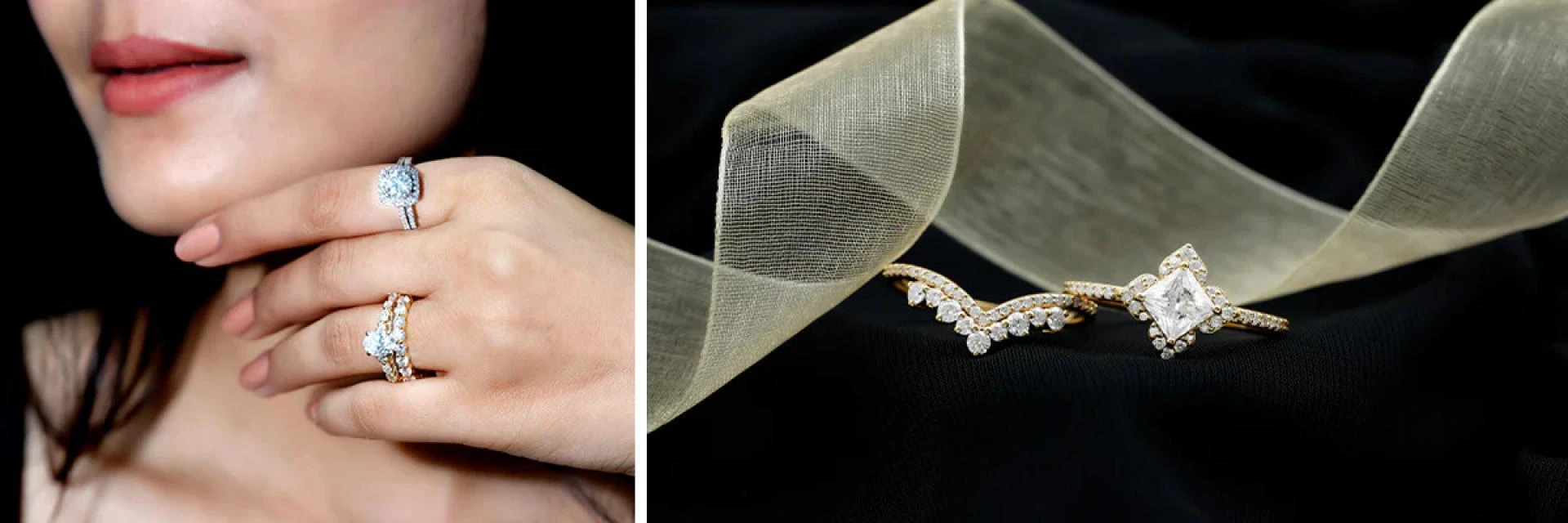
The past decade has seen a seismic change in the diamond world that is transforming what luxury, love, and eco-friendliness mean. Pioneering the way are lab-grown diamonds, a technologically advanced wonder that's upending centuries of conventional wisdom regarding high-end jewellery and, crucially, engagement rings.
Natural diamonds have been the go-to proposal staple for decades, representing love that lasts and devotion. But rapid change is on the horizon. With added ethics, sustainability, and value in mind, lab-created diamonds are fast becoming the new normal for today's couples.
The wedding jewellery market is experiencing a transformation due to lab-grown diamond engagement rings together with other products that might represent the ideal purchase for marriage jewelry. Here’s a quick look at how these pieces are transforming the ring market.
What Are Lab-Grown Diamonds?
Lab-grown diamonds, or cultured, synthetic, or man-made diamonds, are grown under laboratory conditions. Two major techniques manufacture them:
- High-Pressure High Temperature (HPHT): It simulates the natural process of diamond formation on the Earth's surface by applying high heat and pressure to carbon atoms until they crystallize.
- Chemical Vapor Deposition (CVD): Another relatively recent technique by which carbon-loaded gas molecules are disintegrated into fragments within a vacuum chamber and in which carbon atoms get deposited onto a diamond seed and layer upon layer build-up.
Although they are grown in laboratories, they are physically, chemically, and optically indistinguishable from natural diamonds. That is, as hard, as bright, and as brilliant as natural diamonds, they are even certified by the same bodies as the Gemological Institute of America (GIA).
Ethical and Environmental Responsibility
Among the key forces behind the revolution of laboratory-grown diamonds is ethical consciousness. Traditional diamond mining has been associated with environmental devastation and human rights violations, including forced labour and financing of conflict (the "blood diamond" stigma).
Lab diamonds, meanwhile, are created artificially in clean rooms. They require no working communities or people to be exploited and are 100% conflict-free. Ecologically, they:
- Consume significantly less water and energy to produce.
- Include no land displacement or tree cutting.
- Are produced with fewer carbon and waste footprint emissions.
For green-conscious couples intending to start life on the ethical, responsible ground, a lab created diamond wedding ring sets is an optimal choice.
The Smart Financial Decision
The financial benefit of lab-created diamonds is not quite so easily ignored. They cost, on average, 30–40% less than comparable quality and size natural diamonds. The cost difference is not that they are of lesser quality but that they are more cost-effective to create and lack a long mining supply chain.
- A 1-carat natural diamond might run anywhere from $5,000–$10,000 depending on quality.
- A lab-grown version of similar quality for $2,000–$4,000.
This price variability allows the buyer to indulge in scrimping and purchase a bigger, brighter stone than they might otherwise be able to afford. In an era where money is tighter than ever, this is a big plus.
Much Better Quality and Choice
Another massive advantage of lab-created diamonds is the consistency of quality. Because they're cultivated in controlled labs, lab-created diamonds have fewer chances of containing imperfections or inclusions than natural diamonds.
Customers have more choices, too:
- Special shapes and cuts like lab grown diamond halo rings are quite popular
- Designer Settings
- Coloured diamonds (blue, pink, yellow) at a fraction of the cost
Breaking the Stigma
Historically, cultured diamonds were seen as cheaper or a second-best option to "real" diamonds. But that is changing fast.
Celebrities and fashion influencers with huge followings are openly sporting lab grown diamond solitaire rings. Retailers are carrying more cultured versions. Even luxury fashion and heritage brands have begun jumping on the bandwagon.
And now, the lab-grown diamond is not a compromise. It's a choice. It's a badge of transparency, innovation, and forward-thinking, and that's incredibly appealing to value-based millennials and Gen Z consumers who prioritize principle over tradition.
Innovation in Technology at Its Finest
Lab-grown diamond farming is a real technological marvel. As technology improves, so does diamond growth scalability and efficiency. This opens up the potential for more complex designs, more affordability, and more supply to global markets.
Among the most exciting developments are:
- Quicker production cycles (as short as 6–10 weeks)
- Greater carats for bigger stones
- Custom diamond colour for one-of-a-kind, non-traditional designs
As this technology evolves, we will witness lab-grown diamonds vying with and even surpassing natural diamonds for popularity and ingenuity.
Final Thoughts
Love will last forever, but the way we express it is evolving. In an increasingly educated, connected, and empathetic world, lab-grown diamonds are the future of engagement rings. They merge the burning passion of tradition with the values of today.
Whether proposing to the love of your life, replacing your current ring, or searching for jewellery that reflects your values, lab-grown diamonds provide unmatched beauty, integrity, and value.
If you are looking for high-quality lab-grown diamonds, you can opt for Rosec Jewels. They have a diverse collection of certified lab-grown diamond promise rings and engagement rings that reflect all these qualities. With love and care, their collection is for couples who want to celebrate love in an honest, ethical, and lasting way.
























Sign in to leave a comment.