
Introduction
Industrial lighting plays a critical role in productivity, safety, and operational efficiency. In warehouses, factories, logistics centers, and large commercial facilities, traditional lighting solutions often struggle with uneven illumination, wasted energy, and poor visual comfort.
With the rapid development of LED technology, lighting manufacturers are increasingly focusing on optical design rather than simply increasing LED power. Among the most important components influencing LED performance is the LED lens.
An optimized LED lens can control light distribution, improve illumination uniformity, reduce wasted light, and help lighting systems achieve higher efficiency. For industrial applications, selecting the right optical lens design is essential for creating reliable and cost-effective lighting solutions.
Why Industrial Lighting Requires Optical Control
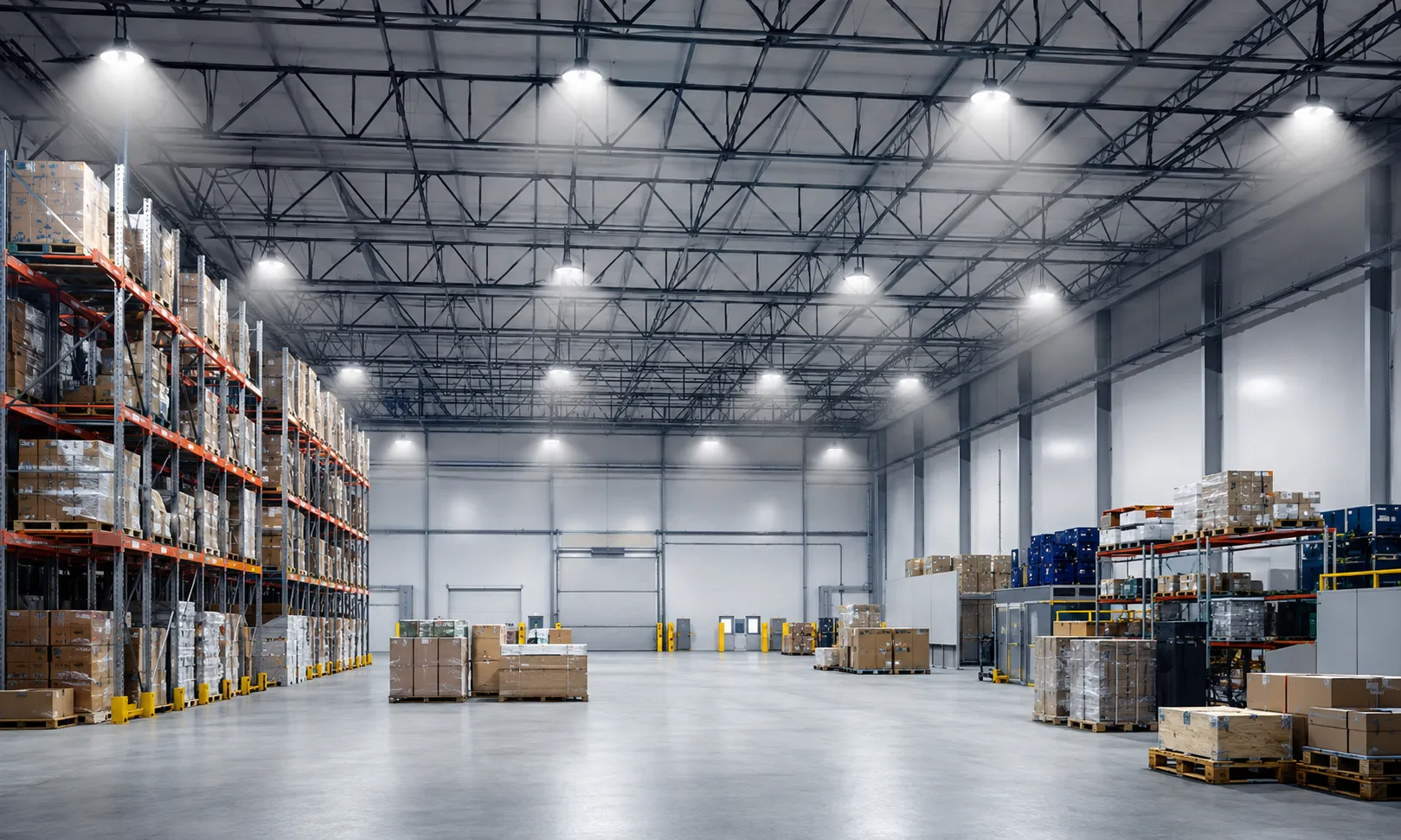
Industrial environments typically have large spaces, high ceilings, and demanding lighting requirements. A warehouse with 10-meter or higher mounting heights requires a completely different optical solution compared with a retail store or office.
Without proper light control, LED fixtures may create several problems:
- Excessive glare for workers
- Uneven brightness across the working area
- Poor visibility in critical zones
- Increased energy consumption due to overpowered fixtures
LED lenses solve these challenges by precisely controlling the direction and spread of light.
Instead of allowing LED light to disperse randomly, an optical lens redirects light into a specific beam angle, ensuring that more energy reaches the intended area.
The Role of Beam Angle in Industrial Lighting Design
One of the most important factors when selecting an LED lens is beam angle.
Different industrial applications require different light distributions:
Narrow Beam LED Lens
Narrow beam lenses are commonly used for high-ceiling applications where concentrated illumination is needed.
Typical applications include:
- Industrial machinery lighting
- High-bay warehouse lighting
- Sports lighting
- Long-distance illumination
A narrow beam reduces unnecessary light loss and improves brightness on targeted surfaces.
Medium Beam LED Lens
Medium beam lenses provide a balance between coverage and intensity.
They are suitable for:
- Manufacturing facilities
- Storage areas
- Commercial buildings
- Production lines
Wide Beam LED Lens
Wide beam lenses are designed for large-area coverage.
Applications include:
- Parking areas
- Large warehouses
- Exhibition halls
- Public facilities
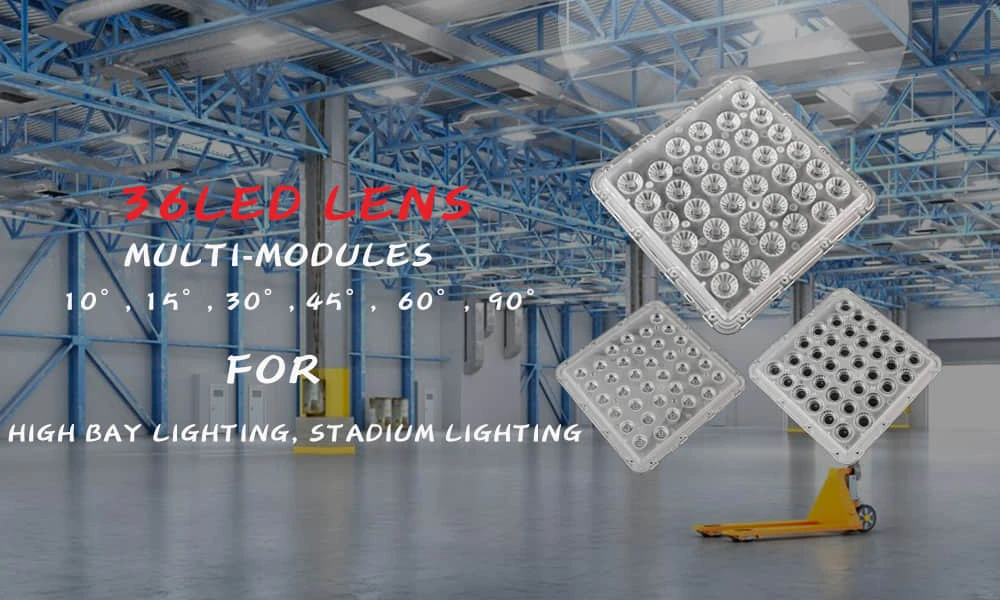
For example, a 90 degree LED lens can provide broader light distribution, helping fixtures achieve better coverage with fewer installation points.
Improving Energy Efficiency Through Better Light Distribution
Energy efficiency is not only determined by LED chip performance. Optical efficiency also plays a major role.
A high-quality LED lens helps improve system efficiency by:
Reducing Light Waste
Without an optical lens, a significant amount of LED output may illuminate unnecessary areas.
A properly designed lens directs light where it is needed, improving usable illumination.
Reducing Required Fixture Quantity
Better optical distribution means fewer fixtures may be required to achieve the same lighting level.
For large industrial projects, this can significantly reduce:
- Equipment costs
- Installation costs
- Maintenance requirements
Improving Long-Term Performance
Industrial lighting systems often operate for many hours every day. Even small improvements in optical efficiency can create substantial energy savings over the lifetime of the system.
Material Selection for Industrial LED Lenses
Industrial applications often require durable optical materials that can withstand demanding environments.
Common materials include:
PMMA LED Lens
PMMA (Polymethyl Methacrylate) is widely used because of:
- Excellent optical transparency
- Stable light transmission
- Good weather resistance
- High cost efficiency
PMMA lenses are suitable for many indoor and outdoor lighting applications, especially in industrial and large-area lighting systems where optical efficiency and long-term stability are required.
PC LED Lens
Polycarbonate provides:
- Higher impact resistance
- Better mechanical durability
- Strong environmental adaptability
PC lenses are often selected for applications requiring additional protection.
The choice between PMMA and PC depends on the project environment, temperature requirements, and mechanical conditions.
How Lighting Manufacturers Choose the Right LED Lens
When developing industrial LED fixtures, manufacturers should consider:
LED Package Compatibility
The lens must match the LED type, such as:
- 3030 LED
- 3535 LED
- 5050 LED
Incorrect matching can reduce optical efficiency.
Required Beam Pattern
Engineers should evaluate:
- Mounting height
- Lighting area
- Required illumination level
- Uniformity requirements
Environmental Requirements
Outdoor and industrial environments may require additional protection, including:
- UV resistance
- Temperature stability
- Waterproof compatibility
The Future of Industrial Lighting Optics
As LED lighting continues to evolve, optical design will become increasingly important.
Future industrial lighting solutions will focus on:
- Higher optical efficiency
- Better glare control
- Customized beam patterns
- Smart lighting integration
LED lenses are no longer just accessories. They are essential optical components that determine how effectively LED technology performs in real-world applications.
Conclusion
For industrial lighting manufacturers, choosing the correct LED lens is one of the most effective ways to improve lighting quality and system efficiency.
From warehouses to factories and large-area facilities, advanced optical solutions help create better illumination while reducing energy consumption.
By combining high-performance LED chips with precisely designed lenses, lighting manufacturers can develop more efficient, reliable, and competitive lighting products.

























Sign in to leave a comment.