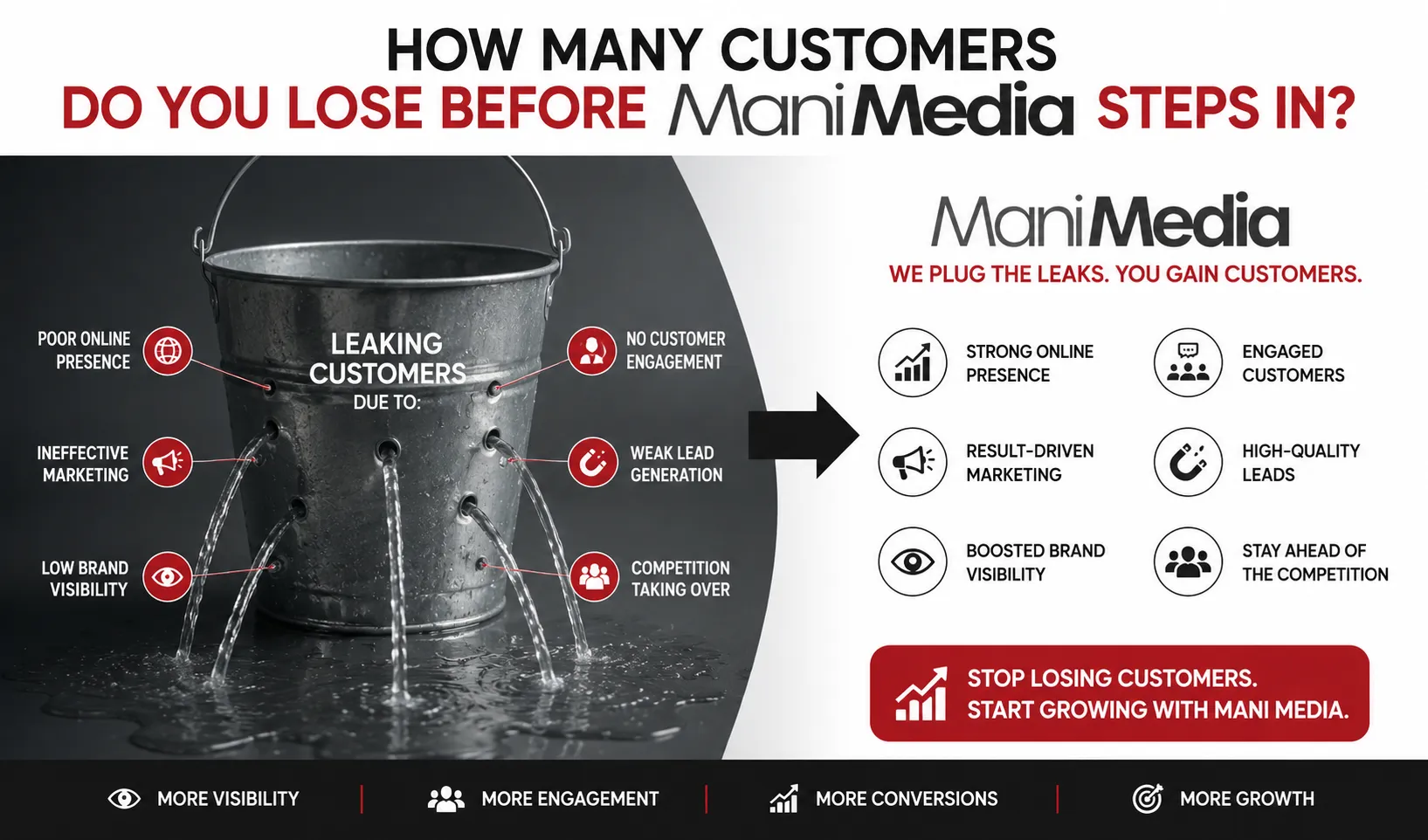

There's a strange blind spot in how most businesses track performance. Owners watch website traffic, ad spend, and conversion rates pretty closely, but almost nobody tracks the customers who searched their name, saw something unclear or outdated, and quietly picked a competitor instead. No complaint. No email. Nothing showing up in any dashboard anywhere. Just a sale that never happened, and nobody ever finds out why.
That invisible leak is a bigger deal than most people assume. It's a big part of why reputation management has turned into such a core piece of modern marketing, rather than some afterthought bolted onto PR after the fact. Mani Media treats it as part of the same system as its broader marketing work, not a separate service tacked on later, which honestly reflects a shift a lot of serious agencies have quietly made over the past few years. So here's the question worth actually sitting with: how many customers slip away before they ever reach out, and what does it take to close that gap?
Why Don't Lost Customers Ever Say Anything?
Most people don't complain when they choose not to buy; they just move on. A few things tend to cause that quiet exit.
- A quick search turns up outdated business hours or an old address, and they assume the business isn't reliable
- A handful of old negative reviews sit at the top of results, even if they've since been resolved
- Inconsistent information across platforms makes the business look disorganized
- No recent reviews at all, which reads as inactive even if the business is thriving
None of these moments generate a support ticket. They just generate silence, and that silence is exactly why this kind of loss tends to go unnoticed for so long, sometimes for years.
What Actually Shapes a First Impression Online?
Before someone ever calls or visits, they've usually already formed an opinion without realizing it happened. That opinion gets built from a mix of things.
- Where the business shows up in search results
- Star ratings, and how recent the most visible reviews actually are
- Whether business details look consistent across every platform someone checks
Rarely does one bad review sink a decision by itself. It's usually a pattern, small inconsistencies stacking up until the whole picture just feels a bit off. Reputation work exists to manage that pattern directly instead of reacting to individual complaints one at a time as they trickle in.
How Does This Connect to Regular Marketing?
Running ads or SEO campaigns to bring in new customers only works if what people find once they get curious actually holds up. Sending traffic toward a business with a messy, outdated online presence is a bit like advertising a store and leaving the front window dirty. Mani Media builds its campaigns with that connection in mind, pairing marketing work with reputation oversight so the traffic being generated doesn't quietly leak out the moment someone checks reviews or searches the business name. Treating both as one system, instead of two separate jobs handled by different people, tends to protect the return on whatever's actually being spent to bring people in.
Visible vs Invisible Customer Loss
| Type | Visible Loss | Invisible Loss |
| Signal | Complaint, refund, cancellation | No signal at all |
| Where it happens | After a purchase | Before first contact |
| Ease of tracking | Shows up in support data | Rarely shows up anywhere |
| Fix | Direct customer service response | Ongoing reputation and consistency management |
The second column is the harder one to deal with, mostly because it's invisible by nature. Fixing what you can't see takes a proactive system, not a reactive one, and that's a much harder mindset shift than it sounds.
What Can a Business Actually Do About It?
- Audit search results for the business name at least once a quarter
- Keep hours, addresses, and contact details consistent across every platform
- Respond to reviews, positive and negative, so the presence looks active
- Address outdated negative content instead of hoping it fades on its own
Pro Tip
Search your own business name from a private browser window every so often, the way a stranger would. Logged-in searches are personalized and won't show you what a first-time customer actually sees.
Final Verdict
The customers a business loses quietly, before ever making contact, are usually the most expensive ones to ignore. Mostly because nobody's tracking them in the first place. Closing that gap takes more than responding to the occasional bad review; it takes treating reputation as part of the same system driving traffic and campaigns to begin with. Mani Media's approach reflects that shift pretty directly, folding reputation oversight into its broader marketing work instead of treating it as a separate fire to put out later. Whatever business you're running, the real question isn't whether you have a reputation problem. It's whether you actually know what people are seeing before they ever pick up the phone.
FAQs
Q1: How much revenue can a poor online reputation actually cost a business?
It varies by industry. Studies consistently show a large share of consumers avoid businesses after seeing negative or inconsistent information online, even without ever reaching out first.
Q2: How often should a business check its online reputation?
At minimum quarterly, though businesses in competitive industries often do better checking monthly.
Q3: Can old negative reviews still hurt a business years later?
Yes, especially if they sit near the top of search results with no recent positive activity to balance them out.
Q3: Is reputation management the same as customer service?
Related, but not the same thing. Customer service responds to individual issues, while reputation management shapes the broader pattern people see before they ever reach out at all.
Q5: Does reputation management help SEO too?
Often, yes. Consistent business information and active reviews tend to support local search visibility alongside traditional SEO work.
Q6: Should a business respond to every single review? Ideally yes, since consistent responses signal an active, attentive business, even when the review itself isn't a good one.
Q7: How long does it take to improve a damaged online reputation?
Depends on how bad the damage is, but consistent effort over a few months usually shows a real, noticeable shift in how a business appears online.
























Sign in to leave a comment.