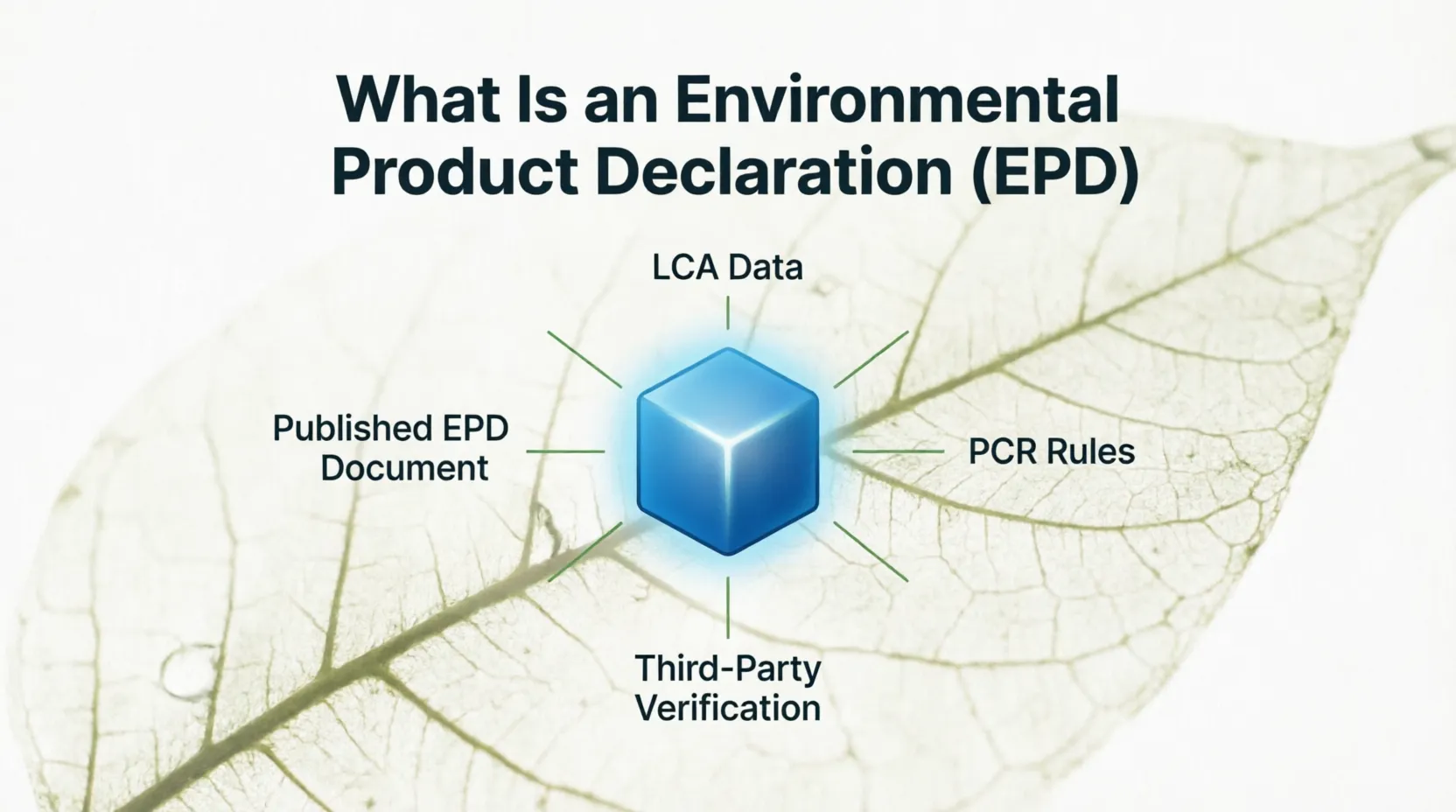

An Environmental Product Declaration (EPD) is a verified report showing exactly how a product affects the environment across its full life cycle. It's built from real production data, follows recognized international standards, and gets checked by an independent verifier before anyone can publish it.
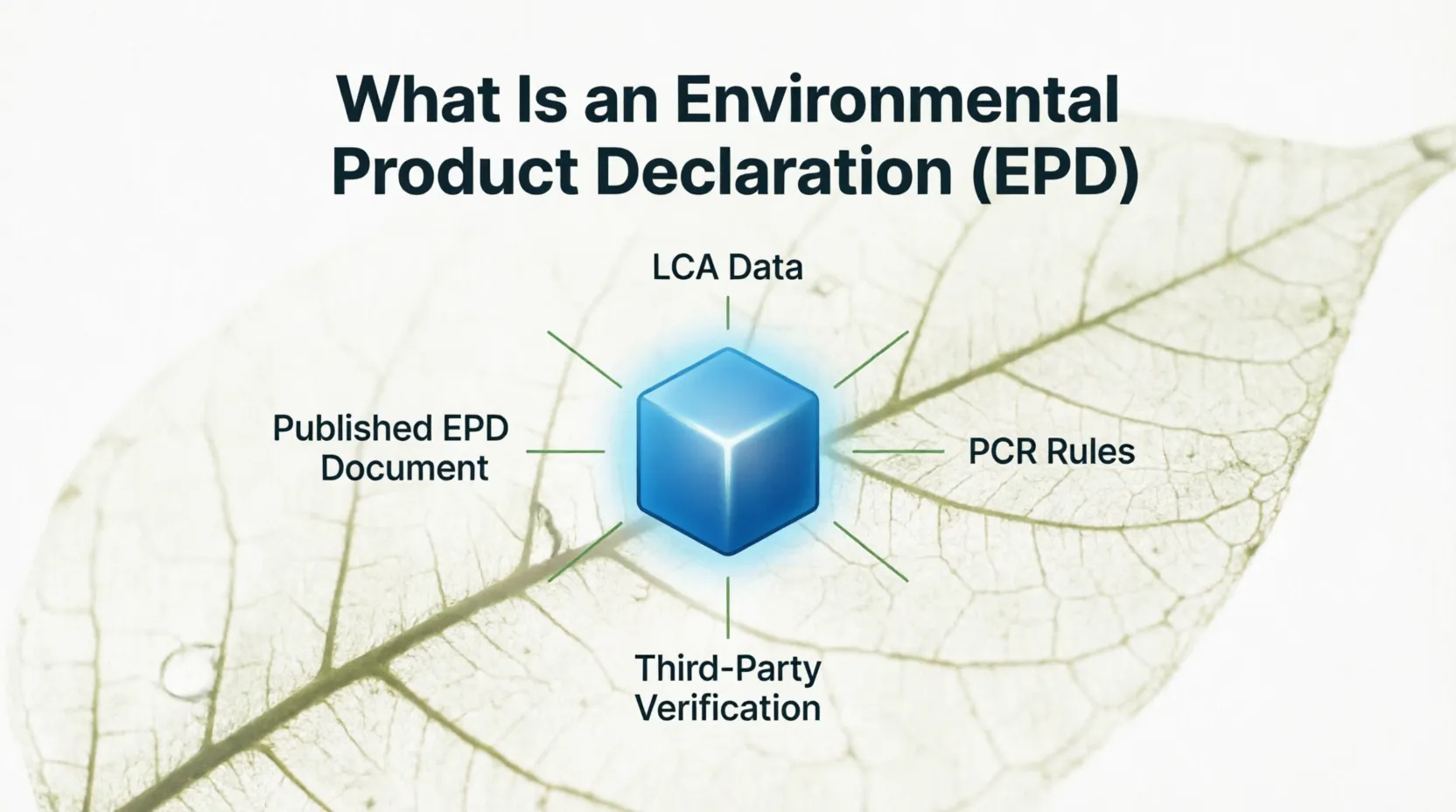
This guide covers what actually sits inside an EPD, how one gets built, and why manufacturers across the GCC and Europe are asking for them more often.
What Is an Environmental Product Declaration (EPD)?
An EPD is a standardized document reporting a product's environmental performance, starting at raw material extraction and ending at disposal. It's grounded in Life Cycle Assessment data and confirmed by independent third-party verification.
Core facts worth knowing:
- EPDs are classified as Type III environmental declarations under ISO 14025
- Construction products typically follow EN 15804 for their structure and content
- Every EPD reports specific, measurable data rather than broad marketing language
- Independent verification checks accuracy before the document ever reaches the public
Picture an EPD as a nutrition label, but for environmental impact instead of calories. It doesn't declare a product good or bad. It simply states the facts.
Why Are Environmental Product Declarations Important?
EPDs matter because they swap vague sustainability language for verified numbers that buyers, architects, and regulators can actually check. That shift now drives real purchasing choices.
Why verified data carries real weight:
- Green building schemes like LEED and Estidama offer credits for verified EPDs
- Procurement teams now list EPDs directly as tender requirements
- They protect manufacturers against greenwashing accusations
- They support carbon disclosure demands across export markets
A manufacturer without an EPD often finds their environmental claims dismissed during competitive bidding. A verified EPD turns those same claims into something buyers can actually confirm.
How Does an EPD Work?
An EPD works by turning raw production data into a standardized, independently verified report through Life Cycle Assessment. That process converts internal numbers into a document outside parties can trust without re-checking it themselves.
The general sequence looks like this:
- The manufacturer collects data covering materials, energy, and production
- An LCA practitioner models environmental impact from that raw data
- The report gets structured according to the relevant PCR and EN 15804
- An accredited, independent verifier reviews the finished document
- A recognized program operator publishes the verified EPD for public use
Once live, buyers and certifiers can cite the EPD directly, skipping the need to independently confirm the manufacturer's claims on their own.
What Information Does an EPD Include?
An EPD includes manufacturer information, product details, LCA results, and a formal verification statement, all arranged in a consistent structure. Nearly every EPD follows this same general layout, no matter the product behind it.
Sections you'll typically find:
- Manufacturer and production facility information
- Product description alongside its declared unit
- System boundaries defining which life cycle stages are covered
- Environmental impact results, including carbon footprint data
- Resource use and waste generation figures
- The applicable PCR reference and formal verification statement
- Validity period and program operator details
This shared structure is precisely what makes EPDs directly comparable across manufacturers and entire product categories.
What Is Life Cycle Assessment (LCA)?
A Life Cycle Assessment is the scientific method underlying every EPD, calculating environmental impact from raw material extraction through final disposal. It's the technical groundwork behind the numbers an EPD later reports.
How LCA connects into the finished EPD:
- LCA collects data across every stage of the product's life, start to finish
- Impact results get calculated using recognized methods and background databases
- Those results feed directly into the EPD's declared impact categories
- Without a completed LCA, there's no real foundation for an EPD at all
An EPD is essentially the public-facing summary of a much deeper technical LCA study underneath it. A weak LCA produces an unreliable EPD, every single time.
What Are Product Category Rules (PCR)?
Product Category Rules are the specific guidelines dictating exactly how an LCA and EPD must be built for a particular product type. They exist so EPDs within the same category stay genuinely comparable.
Why PCRs carry so much weight:
- They define the declared unit, system boundaries, and required indicators
- Almost every product category, from steel to furniture, has its own dedicated PCR
- PCRs get updated periodically to reflect new methods and evolving standards
- An EPD built without following the correct PCR simply won't clear verification
Getting the right PCR selected early is one of the most important decisions in the whole EPD journey.
ISO 14025 Explained
ISO 14025 is the international standard defining Type III environmental declarations, the exact category EPDs sit under. It establishes the ground rules every EPD program has to follow.
What this standard actually demands:
- Declarations must be grounded in genuine Life Cycle Assessment data
- Every declaration must pass through independent, third-party verification
- Information must be presented in a way that supports fair comparison
- Program operators must apply consistent rules across every declaration issued
This standard is exactly why an EPD holds more credibility than a general sustainability statement on a product's packaging.
EN 15804 Explained
EN 15804 is the European standard setting core rules specifically for construction product EPDs. It's the reference point most building material manufacturers work directly against.
Key facts about EN 15804:
- It defines which life cycle modules a construction product EPD must report
- The current edition, EN 15804+A2, became mandatory for new EPDs starting July 2022
- It stays aligned with broader international standards to support global comparison
- Most European green building certification systems reference it directly
For manufacturers chasing European construction contracts, EN 15804 compliance isn't optional. It's simply the entry requirement.
Industries That Benefit from EPDs
Manufacturers across construction, materials, and industrial sectors all benefit from EPDs, particularly those targeting green building work or export markets. The need spreads well beyond one narrow industry.
Industries that lean on EPDs regularly:
- Steel and structural metal manufacturers
- Cement and concrete producers
- Glass and glazing companies
- Aluminium and metal fabrication businesses
- Ceramics and tile manufacturers
- Paints, coatings, and chemical producers
- Furniture and wood product makers
- HVAC and electrical equipment manufacturers
- Packaging producers
Any manufacturer with sights set on green building projects or European buyers should expect an EPD request eventually, regardless of their exact sector.
Step-by-Step EPD Development Process
Building an EPD moves through a defined sequence, running from data gathering to public registration. Each step depends directly on the one that came before it.
- Select the applicable PCR for your exact product category
- Collect production data spanning materials, energy, and processes
- Conduct the Life Cycle Assessment using recognized methods and databases
- Draft the EPD report in line with EN 15804 or the applicable standard
- Submit for third-party verification through an accredited, independent verifier
- Register and publish the EPD with a recognized program operator
For a full regional walkthrough of this exact process, see How to Get an Environmental Product Declaration in the UAE.
Benefits of Environmental Product Declarations
EPDs deliver commercial, environmental, and marketing value that reaches across a manufacturer's whole business. The payoff goes well past basic regulatory compliance.
Value delivered in key areas:
- Commercial – strengthens tender bids and satisfies buyer requirements
- Environmental – reveals genuine opportunities to reduce real impact
- Marketing – gives sustainability messaging verified backing
- Export – opens the door to European and international markets
- Tender qualification – directly meets green procurement criteria
- Competitive advantage – separates certified products from uncertified competitors
For exporters, an EPD often ends up being the deciding factor in landing European contracts. See How GCC Exporters Can Access European Markets Using EPDs for a closer look at that advantage.
Common Challenges and Mistakes
Manufacturers often run into data gaps, PCR confusion, and unrealistic timelines while building their first EPD. A short list of recurring mistakes explains most of the delays.
Common problems include:
- Incomplete or inconsistent production data across different sites
- Picking the wrong PCR for the actual product category involved
- Underestimating how long the verification stage genuinely takes
- Treating the EPD as a one-time project instead of an ongoing task
- Confusing a verified EPD with simpler, unverified environmental statements
Bringing in an experienced LCA consultant from the outset avoids most of these problems before they even start.
EPD vs Carbon Footprint
An EPD covers far more environmental ground than a standalone carbon footprint calculation. Carbon footprint reports one figure; an EPD reports many.
Where the real differences show up:
- A carbon footprint usually reports greenhouse gas emissions alone
- An EPD reports multiple indicators, including water use, resource depletion, and waste
- EPDs require third-party verification; standalone carbon footprints often go unverified
- EPDs follow standardized PCRs, which makes direct product comparison possible
A carbon footprint can live inside an EPD as one component, but it never replaces the full document on its own.
EPD vs Environmental Labels
An EPD reports raw data without passing judgment, while environmental labels usually certify or rank a product against a set bar. The two tools do genuinely different jobs.
How that plays out practically:
- EPDs lay out the facts and leave interpretation up to the reader
- Environmental labels, like eco-labels, often apply strict pass/fail rules
- EPDs support detailed comparison; labels support fast, simple recognition
- Many green building systems use EPDs as underlying proof, then add their own labels or credits on top
Both tools bring real value, but they're built to answer different questions for different audiences.
EPD Validity and Renewal
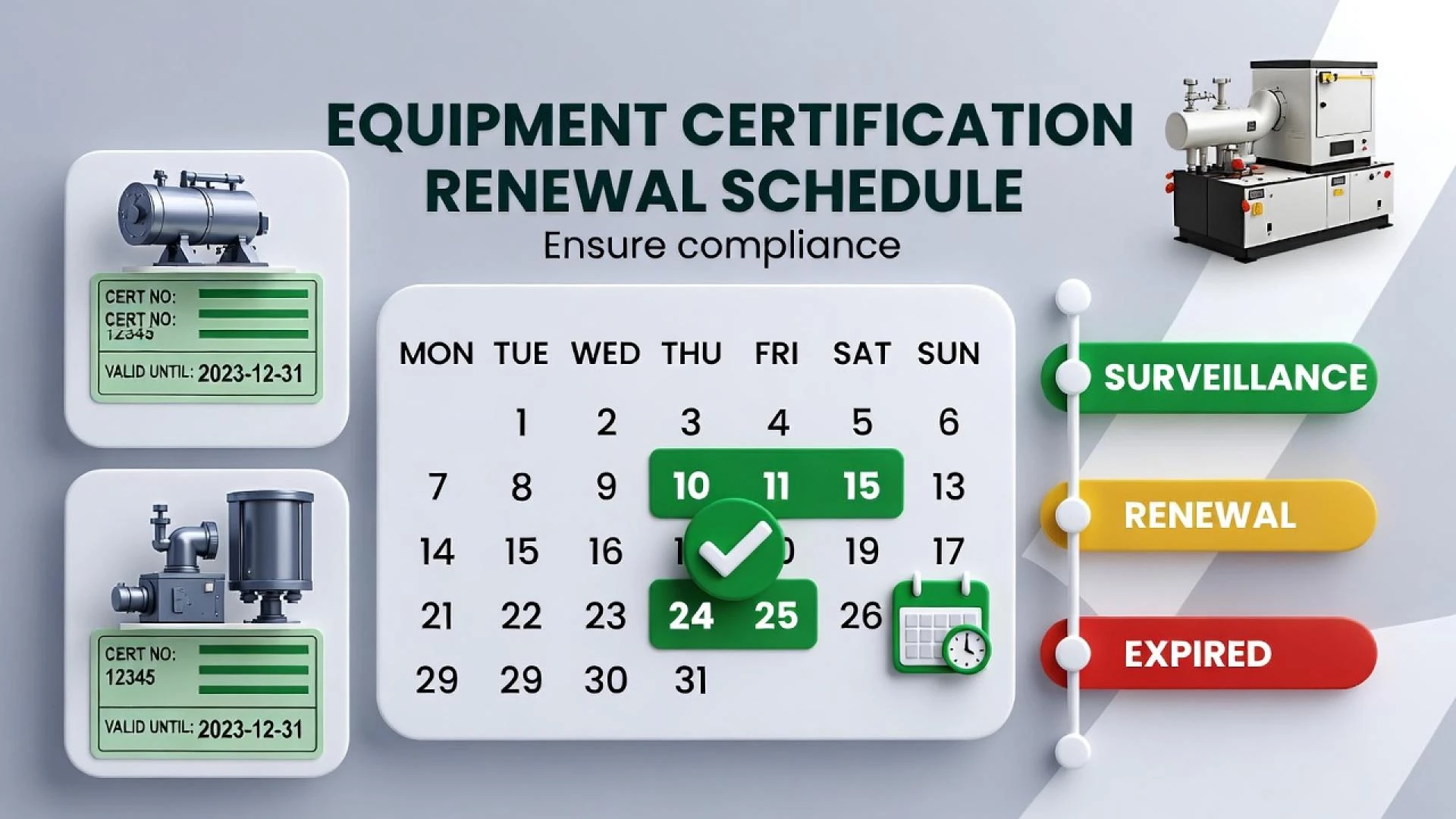
Most EPDs stay valid for five years starting from their verification date, after which renewal becomes necessary. Real product or process changes can force an update sooner than that.
Key points to keep in mind:
- The five-year window begins at verification, not at product launch
- A result that worsens by more than 10 percent can trigger an early update
- Renewal always requires a fresh LCA along with current PCR compliance
- An expired EPD stops supporting tender claims or certification submissions
Best Practices for EPD Development
Manufacturers who get real value from EPDs treat data collection and planning with the same seriousness as verification itself. A handful of consistent habits produce noticeably smoother outcomes.
- Start data collection well before your intended publication date
- Choose an LCA consultant with genuine experience in your specific PCR
- Keep production records organized and current throughout the entire year
- Budget realistically for both initial development and the eventual renewal
- Build your EPD strategy around specific target markets and certifications
Frequently Asked Questions
What is an Environmental Product Declaration?
It's a verified report showing a product's environmental impact across its full life cycle.
Is an EPD the same as a carbon footprint?
No. An EPD reports several environmental indicators, not carbon emissions alone.
Who actually verifies an EPD?
An accredited, independent third-party verifier checks every EPD before it publishes.
How long does developing an EPD usually take?
It typically takes a few months, depending on data availability and complexity.
How long does an EPD remain valid?
Most EPDs stay valid for five years, starting from their verification date.
Do all industries actually need an EPD?
No, but construction, building materials, and export-driven sectors commonly do.
Which standard governs construction product EPDs?
EN 15804 sets the core rules for construction product EPDs across most markets.
What does ISO 14025 cover exactly? It's the international standard defining Type III declarations, including EPDs.
What is a PCR, in simple terms?
Product Category Rules define exactly how an EPD must be structured for a product type.
Can an EPD help earn green building credits?
Yes. Systems like LEED and Estidama award credits for verified EPDs.
Does an EPD replace an eco-label?
No. An EPD reports data; eco-labels typically certify against a fixed standard.
Why do exporters need EPDs specifically?
European buyers increasingly require them for green procurement and market access.
What happens after my EPD expires?
It can no longer support environmental claims in tenders or certifications.
Can smaller manufacturers realistically get an EPD?
Yes. The process scales to businesses of different sizes and product ranges.
Is an EPD mandatory in every market?
Not everywhere, but many regions and green building programs now expect it.
Understanding what an EPD really is builds the foundation for every certification and export decision that follows it. For a full breakdown of the process, read our Complete Environmental Product Declarations Guide 2026. Contact Envirolink for expert support with EPD consulting, verification, and development.






























Sign in to leave a comment.