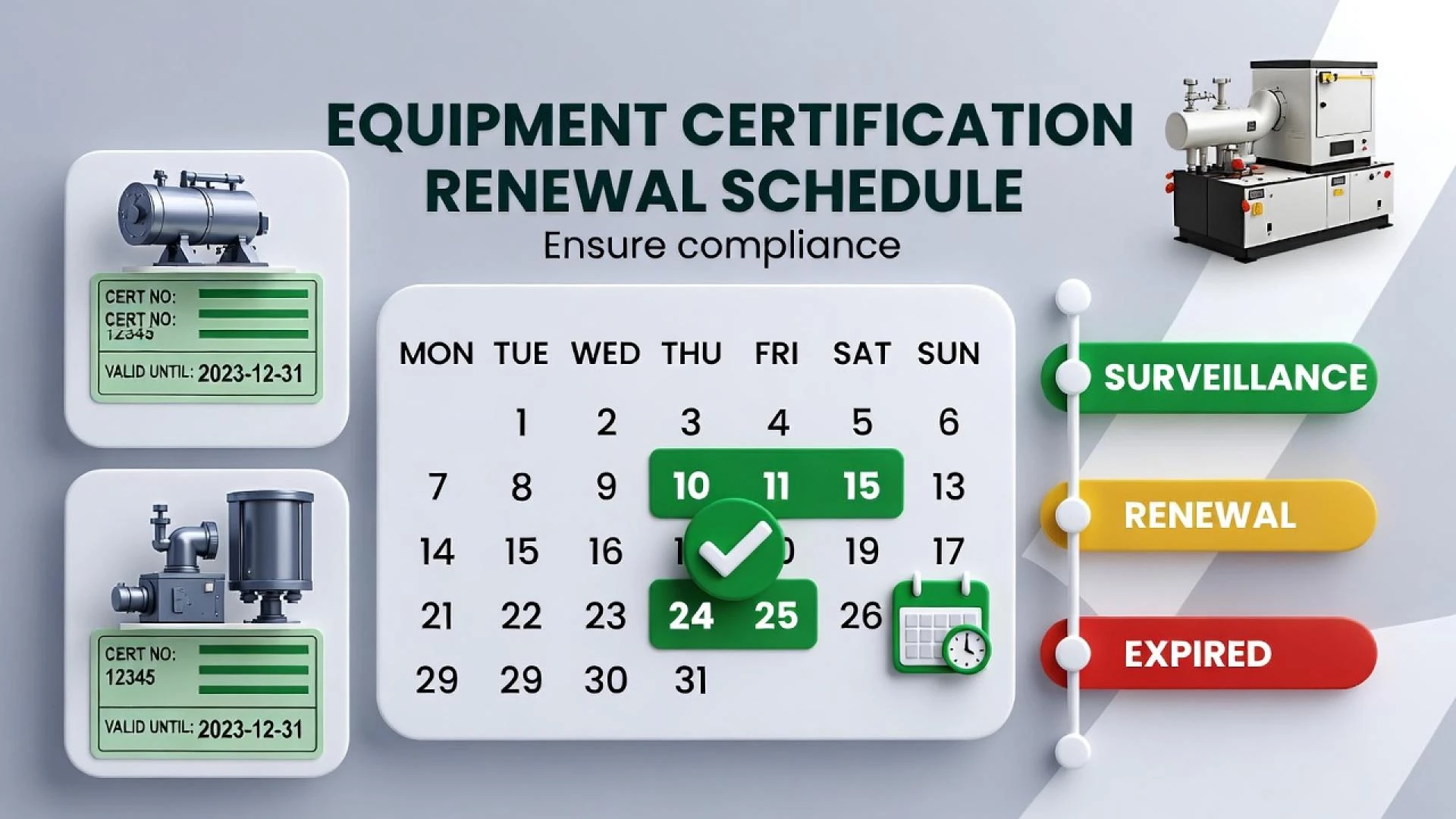

Equipment manufacturers holding IECEx certificates sometimes discover their certifications have lapsed during critical project bids. Procurement managers receive quotations for equipment only to find the referenced certificate expired months ago.
Companies lose market access when customers verify certificates in the IECEx database and find them invalid. Surveillance audits get missed due to poor tracking, triggering certificate suspension.
These situations create embarrassing explanations to customers, rushed recertification efforts, and potentially lost business opportunities. Understanding certificate validity periods prevents these costly surprises.
IECEx certificates don't have fixed expiration dates like a passport, but they remain valid only through continuous compliance. Manufacturers must complete regular surveillance audits, typically annually or every 18 months, to keep certificates active.
Failure to complete these audits on schedule results in certificate suspension or withdrawal. This means your certificate effectively expires if you don't maintain ongoing requirements.
Do IECEx Certificates Have Expiration Dates?
Unlike traditional certifications with printed expiration dates, IECEx certificates remain valid through continuous demonstration of compliance. The certificate doesn't expire on a specific date printed on the document.
Instead, validity depends on maintaining quality systems and completing mandatory surveillance activities. Think of it like maintaining a driver's license—you need to meet ongoing requirements to keep it valid.
The IECEx certification database shows certificate status as "valid," "suspended," or "withdrawn." Valid means everything is current and the certificate works.
Suspended means you've missed surveillance deadlines or have unresolved issues. Withdrawn means permanent revocation requiring complete recertification to restore.
This continuous validity model creates ongoing obligations. You can't just get certified and forget about it for five years like some other certifications.
How Often Are Surveillance Audits Required?
Most IECEx certificates require annual surveillance audits to maintain validity. Some certification bodies allow 18-month intervals for low-risk equipment with excellent compliance histories.
High-risk equipment or manufacturers with previous compliance issues may face more frequent surveillance. Your certification body determines the specific schedule based on risk assessment.
Surveillance audits examine your manufacturing processes, quality documentation, and product testing results. Auditors verify that production still matches your certified design exactly.
They review internal audit records, corrective actions, and any component changes. Everything must align with your original certification specifications.
Missing scheduled surveillance triggers immediate consequences. Certification bodies typically suspend certificates within 30 to 90 days if audits don't happen on time.
Suspension means you can't sell equipment with IECEx claims until you complete the overdue audit. This creates serious problems for ongoing projects and customer relationships.
What Happens During Certificate Renewal?
Beyond surveillance audits, certificates undergo comprehensive renewal every three to five years. These renewal audits resemble your initial certification in depth and scope.
Renewal processes verify your equipment design documentation remains accurate and current. Manufacturing processes get reassessed comprehensively, not just sampled like in surveillance audits.
Certification bodies check if your equipment meets the latest standard versions during renewal. IEC standards evolve with new editions, and your equipment must stay current.
Renewal costs typically run 60 to 80 percent of initial certification fees. You should budget for this expense and plan ahead to avoid surprises.
Failing to initiate renewal on schedule results in certificate withdrawal, not just suspension. Withdrawn certificates require full recertification including retesting and complete documentation reviews.
This recertification process takes much longer and costs significantly more than timely renewals. It's always better to renew on schedule than let certificates lapse.
How Do Design Changes Affect Certificate Validity?
Any modifications to your equipment design require proper assessment before implementation. Changes affecting safety characteristics, protection concepts, or specifications need certification body approval.
You must notify your certification body of proposed changes and receive approval first. Implementing unauthorized modifications can result in immediate certificate withdrawal.
Minor changes like component substitutions with equivalent specs may need only documentation review. Major changes affecting explosion protection typically demand retesting and certificate revision.
Customers discovering unauthorized changes can file complaints triggering investigations. Manufacturers found selling modified equipment without approvals face reputation damage beyond certificate loss.
Proactive change management systems help you navigate modification requirements effectively. Document all proposed changes and consult your certification body before making them.
Understanding IECEx certification training requirements helps your team manage these processes correctly. Proper training prevents costly mistakes and maintains certificate validity.
What Tracking Systems Prevent Certificate Lapses?
Successful certificate management requires robust tracking systems and organizational processes. Implement calendar reminders for surveillance audits at least three months before due dates.
Confirm surveillance schedules with your certification body annually. Schedule audits proactively rather than waiting for reminder notices that might arrive too late.
Assign specific personnel responsibility for certification maintenance. This accountability ensures nothing falls through the cracks during busy periods.
Regular internal audits help identify potential issues before certification body visits. Quarterly or semi-annual internal reviews catch problems early when they're easier to fix.
Maintain communication with your certification body representatives. They can advise on change management, clarify requirements, and provide advance notice of upcoming changes.
Building strong relationships with certification body personnel makes surveillance processes smoother. Good communication also speeds up issue resolution when problems arise.
How Do UAE and KSA Companies Manage Certificate Validity?
Companies in the United Arab Emirates and Saudi Arabia must remain particularly vigilant about certificate validity. Major operators including ADNOC and Saudi Aramco regularly verify supplier certificates before placing orders.
Invalid or suspended certificates discovered during verification create significant problems. Projects may reject equipment shipments and suspend supplier qualifications pending recertification.
These consequences extend beyond individual transactions, damaging long-term business relationships. In competitive markets, certificate lapses can quickly result in lost market share to competitors.
UAE and Saudi procurement teams should verify certificate validity before placing orders. The IECEx online database provides real-time status information enabling quick verification.
Manufacturers serving these markets must maintain certificate validity as a non-negotiable requirement. The competitive industrial landscapes mean certificate problems create immediate competitive disadvantages.
Companies should implement automated tracking systems that alert multiple personnel about upcoming deadlines. Redundant notification systems prevent single points of failure in certificate management.
Key Takeaway
- IECEx certificates don't expire on fixed dates but require continuous compliance through surveillance audits
- Most certificates need annual or 18-month surveillance audits to maintain valid status
- Comprehensive renewal assessments occur every 3-5 years at 60-80% of initial certification costs
- Missing surveillance deadlines results in certificate suspension within 30-90 days
- Design modifications require certification body approval before implementation
- Withdrawn certificates require complete recertification with testing, not just renewal
- UAE and KSA operators rigorously verify certificate validity before approving purchases
- Robust tracking systems and assigned personnel responsibility prevent costly certificate lapses
- Proactive management maintains market access and prevents competitive disadvantages
Need help establishing systems to maintain your IECEx certification validity? Extrainings offers ongoing support services including compliance tracking, internal audit training, and renewal preparation assistance that keep your certificates valid and your business competitive.


























Sign in to leave a comment.