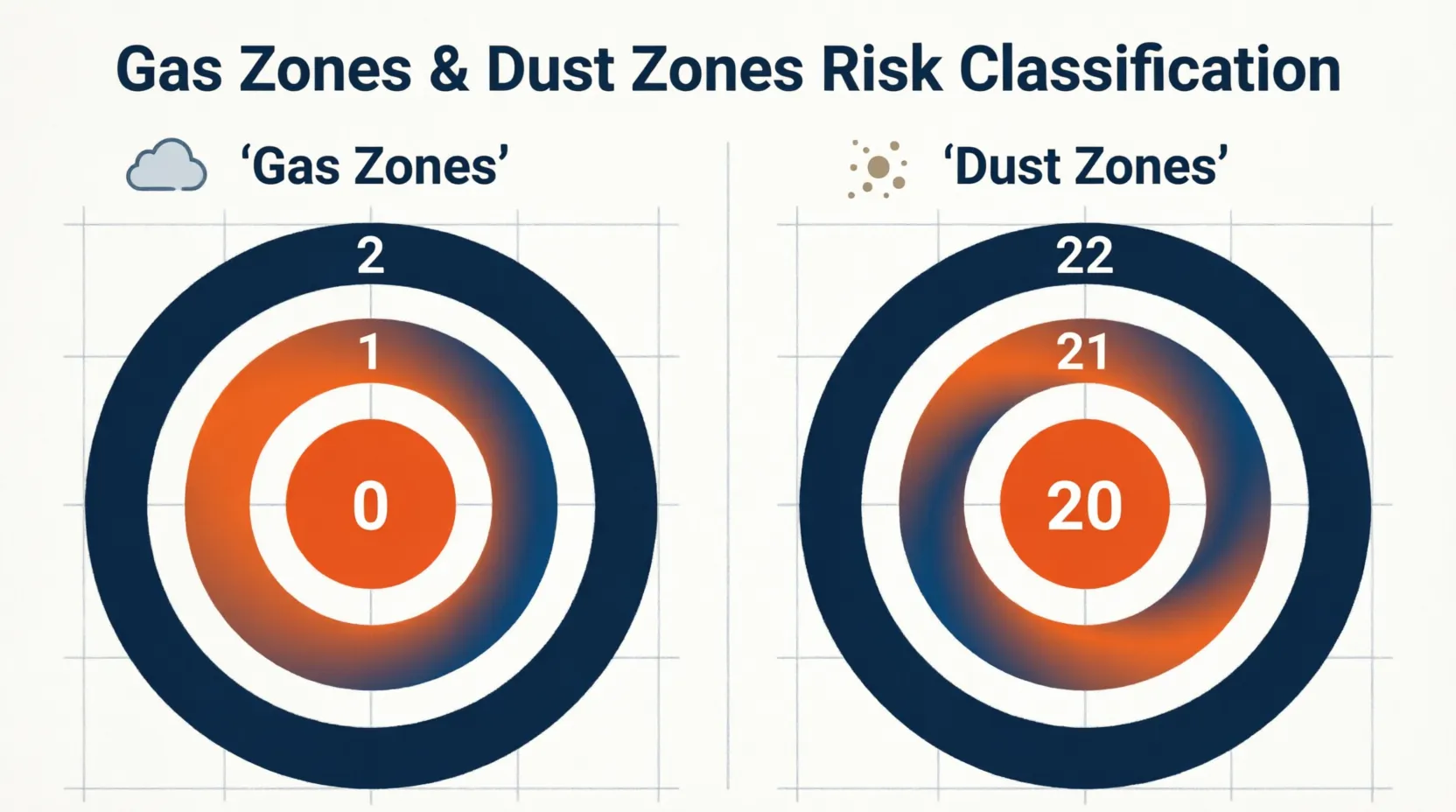

Hazardous Area Zones Explained: Zone 0, Zone 1, Zone 2, Zone 20, Zone 21, and Zone 22 in IECEx
Hazardous area zones classify locations where explosive gases, vapors, or dust may exist. IECEx uses this classification to help engineers select equipment based on how likely and how long that exposure lasts.
This guide breaks down every zone, how they connect to EPL and equipment selection, and where classification mistakes tend to happen.
What is Hazardous Area Zone Classification?
Zone classification is a system rating locations by how often an explosive atmosphere is present. It's the starting point for every equipment selection decision in hazardous areas.
Three points define it:
- Definition – a scale describing exposure frequency and duration, not gas type or temperature
- Purpose – determines the minimum protection level equipment must provide
- Importance in IECEx – every certified product references zone suitability directly on its marking
Zone answers one specific question: how often is this location actually dangerous? Everything else, gas group, temperature class, EPL, builds on that answer.
Why Does IECEx Use Zone Classification?
IECEx uses zones because explosion risk isn't the same everywhere on a site. A tank interior and a nearby walkway need very different equipment protection.
Why this system matters:
- Explosion risk management – matches protection level to actual exposure likelihood
- Equipment selection – gives engineers a starting filter before checking gas group or temperature
- Safety compliance – required documentation for hazardous area installation approval
- Installation planning – helps design teams map equipment needs across an entire facility
Without zone classification, every location on site would need the highest possible protection level. That's expensive, unnecessary, and impractical at scale.
Gas Hazardous Area Zones Explained
Gas zones, Zone 0, Zone 1, and Zone 2, classify locations by how often explosive gas or vapor atmospheres occur. Zone 0 represents constant exposure; Zone 2 represents rare, brief exposure.
| Zone | Description | Typical Condition |
|---|---|---|
| Zone 0 | Explosive atmosphere present continuously or for long periods | Inside storage tanks, process vessels |
| Zone 1 | Explosive atmosphere likely during normal operation | Areas near pumps, valves, loading points |
| Zone 2 | Explosive atmosphere unlikely, occurring only briefly | Areas near Zone 1 boundaries, general plant space |
Zone 0 demands the strictest equipment. Zone 2 allows more flexibility, since exposure is rare and short when it happens at all.
Dust Hazardous Area Zones Explained
Dust zones, Zone 20, Zone 21, and Zone 22, follow the same logic as gas zones but apply to combustible dust atmospheres. Zone 20 represents constant dust exposure; Zone 22 represents rare, brief exposure.
| Zone | Description | Typical Condition |
|---|---|---|
| Zone 20 | Combustible dust cloud present continuously or for long periods | Inside dust collection vessels, mixing equipment |
| Zone 21 | Combustible dust cloud likely during normal operation | Areas near dust handling and transfer points |
| Zone 22 | Combustible dust cloud unlikely, occurring only briefly | General areas near dust-generating equipment |
Grain silos, flour mills, and sugar processing plants rely heavily on these zones. Dust behaves differently than gas, but the classification structure stays consistent.
Review IECEx zones and protection concepts for a deeper breakdown of how zone classification pairs with specific protection methods.
Zone 0 vs Zone 1 vs Zone 2: Key Differences
The three gas zones differ mainly in exposure frequency and required equipment protection. Zone 0 demands the highest protection; Zone 2 allows the most flexibility.
| Factor | Zone 0 | Zone 1 | Zone 2 |
|---|---|---|---|
| Gas Presence | Continuous or long-duration | Likely during normal operation | Unlikely, brief duration only |
| Risk Level | Highest | High | Lower |
| Typical Location | Tank interiors, process vessels | Areas near pumps and valves | General plant areas near Zone 1 |
Equipment rated for Zone 0 automatically covers Zone 1 and Zone 2 too. That hierarchy only works in one direction.
Zone Classification vs Equipment Protection Level (EPL)
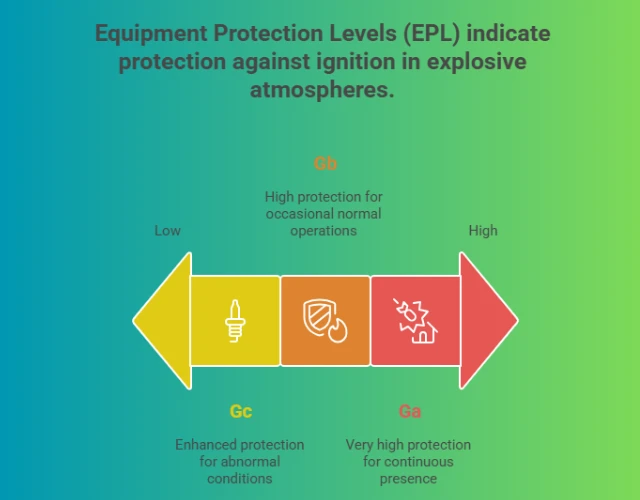
Zone classification directly determines the minimum EPL required for equipment. Each zone maps to a specific protection level, both for gas and dust.
| Zone | Required EPL |
|---|---|
| Zone 0 | Ga |
| Zone 1 | Gb |
| Zone 2 | Gc |
| Zone 20 | Da |
| Zone 21 | Db |
| Zone 22 | Dc |
Higher-rated equipment always covers lower-risk zones. Ga-rated equipment works in Zone 1 or Zone 2, but Gc-rated equipment can never go into Zone 0.
How Engineers Select IECEx Equipment Based on Zones
Engineers treat zone identification as the first step in a full selection process, not the only step. Every other marking element builds on top of it.
Checklist for equipment selection:
- ✓ Identify hazardous zone – confirm the exact zone rating for the installation location
- ✓ Identify gas or dust type – determine exactly what's present at that location
- ✓ Check Gas Group – confirm IIA, IIB, or IIC compatibility with the actual gas
- ✓ Check Temperature Class – confirm surface temperature stays below the gas's ignition point
- ✓ Select correct EPL – match protection level to the zone's exposure frequency
- ✓ Verify Ex marking – confirm every element on the equipment nameplate aligns
Skipping the zone step first makes every later check unreliable. Zone sets the baseline everything else gets checked against.
Real Industrial Example
A project engineer needed an electrical instrument for a Zone 1 area in a petrochemical process unit. Zone 1 requires at least Gb-level protection.
The engineer confirmed the zone classification through the facility's hazardous area drawing. That confirmed Zone 1, ruling out lower-protection Gc-rated instruments immediately.
Next, the engineer checked the instrument's marking: Ex ia IIC T4 Gb. The Gb rating matched Zone 1 exactly, with the gas group and temperature class also confirmed against site conditions.
This sequence, zone first, then gas group, temperature, and EPL, reflects how engineers actually approach selection in the field.
Common Mistakes During Hazardous Area Classification
Most zone-related mistakes come from rushing the identification step or confusing zone with other marking elements. A few recurring errors cause most compliance gaps.
- Wrong zone identification – misreading facility drawings or assuming a location's classification
- Selecting incorrect EPL – choosing Gc equipment for a Zone 1 area requiring Gb
- Ignoring gas properties – matching zone correctly but skipping gas group verification
- Confusing gas zones and dust zones – applying Zone 1 logic to a Zone 21 dust area
- Using non-certified equipment – installing standard equipment without checking Ex marking at all
A maintenance team once replaced equipment in a Zone 21 dust area using a device certified only for gas zones. That mismatch surfaced during a routine safety audit.
Check IECEx certification cost factors if a classification error requires replacing already-installed equipment.
Frequently Asked Questions
What are hazardous area zones?
They're classifications rating how often explosive gas or dust atmospheres occur at a location.
What is Zone 0?
Zone 0 is an area with continuous or long-duration explosive gas presence.
What is Zone 1?
Zone 1 is an area where explosive gas is likely during normal operation.
What is Zone 2?
Zone 2 is an area where explosive gas is unlikely and only brief.
What is the difference between Zone 0 and Zone 1?
Zone 0 has continuous gas exposure. Zone 1 has likely, but not constant, exposure.
Which EPL is required for Zone 1?
Zone 1 requires at least Gb protection, though Ga-rated equipment also qualifies.
Are IECEx zones the same as ATEX zones?
Yes, the zone definitions are technically aligned between IECEx and ATEX systems.
Zone classification sets the foundation for every equipment decision in hazardous areas. Confirm it first, then layer gas group, temperature class, and EPL checks on top. Review the full IECEx Certification process to see how zone data feeds into equipment testing and approval, and explore IECEx certification training to build this skill across your team. Confirm any uncertain marking through IECEx certificate verification before installation.





























Sign in to leave a comment.