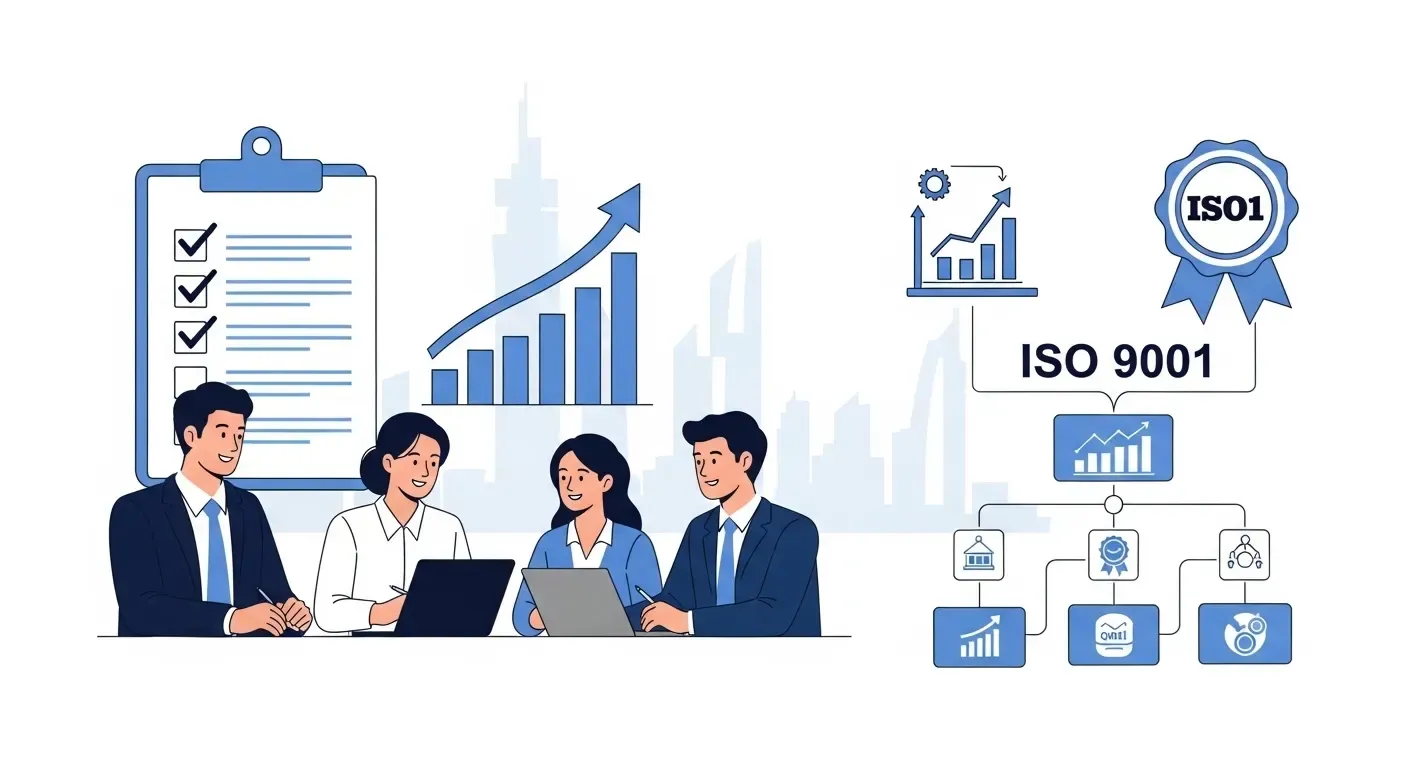

The single most damaging belief a small business owner can hold about ISO 9001 is that it is built for large organisations. It is not. The 2015 revision of the standard was specifically designed to be scalable — meaning a five-person business and a five-hundred-person manufacturer are held to the same principles but not the same volume of paperwork.
1. You Qualify for Contracts That Are Currently Closed to You
Corporate procurement departments and government agencies regularly include ISO 9001 certification as a minimum requirement in their supplier pre-qualification process. Bids from uncertified companies are filtered out before evaluation begins. Certification does not just improve your chances — it gets you in the room.
2. Operations Become Consistent and Repeatable
Small businesses frequently depend on the knowledge and habits of one or two key people. When those people are absent or leave, quality suffers. ISO 9001 requires you to document your processes, which transfers critical knowledge from individuals into the organisation itself. Results become predictable regardless of who is working that day.
3. Customer Complaints Drop Measurably
The standard requires you to track every complaint, identify root causes, and implement corrective actions that prevent recurrence. Most certified SMEs report a significant reduction in complaints within the first twelve months. This directly reduces the cost of service recovery and protects client relationships.
4. Staff Productivity Improves
When employees have clear job descriptions, documented procedures to follow, and regular training, confusion and rework decrease. People work faster and with more confidence when they know exactly what is expected and how to do it. Staff turnover also tends to fall because clarity reduces workplace stress.
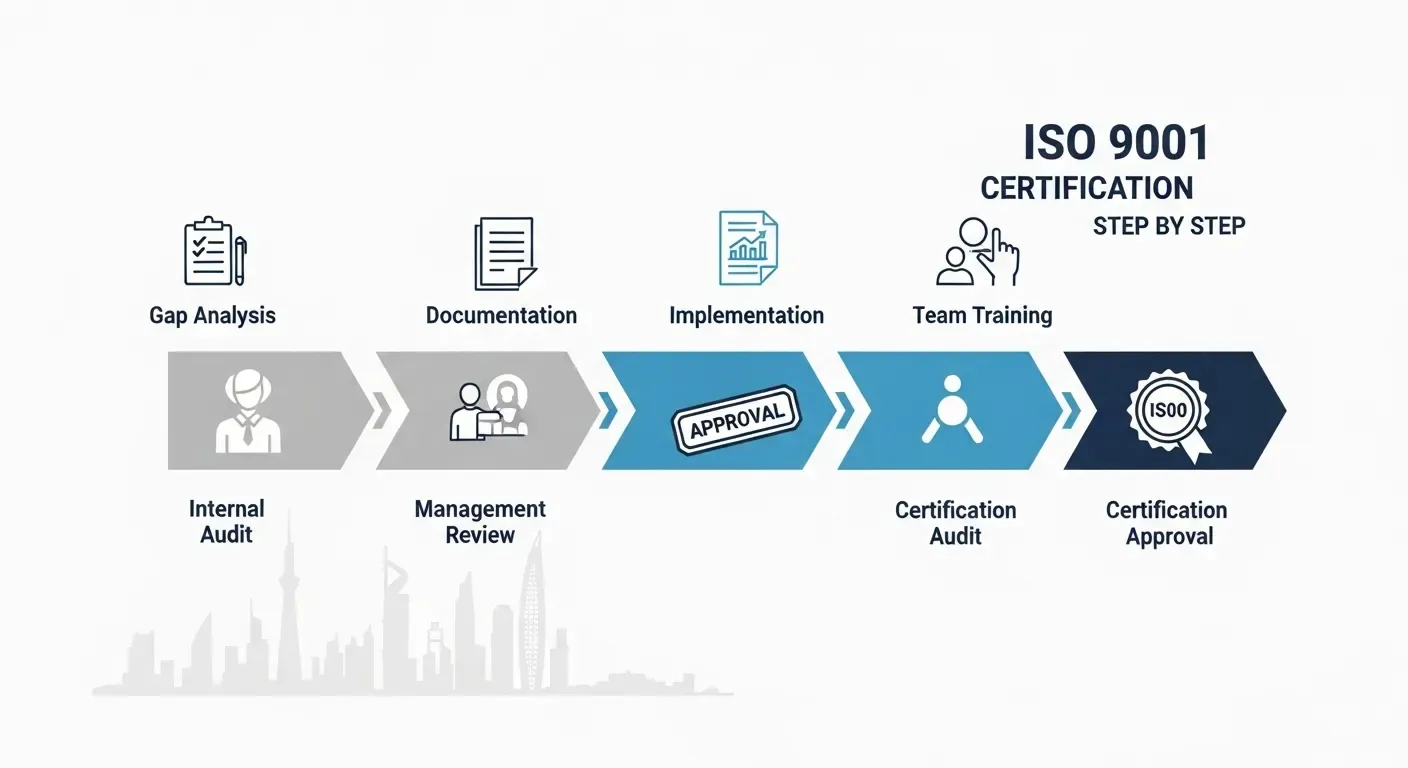
For businesses considering certification for the first time, our ISO 9001 certification process step by step guide walks through exactly what implementation involves.
5. Mistakes Are Caught Before They Reach the Client
ISO 9001 requires a risk-based approach to managing your operations. This means identifying where things can go wrong before they do, and putting controls in place to prevent failures. The cost of catching a defect internally is a fraction of the cost of a client complaint, a returned delivery, or a damaged contract relationship.
6. The Business Becomes Scalable
Growth is the goal of most small businesses. But growth without systems creates chaos. When your QMS is in place, hiring new staff, entering new markets, or taking on larger contracts does not destabilise the business. The documented system absorbs growth rather than cracking under it.
7. Credibility in Competitive Markets
In the UAE, certification carries particular weight. Free zone tenants, government-linked buyers, and multinational corporations all view ISO 9001 as a baseline quality signal. The benefits of ISO 9001 in the UAE and Gulf region are especially pronounced for smaller businesses entering competitive procurement environments.
What Does It Cost vs What Does It Return?
The investment scales to the size of your business. A small team pays significantly less than a large manufacturer. Most SMEs recover the full certification cost within the first year through new contract wins that were previously inaccessible. The long-term return — in client retention, operational efficiency, and market positioning — is compounding.
Myths That Stop Small Businesses From Certifying
Myth: ISO 9001 is too expensive for a small company. Reality: Costs scale with size. A small business pays a fraction of what a large one does. Myth: We need a quality manager to implement it. Reality: Your operations manager or a designated team member can run the QMS with proper guidance. Myth: It is just a box-ticking exercise. Reality: When implemented properly, it genuinely changes how a business operates.
Need expert ISO support? Contact Global ISO Certificates: https://globalisocertificates.com/contact-us/



























Sign in to leave a comment.