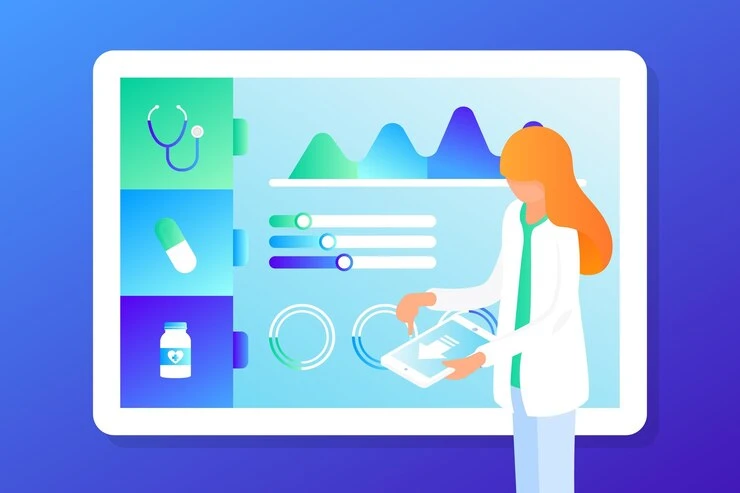

Navigating Healthcare’s Digital Challenges in 2025
Healthcare in 2025 is witnessing groundbreaking innovations, yet not without its challenges. Integrating advanced technologies like medical software development services and digital twins in healthcare presents hurdles such as data security, system interoperability, and resource optimization. Despite these obstacles, these advancements are redefining diagnostics, treatment, and operational workflows, paving the way for a more efficient and patient-centric future.
What Makes Digital Twins Revolutionary Yet Challenging?
Digital twins, which are virtual replicas of physical systems, have transformative potential in healthcare. However, the challenges of high data fidelity, secure integration, and real-time processing often slow adoption.
Major Applications of Digital Twins in Healthcare
- Personalized Medicine: Digital twins simulate patient-specific treatment responses.
- Surgical Training and Planning: Virtual organs assist surgeons in preparation and practice.
- Hospital Management: Simulated workflows help optimize resource allocation.
Challenges with Digital Twins in Healthcare
- Data Volume and Accuracy: Creating real-time simulations requires massive, accurate datasets.
- Cybersecurity Risks: Protecting sensitive patient information is paramount.
- Integration Complexities: Digital twin technology must align with existing software systems.
The Role of Medical Software Development Services in Tackling Challenges
Medical software development services are key to overcoming the obstacles associated with implementing digital twins and other technologies.
Key Solutions Offered by Software Development Services
- Interoperability Enhancement: Bridging the gap between existing and new systems.
- Robust Cybersecurity: Employing advanced encryption and threat detection.
- AI Integration: Enabling predictive analytics and real-time simulations.
- Scalability: Building software capable of handling growing data and user demands.
Real-World Examples of Success in 2025
- Smart Hospitals: Digital twins simulate hospital workflows, supported by custom software to reduce wait times and optimize resource allocation.
- Chronic Disease Management: Virtual models help predict disease progression and personalize treatment.
- Surgical Precision: AI-driven software and digital twins assist in planning and executing complex surgeries with higher success rates.
Future Trends: What’s Next for Healthcare in 2025?
As healthcare technology evolves, these areas are expected to expand:
- AI-Powered Diagnostics: Faster, more accurate identification of diseases.
- IoT Integration: Connecting devices to enhance patient monitoring.
- Blockchain for Security: Safeguarding data in an interconnected ecosystem.
Conclusion: A Digital Renaissance in Healthcare
The synergy between medical software development services and digital twins in healthcare in 2025 represents a turning point for the industry. Although challenges persist, the potential benefits in precision, efficiency, and patient outcomes are undeniable. As healthcare providers continue to innovate, these technologies will become indispensable tools for navigating the complexities of modern medicine.
FAQs
1. What are digital twins in healthcare?
Digital twins are virtual replicas of physical entities, such as organs or workflows, used to simulate and predict outcomes in healthcare settings.
2. How do medical software development services contribute to healthcare?
These services create custom software solutions to streamline patient care, enhance operations, and improve data security.
3. What are the biggest challenges of implementing digital twins in healthcare?
Challenges include managing large data volumes, ensuring cybersecurity, and integrating with existing systems.
4. Can digital twins improve patient outcomes?
Yes, by enabling personalized treatments and predictive diagnostics, digital twins can significantly enhance patient care.
5. How does AI play a role in medical software development?
AI is integrated into software to enable predictive analytics, automate processes, and enhance decision-making.
6. What is the future of healthcare technology?
The future includes advancements in AI, IoT, blockchain, and further integration of digital twin technology to transform patient care.




























Sign in to leave a comment.