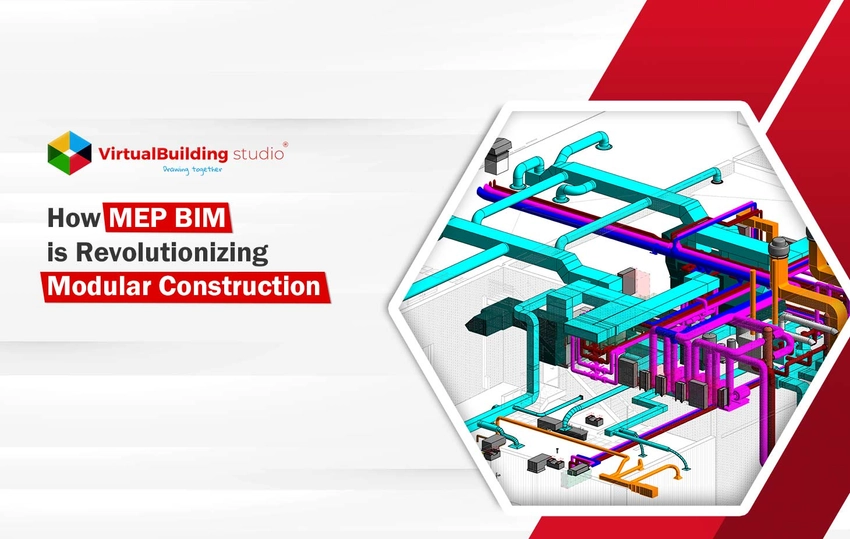

The construction industry is rapidly evolving, and modular construction is emerging as a game-changer for faster, more efficient, and sustainable building solutions. This off-site construction method involves prefabricating building components in a controlled environment and assembling them on-site, drastically reducing project timelines and minimizing waste. With its growing adoption in residential, commercial, and healthcare projects, modular construction is reshaping how buildings are designed and delivered.
However, the success of modular projects depends heavily on seamless coordination and precision planning, especially when it comes to complex building systems. This is where mechanical, electrical, plumbing, and fire protection (MEPF) BIM plays a critical role. By integrating MEPF systems into a digital 3D model, teams can detect clashes early, streamline prefabrication, and ensure flawless on-site assembly.
This article explores how MEP BIM modeling services are revolutionizing modular construction by enhancing efficiency, improving accuracy, and enabling real-time collaboration among stakeholders.
From BIM coordination services to intelligent detailing for prefabrication, BIM modeling services are driving the next phase of industrialized construction. Discover the value of MEPF BIM modeling and how BIM for Modular Construction is setting new standards in project delivery.
Understanding MEP BIM in Modular Construction
MEPF BIM modeling refers to the use of cutting-edge BIM processes to design, coordinate, and document Mechanical, Electrical, Plumbing, and Fire Protection systems in a digital 3D environment. These intelligent models integrate spatial, technical, and performance data to represent real-world systems within a building. In modular construction, where precision and coordination are critical, MEPF BIM becomes the backbone of successful project execution.
Traditional 2D CAD workflows lack the spatial intelligence and clash-detection capabilities required for off-site prefabrication. In modular builds, even minor misalignments in MEP components can cause costly rework or delay during on-site assembly.
Legacy methods also struggle to keep up with the dynamic coordination needed between architectural, structural, and MEP trades in a factory-controlled setting. BIM modeling services offer a transformative shift by enabling real-time clash detection, system routing optimization, and integration with fabrication tools.
Engineers can design MEP systems within precise module boundaries, simulate connections, and validate installations before they reach the site. With BIM coordination services, all stakeholders work from a single source of truth, ensuring prefabricated modules are fully coordinated and installation-ready.
As modular construction accelerates, MEP BIM Modeling Services provide the technical accuracy and collaboration essential to meet the demands of industrialized building delivery.
Success Story
 Construction Firm Expands Team by 30 Architects & Engineers in 2 Months
Key Benefits of MEP BIM Services for Modular Construction
Modular construction thrives on precision, speed, and efficiency - qualities that traditional project delivery methods often struggle to provide, especially when integrating complex MEP systems. MEP BIM Modeling Services bridge this gap by offering data-driven workflows that align perfectly with the demands of off-site construction.
Here’s how MEP BIM enhances modular project outcomes:
Enhanced Coordination & Clash Detection
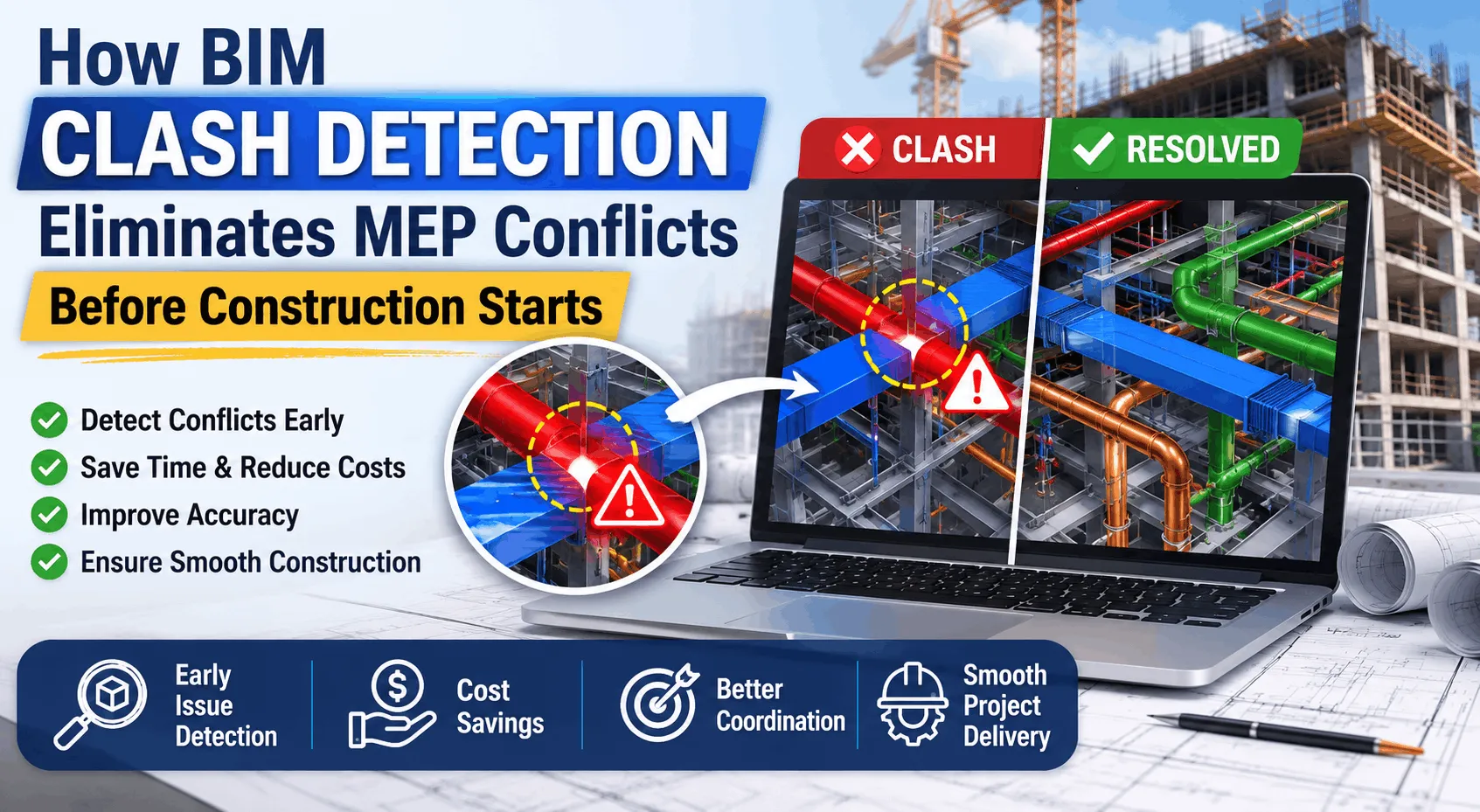
Through BIM coordination services, all MEPF systems are modeled in a shared 3D environment, allowing early identification and resolution of clashes between HVAC, electrical conduits, piping, and structural elements. This eliminates on-site conflicts and ensures each prefabricated module integrates seamlessly during assembly.
Improved Accuracy & Reduced Rework
With MEPF BIM modeling, engineers can model systems with high precision, factoring in clearances, material specs, and real-world constraints. This minimizes design inconsistencies and greatly reduces field rework, saving time and resources during construction.
Streamlined Prefabrication & Offsite Construction
Accurate BIM models serve as fabrication-ready blueprints. Each duct, pipe, and cable tray is modeled to exact dimensions, enabling manufacturers to prefabricate modules with confidence. This supports just-in-time delivery and fast-tracked installation on site.
Cost & Time Savings
By optimizing system layouts and minimizing design errors, BIM Modeling Services contribute to significant cost and time savings. Modules are built and installed faster, with fewer material wastages and change orders, ultimately enhancing project profitability.
Better Collaboration Among Stakeholders
BIM for Modular Construction promotes integrated workflows where architects, engineers, and contractors collaborate on a centralized model. This ensures everyone is aligned with the latest design intent, reducing communication gaps and enhancing decision-making.
Explore More about How MEP BIM is Revolutionizing Modular Construction





















![[Download] Residential ADA Checklist: A Step-by-Step DIY Compliance Guide](https://writeupcafe.com/data/post/1568969/454b4451af4dff3a1b61c43fb23b812b.jpg.webp)
Sign in to leave a comment.