
Micro rings have become one of the most recognised methods for attaching hair extensions in a way that avoids heat and glue. Favoured for their discreet finish and flexible movement, this technique allows extensions to sit naturally alongside existing hair. Understanding how micro rings work, how they are applied, and what makes them effective helps explain why they remain a popular choice in professional settings.
This method is based on small, lightweight rings that secure extension strands to sections of natural hair. When fitted correctly, they offer a comfortable, long-lasting solution for adding length and volume.
What Are Micro Rings?
Micro rings are tiny metal or silicone-lined loops designed to hold extension hair in place. They are small enough to sit close to the scalp without being visible when the hair falls naturally. The silicone lining often found inside the ring helps cushion the natural hair and improves grip, reducing slippage.
Because micro rings do not rely on adhesives or heated tools, they are often described as a more mechanical method of attachment. The extension strand is held securely by pressure rather than bonding agents, which can appeal to those who prefer a technique that avoids chemicals.
Preparing the Hair for Application
Before micro rings are fitted, the natural hair must be clean and dry. Product build-up can make it harder for the rings to hold securely, so a gentle cleanse beforehand creates the best base. The stylist will then brush through the hair to remove tangles and ensure smooth sectioning.
Careful sectioning is crucial. The hair is usually divided horizontally, starting at the nape of the neck and working upward. This structured approach ensures even distribution of the extensions and helps the finished style look balanced from all angles.
Threading the Hair
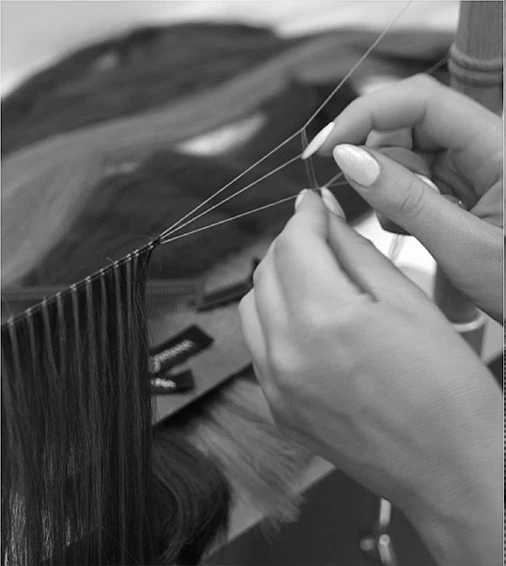
The first step in attaching micro rings involves threading a small section of natural hair through the ring. A special loop tool is often used to pull the hair neatly through the tiny opening. The amount of natural hair included in each section is important. Too much hair can make the ring bulky, while too little may not provide enough support.
Once the natural hair is through the ring, the tip of the extension strand is inserted alongside it. Both the extension and the natural hair now sit inside the ring together.
Securing the Ring
After positioning, the stylist slides the ring upward so it sits a short distance from the scalp. It should be close enough to look natural but not so tight that it pulls on the roots. Using professional pliers, the ring is then gently clamped flat. This compression holds the extension and natural hair together securely.
The pressure must be firm enough to prevent slipping but not so tight that it damages the hair. Skilled application ensures the micro rings stay in place while still allowing the hair to move freely.
Building Length and Volume
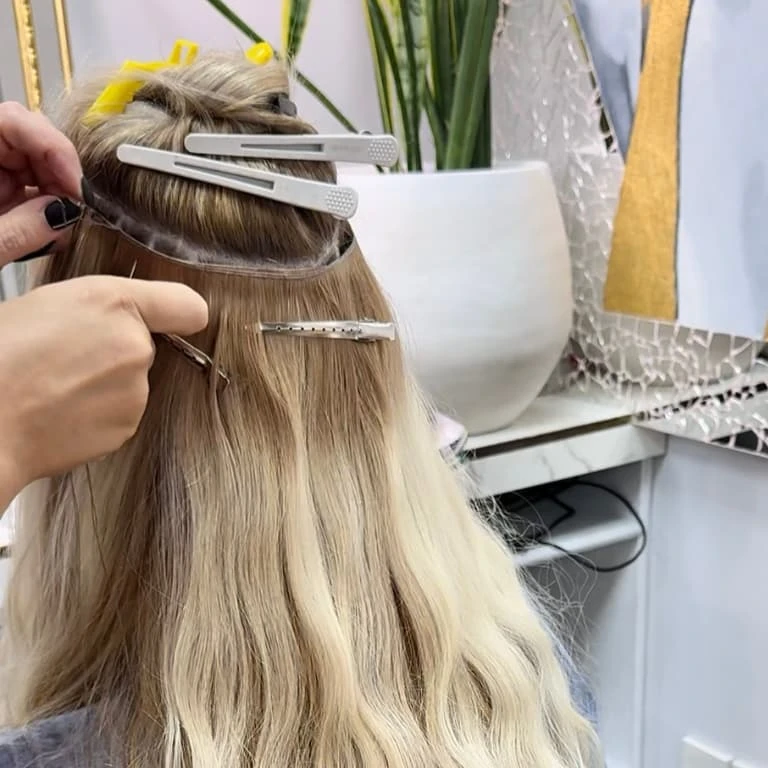
The process is repeated strand by strand across each section of the head. This gradual approach allows the stylist to control where volume and length are added. Extensions can be placed more densely at the back for fullness or more lightly around the sides for a subtle effect.
Spacing is carefully considered. Leaving small gaps between rows ensures the hair does not feel overly heavy and helps the extensions blend seamlessly with natural strands. Proper placement also keeps the micro rings hidden, even when the hair is styled in different ways.
Blending the Extensions
Once all the micro rings are attached, the hair is usually trimmed and shaped. This step is essential for blending the extensions with the client’s own hair. Without a blending cut, the difference in length may look obvious.
Layering softens the transition and helps the hair move as one. After cutting, the stylist may style the hair with waves or a smooth finish to demonstrate how naturally the extensions sit.
Comfort and Movement
One of the reasons micro rings are so widely used is the flexibility they allow. Because the extensions are attached in small sections, they move individually rather than as a single bulky piece. This creates a more natural flow and makes the hair feel lighter.
When applied correctly, micro rings should not cause discomfort. The wearer may notice a slight difference at first simply because of the added hair, but this usually settles quickly. Rings that feel too tight can be adjusted, which is why communication during the fitting is important.
Maintenance and Repositioning
As natural hair grows, the micro rings gradually move further from the scalp. Regular maintenance appointments allow a stylist to open the rings, slide them back up, and clamp them again. This repositioning keeps the extensions looking neat and prevents tangling at the roots.
During maintenance, any strands that have naturally shed can be replaced. Keeping up with these appointments ensures the extensions remain comfortable and continue to blend well.
Daily care also supports longevity. Gentle brushing, careful washing, and avoiding heavy products at the roots all help keep the micro rings secure and the hair in good condition.
Safe Removal
When it is time to remove the extensions, the process is straightforward. The stylist uses pliers to gently open each ring, releasing the extension strand and natural hair. Because no glue or heat is involved, removal is typically simple when done professionally.
Proper removal helps protect the natural hair and prepares it for a break or a new set of extensions if desired.
Micro rings offer a precise and adaptable way to attach hair extensions while maintaining a natural look and feel. Their discreet size, reusable design, and glue-free approach make them a trusted method for adding length and volume. With professional application and consistent care, they can provide a comfortable, realistic enhancement to everyday hairstyles. For those seeking refined techniques and beautifully blended results, specialists such as Tatiana Karelina are often associated with expert use of micro rings in extension
























Sign in to leave a comment.