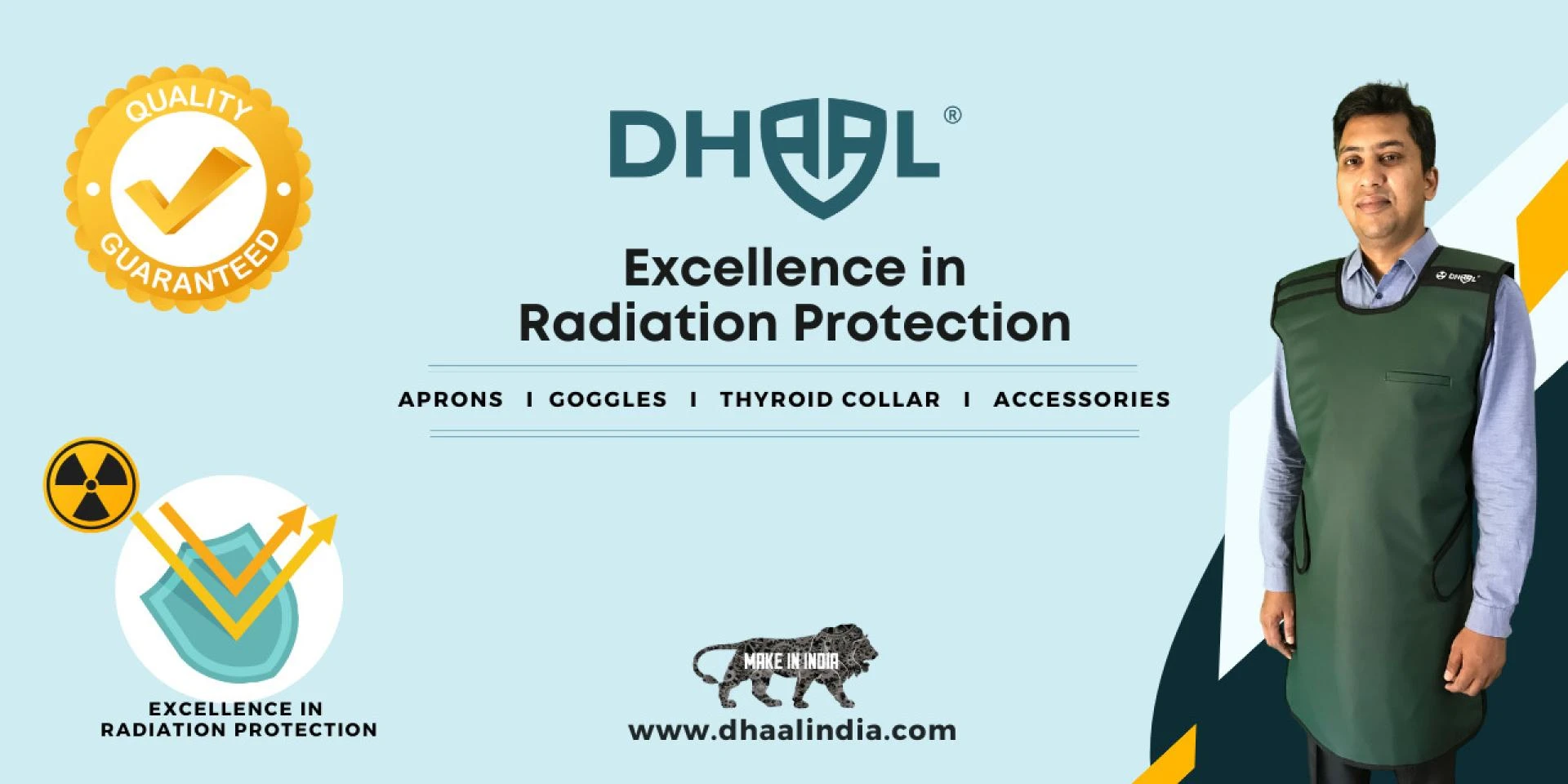
A 0.5 mm thick lead apron is commonly used in radiology for general protection during diagnostic imaging procedures. Here's how it reduces radiation exposure:
Effectiveness in Radiation Reduction:
- Scatter Radiation: A 0.5 mm lead apron typically reduces scatter radiation by about 90-95%. This is particularly effective for protecting healthcare workers and patients from scattered radiation during X-ray and fluoroscopy procedures.
- Attenuation of X-rays: For lower-energy X-rays, the 0.5 mm lead apron absorbs most of the radiation, leaving only a small percentage to pass through. The attenuation factor depends on the energy of the X-rays, but generally, it offers significant protection.
- Energy and Thickness Consideration: The reduction efficiency depends on the energy level of the radiation. Higher-energy radiation, such as that used in CT scans or some fluoroscopic procedures, may be less attenuated by a 0.5 mm lead apron compared to lower-energy X-rays. However, it still provides substantial protection.
Practical Impact:
- Radiation Exposure for Workers: The apron’s main role is to reduce occupational exposure for healthcare workers. A 0.5 mm thick lead apron significantly lowers the risk of radiation exposure, especially when healthcare workers are in close proximity to the patient during procedures like X-rays and fluoroscopy.
- Patient Protection: Although the 0.5 mm Full Over Lap Lead Apron(Wrap Around Lead Vest & Skirt) primarily protects the operator, it also shields the patient from unnecessary radiation exposure to non-target areas.
Conclusion:
A 0.5 mm thick lead apron is highly effective for routine diagnostic imaging, reducing radiation exposure by 90-95% for scatter radiation, which is the primary concern in most procedures. For more intense or higher-energy radiation (like CT or fluoroscopy), the apron still provides substantial protection, but thicker aprons may be required for maximum safety.


























Sign in to leave a comment.