
The dating app industry has grown into a competitive digital space where users expect more than simple profiles and matching. Modern platforms are increasingly focused on personalised experiences, secure communication, intelligent recommendations, and smooth user interfaces. For businesses planning to enter this market, understanding the development process before starting can help create a clearer roadmap.
One of the first things businesses need to consider is the dating app development cost. The overall investment can vary depending on the application's features, design, platform, technology, integrations, and development requirements. A basic dating app with registration, profiles, matching, messaging, and notifications will generally require fewer resources than a more advanced platform with AI-powered recommendations, video calling, subscriptions, verification, and advanced security features.
Important Features of a Dating App
A successful dating platform should focus on features that make the user journey simple and engaging. User registration, profile creation, preference settings, location-based discovery, matching, private messaging, and push notifications are some of the commonly required features.
Safety is equally important. Profile verification, reporting tools, blocking options, moderation, and secure data handling can help create a safer environment for users. Businesses should consider these requirements during the planning stage rather than treating them as additional features later.
The design of the application also plays an important role. Dating apps involve frequent interactions, so users should be able to browse profiles, express interest, match with others, and communicate without unnecessary complexity.
Choosing the Right Technology
Technology selection can have a direct impact on application performance, scalability, development time, and maintenance. Businesses need to select technologies based on their project requirements rather than simply following current trends.
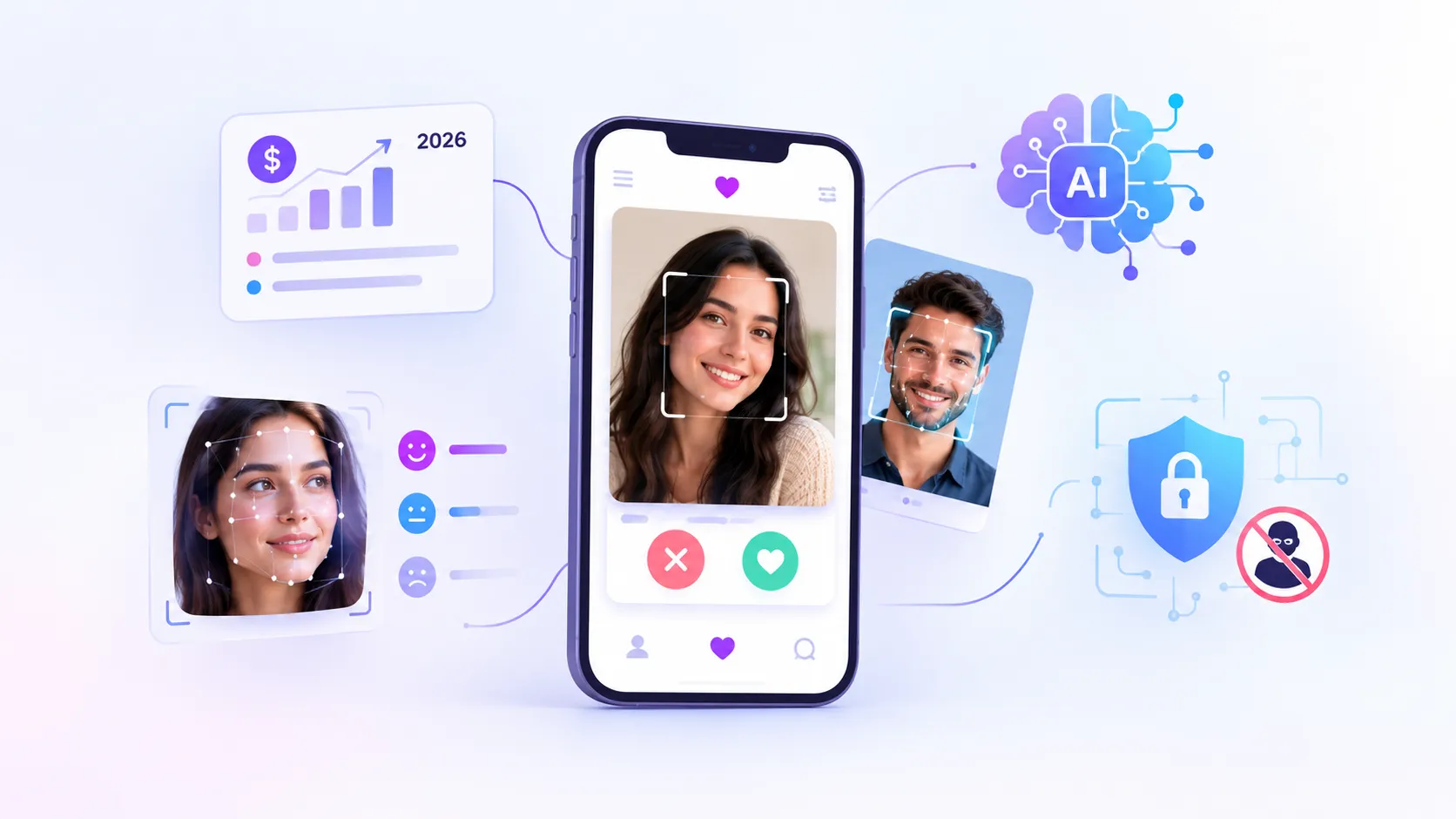
When planning the best tech stack for building a dating app 2026, factors such as platform requirements, expected users, backend architecture, database, security, APIs, and future scalability should be considered.
For mobile development, businesses can choose between native technologies and cross-platform frameworks depending on their requirements. The backend may involve technologies such as Node.js, Python, or Java, while databases and cloud services can be selected according to the application's expected workload.
AI and Personalised Matching
Artificial intelligence is becoming increasingly useful in dating applications. Instead of relying only on basic preferences, AI can help analyse user behaviour and interactions to provide more personalised recommendations.
AI can also be used for profile suggestions, content moderation, suspicious activity detection, and improving the overall matching experience. However, businesses do not necessarily need to introduce complex AI features from the first version. Starting with practical functionality and expanding later can be a more manageable approach.
Exploring Niche Dating Apps
The dating market is not limited to traditional relationship-focused platforms. Businesses can also target specific communities and interests with niche applications. These platforms can offer a more focused experience to a particular audience.
For example, businesses looking to build a dating app around a specific interest can explore concepts such as pet dating. A pet-focused platform could allow owners to create profiles for their pets, discover nearby users, find compatible matches, communicate with other owners, and explore related services.
This type of niche approach can help businesses create a clearly defined product instead of trying to serve every type of dating-app user.
Start With a Clear MVP
Before investing heavily in development, it can be useful to define the core purpose of the application and identify the features needed for the first version. An MVP can include essential functionality such as registration, profiles, discovery, matching, messaging, and basic safety features.
Once the application is launched, user feedback can help identify which additional features are worth developing. Advanced functions such as AI recommendations, video calling, premium subscriptions, and additional integrations can then be introduced as the platform grows.
Final Thoughts
Building a dating application requires careful planning across product design, technology, security, user experience, and long-term scalability. The development budget will depend largely on the complexity and functionality of the platform.
Whether the goal is to create a mainstream dating platform or explore a more focused niche, starting with a clear concept and manageable feature set can provide a strong foundation for future growth.























Sign in to leave a comment.