
A new bag brand rarely starts with every detail figured out. You might have a clear design in mind, a few material references and an idea of who you want to sell to. What is less clear is how much work needs to happen before that idea is ready to become a product.
Some founders assume they can move straight from a sketch to manufacturing. Others spend months refining details before they have even tested a sample. The right amount of product development sits somewhere between those two approaches, and it depends on what you are trying to create.
It Depends on the Bag You Want to Make
Not every handbag requires the same level of development.
A simple canvas tote with minimal hardware and straightforward construction may need fewer development stages than a structured leather handbag with custom fittings, several compartments and a particular shape to maintain.
The complexity of the design matters, but so does the intended use. A bag designed for everyday carrying needs to be considered differently from a small evening bag that will hold only a few essentials.
Before deciding how much development your product needs, be clear about what the bag must do, who it is for and what makes it different from existing products.
Those answers help determine where the development work should focus.
A Strong Idea Still Needs to Be Worked Through
A sketch can communicate the overall appearance of a bag, but it rarely answers every question needed to make it.
How will the bag hold its shape? What materials will work for the design? How should the handles attach to the body? Will the intended closure be practical? How much internal space will remain once the lining and compartments are added?
These details can influence one another.
For example, a founder may want a soft, lightweight handbag with a very structured silhouette. Achieving both may require careful decisions about the outer material, reinforcement and internal construction.
This is where product development becomes more than turning a visual idea into a physical object. It is the process of working through the decisions that allow the design to function as intended.
When Do You Need a Tech Pack?
A tech pack becomes important when the design needs to be communicated clearly to the people developing or manufacturing it.
It can document measurements, materials, colours, construction details, hardware, stitching and other specifications required to reproduce the product.
However, creating a tech pack too early can lead to unnecessary revisions if the design is still changing significantly.
It is useful to establish the main design direction first, then develop the technical documentation as the product becomes more defined. The exact timing depends on the complexity of the bag and how much information the development team needs to begin its work.
The goal is to give the team enough clarity to understand the intended product without treating every early decision as permanent.
Sampling Is Where Assumptions Get Tested
A design may look convincing on screen and still feel different when it becomes a physical bag.
The proportions may be slightly off. A strap may not sit comfortably. The material may be stiffer than expected, or the bag may feel heavier once the hardware and lining are in place.
These are the kinds of issues that a sample can reveal.
For a new brand, the first sample is often less about achieving perfection immediately and more about understanding what needs to change. The next version can then address those issues with a clearer purpose.
Some bags may need only a small number of revisions. Others may require more, particularly when the construction is complex or the original concept relies on specific materials or components.
There is no useful universal number of samples to aim for. What matters is whether the product has been tested against the requirements that matter to the brand.
Don't Develop Every Detail to the Same Level
One of the easiest ways to waste time and budget is to give every design decision equal attention.
Some details have a direct effect on how the bag functions. Others are mainly visual. Both can matter, but they do not always need to be resolved at the same stage.
A handle attachment, for example, affects strength and usability. A decorative detail may be easier to adjust later, provided it does not affect the construction or overall design.
It helps to separate the decisions that are essential to the product from those that can be refined as the design develops.
This does not mean overlooking small details. It means dealing with them in a sensible order.
Your First Bag Should Teach You Something
For a new brand, the first product often establishes more than a starting point for sales. It can help you understand how your design ideas translate into materials, construction, cost and production.
You may discover that a particular material is difficult to source consistently, that a custom hardware component adds more cost than expected, or that a feature you considered essential does not improve the product enough to justify its complexity.
These lessons can influence future designs and help you make more informed decisions as the brand grows.
That is one reason it is worth approaching the first bag carefully without assuming it needs to be the most complicated product in your collection.
A focused design with a clear purpose can provide a useful foundation for a new brand.
How Much Should You Invest Before Manufacturing?
The answer depends on your budget, the complexity of the bag and the risks involved in getting the product wrong.
Skipping important development work may reduce the initial spend, but it can leave unresolved issues to surface during production. At that stage, changes may affect materials, components, timelines or the finished stock.
On the other hand, continuing to refine a product without a clear reason can increase costs without making it meaningfully better.
A practical approach is to identify the decisions that could create expensive problems if they are left unresolved. Prioritise those during design development and sampling, then assess the remaining details based on their impact on the product.
The aim is not to spend as much as possible before manufacturing. It is to make informed decisions before committing to production.
When Is the Bag Ready for Production?
A bag does not need to be free of every possible improvement before it can move forward. But the important aspects of the product should be understood and tested.
Before committing to production, consider whether:
- The design reflects the brand and its intended customer.
- The materials and hardware are suitable for the product.
- The bag functions as expected when carried and used.
- The construction and key measurements have been reviewed.
- The technical information is clear enough for manufacturing.
- The expected cost and production requirements fit the business plan.
If major questions remain around structure, comfort, materials or functionality, further development may be worthwhile.
If the remaining changes are minor and do not affect the product's performance or production requirements, it may be reasonable to move forward.
Getting the Right Support
New founders do not necessarily need to manage every technical decision themselves. A product development team can help assess the concept, refine the design, work through materials and construction, coordinate prototyping and prepare the product for manufacturing.
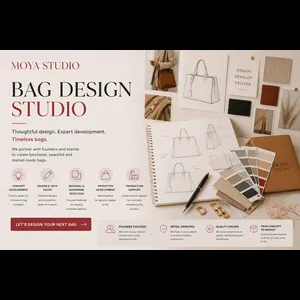
At MOYA Studio, the process can cover design and technical development, sampling, material and manufacturer sourcing, and preparation for production.
The level of support needed will depend on how much of the product has already been worked out and where the main uncertainties remain.
Final Thought
A new bag brand does not need endless development before it can launch. It needs enough development to understand what it is making, why the product works for its intended customer and what is required to manufacture it properly.
A straightforward design may need a relatively focused process. A more complex handbag may require additional rounds of testing and refinement.
The useful question is not how many development stages every new brand should complete. It is whether the work done so far has answered the questions that matter for this particular bag.
That is what helps turn a promising idea into a product you can confidently take to market.




















Sign in to leave a comment.