

A handbag often begins with a simple idea. It might be a particular silhouette, a material you want to work with, or a gap you have noticed in the market. At first, the concept may seem straightforward. You know what you want the bag to look like, who it is for and how you imagine people using it.
Turning that idea into a finished product involves a series of decisions that are not always obvious at the beginning. The design needs to work in practice, the materials need to suit the construction, and the final product needs to be developed in a way that can be repeated during manufacturing.
For new founders, understanding the product development process helps make the journey more manageable. It also makes it easier to recognise which decisions need attention before moving to the next stage.
1. Defining the Idea and the Customer
Before starting the design work, establish what the handbag is meant to achieve.
A product designed for everyday use will have different requirements from a small evening bag or a structured work tote. The intended customer, price point and purpose all influence the decisions that follow.
Start by considering a few practical questions:
- Who is the handbag designed for?
- What will the customer use it for?
- What items should it comfortably hold?
- What price range are you working towards?
- What should make the product distinctive?
- Where will it sit within your brand?
These answers help establish a direction for the product. Without them, it is easy to focus on visual details before understanding what the bag actually needs to do.
At this stage, you do not need every measurement or construction detail. You need a clear enough brief to guide the design.
2. Developing the Design Concept
Once the purpose of the bag is clear, the design can begin to take shape.
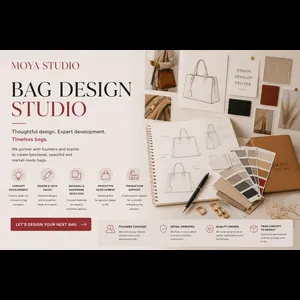
This may involve sketches, visual references, silhouette exploration, colour choices and ideas for materials or hardware. Some founders arrive with a detailed concept, while others need to explore several directions before settling on one.
The important thing is to understand which elements define the product.
For example, the shape of the bag may be central to its identity. In another design, the material, handle construction or hardware may be what makes it distinctive.
As the concept develops, consider how the different elements work together. A design should not only look appealing in a sketch; its proportions, opening, carrying method and intended capacity also need to make sense.
This is where a bag design studio can help translate an initial idea into a more considered product concept, while keeping the founder’s original vision in focus.
3. Making Decisions About Materials and Hardware
Materials have a direct influence on how a handbag looks, feels and performs.
Two materials used for the same design can produce very different results. A soft leather may create a relaxed silhouette, while a firmer material may help the bag maintain a structured shape. Weight, thickness, flexibility and texture can all affect the finished product.
Hardware needs similar consideration. Clasps, buckles, rings, zips and strap fittings contribute to the appearance, but they also affect usability, weight and construction.
When exploring materials and components, consider:
- Whether the material supports the intended shape
- How it behaves around seams, folds and curves
- Whether reinforcement will be required
- How the hardware attaches to the bag
- Whether components are available in the required finish
- How material and hardware choices affect the target cost
Not every choice needs to be finalised immediately. Some decisions become clearer during technical development or prototyping. However, establishing a suitable direction early helps prevent avoidable changes later.
4. Turning the Design Into a Technical Plan
A design concept communicates the appearance of a handbag, but production requires more precise information.
This is where technical development becomes important. The design needs to be translated into dimensions, construction details, material specifications and other information that explains how the product should be made.
Depending on the complexity of the bag, this may include:
- Measurements and proportions
- Material and colour references
- Stitching and seam details
- Lining and internal compartments
- Handle and strap construction
- Hardware placement
- Reinforcement and structural support
- Branding and finishing details
A handbag tech pack helps bring these details together in a format that can be understood by the people developing and manufacturing the product.
The purpose is not simply to create a document. It is to reduce uncertainty around how the handbag should be constructed and what the finished result should look like.
5. Creating the First Prototype
Once the design and technical direction are sufficiently developed, the first physical prototype can be made.
This is an important stage because a drawing or digital visual cannot reveal everything about how a bag will behave in real life.
The prototype allows you to assess the proportions, material, structure, functionality and overall feel of the product. You can carry it, open and close it, test the compartments and see how it responds when filled.
Sometimes the result is close to the original concept. In other cases, the physical sample reveals details that need to change.
A handle may sit differently than expected. The material may be too soft to support the intended shape. The opening may be awkward to use, or the bag may feel heavier than anticipated.
These discoveries are a normal part of development. The first prototype is not necessarily the final product; it is an opportunity to test the decisions made so far.
6. Reviewing the Sample and Making Revisions
After reviewing the prototype, identify what works and what needs improvement.
It helps to assess the bag against the original brief rather than making changes based only on personal preference. Ask whether the product performs its intended function, whether the proportions feel right and whether the materials and construction support the design.
Typical revisions may involve:
- Adjusting dimensions or proportions
- Changing handle or strap placement
- Improving access to the main compartment
- Refining pockets and internal organisation
- Reconsidering material thickness or structure
- Adjusting hardware or finishing details
Each revision should have a clear purpose. Changing several elements at once without understanding the reason can make it harder to evaluate whether the product is improving.
Depending on the design, more than one prototype may be needed. The number of rounds will depend on the complexity of the bag, the issues identified and how much refinement is required.
7. Preparing the Product for Manufacturing
Once the design has been refined and the sample approved, attention shifts towards preparing the product for production.
The approved sample, technical documentation and material specifications should all describe the same version of the handbag.
Before proceeding, confirm that:
- The dimensions and construction details are agreed
- Materials and hardware have been selected
- The latest revisions are reflected in the documentation
- The manufacturing team understands the required finish
- Sourcing requirements and lead times have been considered
- The production cost and order quantity are understood
A product that looks good as a one-off sample may still need additional preparation before it can be produced consistently. Construction methods, material availability and quality expectations all need to be considered.
This stage connects product development with the practical realities of manufacturing.
8. Moving Into Production
Production is where the developed design is made in the agreed quantity.
The process may involve sourcing materials, preparing components, cutting, stitching, assembling, finishing and checking the completed bags. The exact sequence depends on the design and the manufacturer's process.
Clear documentation and communication become particularly important at this stage. If a specification is unclear or a component needs to be changed, the decision should be discussed and approved rather than left open to interpretation.
Quality expectations should also be established before production begins. The approved sample can serve as a reference for details such as construction, finishing, dimensions and overall appearance.
For founders, production is not simply about receiving the finished bags. It is about ensuring that the product being made remains consistent with the one that was developed and approved.
9. Getting the Bag Ready for Launch
A finished product is an important milestone, but it is not the end of the work involved in bringing a handbag to market.
The bags may still need final inspection, packaging, product photography, pricing and preparation for sale. The launch plan should account for the time needed to complete these tasks, as well as shipping and delivery.
It is useful to think about these requirements before production is complete. Packaging, labels and other brand elements may need to be arranged in advance, while product photography may depend on having finished units available.
Planning these details alongside development helps connect the physical product with the wider business launch.
Why Each Stage Matters
The product development process is not just a sequence of tasks. Each stage informs the next.
The initial brief guides the design. The design shapes material and construction decisions. Technical development communicates those decisions. Prototyping tests them, while revisions help refine the product before manufacturing.
When these stages are rushed or treated separately, important details can be missed. A material selected without considering construction may create problems during sampling. An unclear specification can lead to inconsistent results. A prototype approved without proper testing may reveal functional issues only after production has begun.
Taking a considered approach gives founders more opportunities to identify and address problems while changes are still manageable.
How MOYA Studio Supports the Process
For founders, bringing a handbag from concept to production can involve several areas of expertise. Design, materials, technical development, sampling and manufacturing preparation all need to work together.
MOYA Studio supports bag founders through these stages, helping develop the initial concept into a product that is considered from both a design and production perspective.
Depending on the project, this can include design refinement, material and construction development, technical documentation, prototyping and preparation for manufacturing.
The aim is to help founders work through the decisions required to turn an idea into a finished product, without losing sight of the original design intent.
Final Thoughts
Taking a handbag from an initial idea to a finished product involves much more than creating an attractive design. It requires a clear understanding of the customer, considered material and construction choices, technical planning, physical testing and preparation for manufacturing.
Not every decision will be settled at the beginning, and some will change as the product develops. What matters is having a process that allows those decisions to be explored, tested and refined before they become part of the finished product.
A strong handbag begins with an idea, but it becomes a viable product through the work that happens between the first concept and the final bag.

















Sign in to leave a comment.