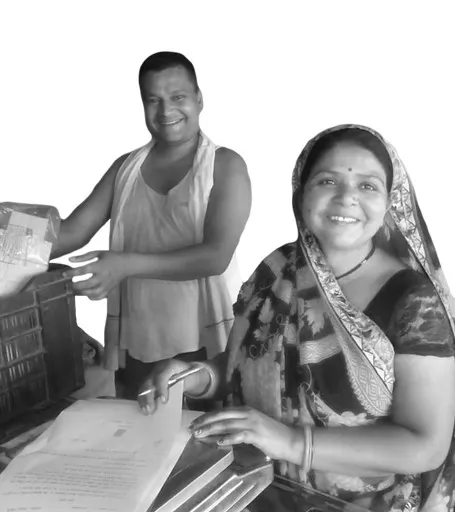

In the middle of 2020, a hearing in an Indian district court could happen with the judge at home, the advocate sitting in a parked car and the client joining on a borrowed phone. Nobody had planned for that. But once the video link held, a question that had been sitting quietly in policy papers for years turned urgent. If a hearing can run over a screen, how much of the rest of dispute resolution can move there too?
Online dispute resolution, usually shortened to ODR, is one answer. It is not a separate court and it does not create new rights. It is a way of running mediation, conciliation and arbitration over digital channels, with the same legal standing the offline versions already have. NITI Aayog released its ODR policy plan for India in November 2021, and since then banks, lenders, payment firms and e-commerce platforms have shifted a growing share of their dispute load onto it.
So how does a matter actually travel through the process? Here is a look at the usual path.
The dispute enters the system. Two routes are common. A business with thousands of similar small claims, say a bank chasing unpaid credit card balances, refers them in batches to an institution or an online dispute resolution company that maintains a panel of neutrals. Or an individual files a single matter on their own. Either way, the case gets a number and a case manager.
Notice goes out. The other party is contacted over email, SMS, WhatsApp and phone, often in the language they are likely to read. This step matters more than people expect. A process nobody shows up to is not resolution, it is a formality with extra steps.
The session happens. A mediator or arbitrator, empanelled and trained, runs the session over video or sometimes over a phone call. Sessions are short. Many are under an hour, because the amounts involved are small and the facts are rarely disputed. What is usually being negotiated is a payment schedule, a waiver, or an apology and a correction.
Something binding comes out. In mediation, the parties sign a settlement agreement. Under the Mediation Act, 2023, which received presidential assent on 14 September 2023, a mediated settlement agreement is enforceable in the same way as a decree of a civil court under the Code of Civil Procedure, 1908. In arbitration, the neutral passes an award under the Arbitration and Conciliation Act, 1996, which carries the same weight as it would in an offline arbitration.
The law behind the screen
There is no single ODR statute in India, and that surprises a lot of people. What exists instead is a set of laws that together make the digital version workable. The Arbitration and Conciliation Act, 1996 governs the arbitration and conciliation side. The Mediation Act, 2023 covers mediation and expressly recognises online mediation, community mediation and institutional mediation. It also sets a time limit of 180 days for completing mediation, extendable by another 180 days if both sides agree. Section 89 of the Code of Civil Procedure lets courts refer pending matters to these methods. And the Information Technology Act, 2000 is what allows the paperwork, the signatures and the record itself to exist electronically.
Where it fits, and where it does not
ODR is strongest where disputes are numerous, similar to each other and modest in value. Loan recoveries, insurance claims, telecom billing, rental deposits, small vendor payments. The National Judicial Data Grid puts pendency across Indian courts at well over four crore cases, and very little of that backlog is complex litigation. Much of it is repetitive.
But ODR is not a fix for everything. A dispute turning on contested evidence, a criminal element, or a question of law that needs a precedent belongs in a courtroom. Digital access is uneven too, and a party without a stable connection or a smartphone is at a real disadvantage in a video session.
The interesting part is what happens as the habit spreads. A generation that already settles refunds and ride complaints through an app may simply expect the rest of its disagreements to work the same way.
About The Author
Aditya Aryan is a lawyer and mediator. He is currently building marketing at Sama, India’s leading online dispute resolution company.























Sign in to leave a comment.