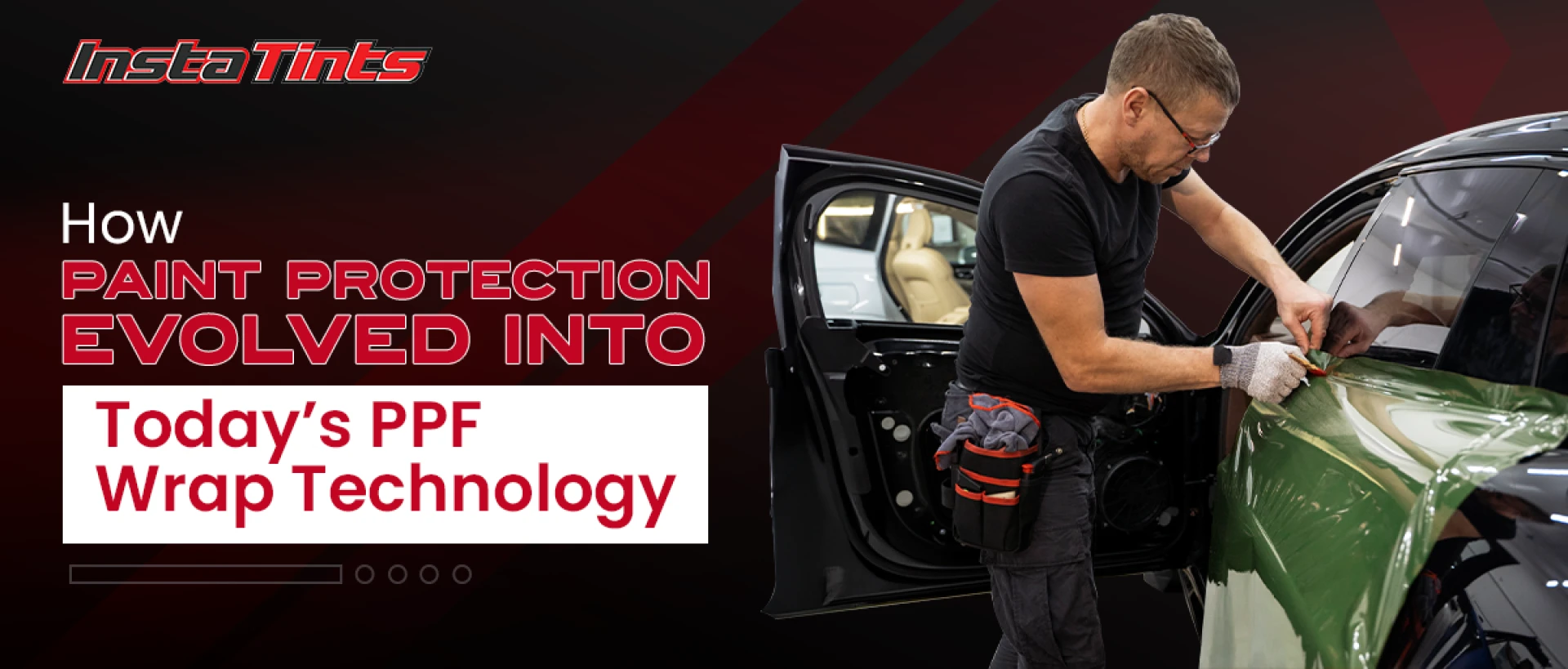

What’s Discussed in the Article? Paint protection film has come a long way from its origins to today’s high-tech PPF wraps. Modern films protect cars from scratches and other environmental hazards while keeping the paint flawless, making them a must-have for car enthusiasts and everyday drivers alike.
Are you aware that PPF, i.e., paint protection film, originated during the Vietnam War? Yes, the US military was stressed by the lack of protection for their helicopter blades against debris, sand, and jarring environmental conditions. Then, the engineers developed a technology for dressing the blades and the delicate fragments of the vehicle. That transparent protective layer could shield the surfaces from damage while maintaining aerodynamics and visibility. Now, fast forward to today, and the technology is more than just functional.
While this was just a mere introduction to today’s talk, let’s go deeper into understanding and knowing about the PPF wrap better and louder. Post the war era, what changed the film to become one of a kind, and why must you go for your car’s paint protection? Let’s talk facts.
Paint Protection Film: Early Automotive Adoption
In the late 1990s and early 2000s, car enthusiasts and high-end car owners sought the technology of the PPF and started using it to protect their cars’ vulnerable areas, including car bumpers, side mirrors, door edges, and hood fronts. Initially also known as the ‘helicopter tape,’ due to its first-time usage, the film has many drawbacks, such as
- The film was thick and less flexible.
- The PPF wrap often turned yellow over time
- The adhesive used back in the day could damage paint during the removal process.
- Edges were visible even after the installation; size issues
Despite its limitations, the overall concept was so good that it cashed in later on, now to become one of a kind. Car manufacturers and detailing studios then began exploring ways to beautify and refine the appeal and the benefits of the PPF wrap. This also marked the beginning stage of the evolution of the car as a luxury vehicle and its protection.
PPF Wrap Today: The Modern Era of the Modern People
Today, PPF is one of the most usable car detailing services available in the spectrum of car protection services. Modern car paint protection is built stronger, more durable, and clearer than before. Manufacturers have introduced multi-layered films that combine flexibility, strength, and self-healing properties that make them the go-to service for both protection and performance. Apart from them, InstaTints’ PPF wrap has far more properties than others in terms of
- Ultra-Clear Finish: As stated before, the old films used to turn yellow and dull due to a lack of good material usage. Modern PPF films are crystal clear, thanks to the technological advancements, which ensure that the original paint colour and shine remain unchanged.
- Hydrophobic Properties: Advanced films like InstaTints’ resist water, dirt, and contaminants. This makes washing easier and keeps the car looking clean for longer.
- Better Flexibility and Coverage: The film has the property to stretch, which makes it flexible enough to wrap entire panels and a full vehicle. The full-body PPF film is becoming increasingly popular over time.
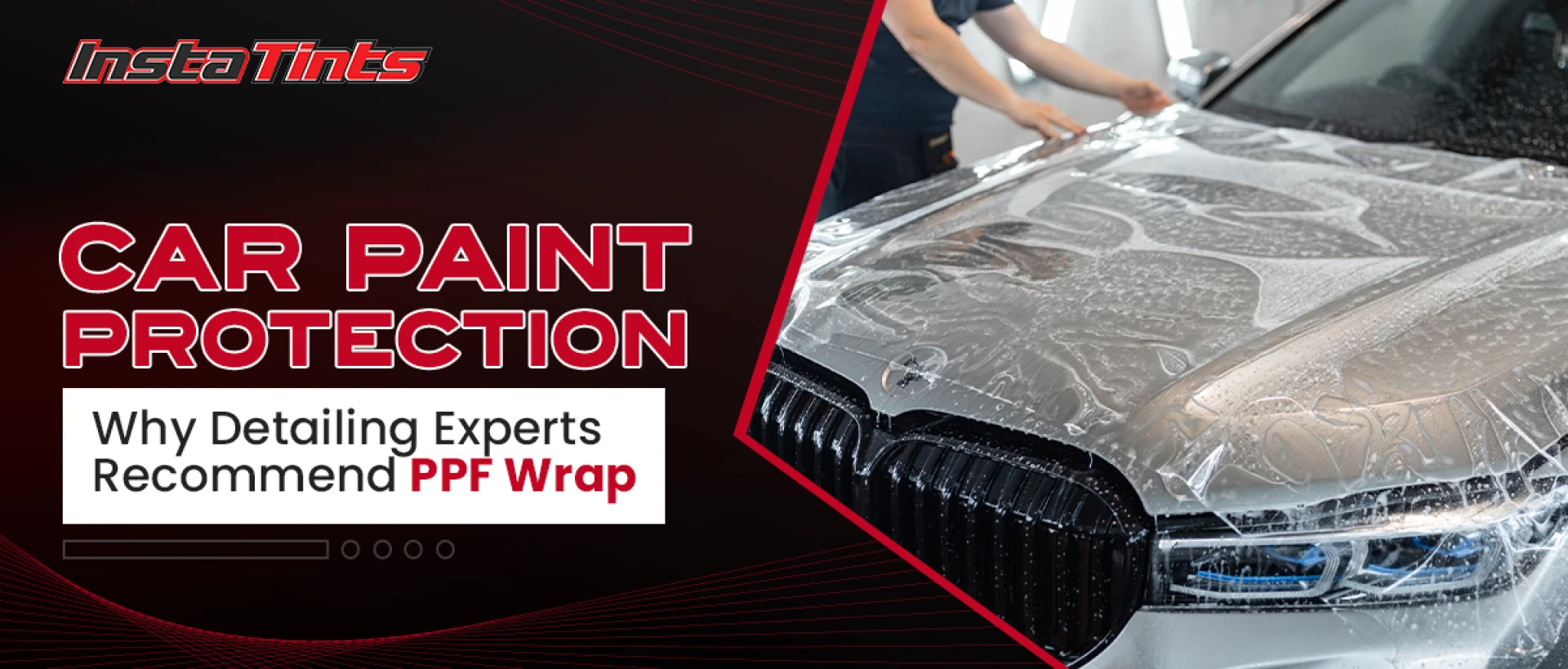
Improved material quality and computer-backed cut-and-installation help PPF film to seamlessly cover the entire vehicle. This, in turn, means that the modern paint protection is very able to guard against stone chips, road debris, minor scratches, bird droppings, UV damage, and any type of chemical stain.
What’s the future of car paint protection?
Modern paint protection film has played a major role in the protection and appearance of vehicles. From shielding the original paint from the everyday wear-and-tear to maintenance and increasing the resale value, installing a PPF wrap does no harm, but only profit. What once began as the protection layer for a helicopter blade is now becoming one of the most effective solutions for car paint protection.
As technology continues to grow, InstaTints PPF will be more and more used and instituted, becoming the most viable car detailing service across the expertise. For anyone who wants to keep their car shining throughout its lifespan, you now know what can make that happen!
FAQs
- What is paint protection film?
PPF is a thin and transparent thermoplastic urethane film applied to a car’s painted surfaces to protect against environmental toxins and other minor on-road damage.
- How is a PPF wrap different from regular car wax or coating?
Unlike other sealants, PPF provides a physical barrier that absorbs effects, offering long-term protection.
- Can PPF wrap cover the entire car?
Yes, today's films are flexible enough for full-body installation, protecting all painted panels, including bumpers, hoods, and mirrors.
- Does PPF yellow over time?
High-quality modern films are UV-resistant and designed not to yellow or fade, maintaining the car’s original paint colour for years.
- How long does a PPF wrap last?
Depending on quality and maintenance, PPF can last anywhere from 5 to 10 years before replacement is recommended.
























Sign in to leave a comment.