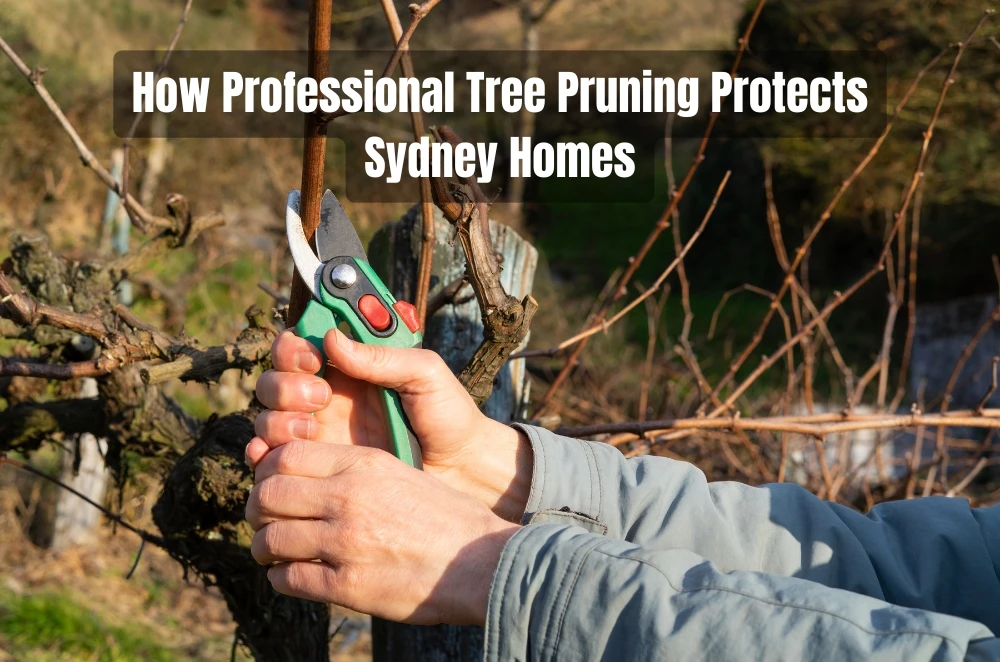

If you own a freestanding home in Sydney, keeping trees healthy isn’t just cosmetic—it’s risk management. Strategic cuts reduce storm damage, protect roofs and wires, and keep neighbours happy. For a deeper how-to and local context, start with tree pruning in Sydney — it’s a practical primer on what work is typically involved and how pros approach it.
Why proactive pruning matters in Sydney’s conditions
Sydney’s weather swings from hot, dry spells to soaking east-coast lows. That mix accelerates growth, then stresses branches, which is exactly when limbs fail.
- Reduces wind-sail effect so canopies flex, not fracture, in southerly busters.
- Keeps limbs clear of roofs, gutters and solar arrays, limiting debris and abrasion.
- Improves airflow and light, which lowers fungal pressure after humid weeks.
- Guides young trees into stronger architecture, avoiding costly structural fixes later.
I’ve seen this play out first-hand. After a run of late-summer storms, a client in the Inner West had a lopsided jacaranda leaning over their tiled roof. We staged reduction cuts and lifted the crown clear of the ridge by 1.5–2 metres.
What “professional pruning” actually includes
Not all cuts are equal. A certified arborist will tailor work to species, age and defects, using standards-based techniques.
- Crown cleaning: Removing dead, diseased or rubbing wood; improves safety and plant health.
- Crown thinning: Selectively reducing density without “lion-tailing,” keeping load paths natural.
- Crown reduction: Shortening to reduce lever-arm forces; done to laterals, not flat-topped.
- Clearance pruning: Creating set distances from roofs, facades, solar panels, aerials and lines.
Good operators also:
- Make collar-respecting cuts that trees can compartmentalise.
- Stage work across seasons for sensitive species (e.g., avoid heavy summer cuts on eucalypts prone to epicormic flush).
- Use rope access and friction-savers to protect bark and gardens.
- Leave a tidy site—chip, mulch, and take debris without compacting lawns.
Safety, compliance and neighbourly obligations
Sydney councils regulate pruning and removal for a reason—tree work blends public safety, amenity and biodiversity. Before you cut, check the rules and any exemptions. For a clear, homeowner-friendly explainer on when permits apply and what counts as exempt, see council tree cutting rules.
- Boundaries & neighbours: If branches overhang, you usually have rights to prune to the boundary—provided it’s not harmful to the tree, and you follow local rules. A quick chat prevents disputes.
- Utilities: For service lines, use Level 2-authorised contractors where required. Even innocent-looking spans can carry risks you can’t see from the ground.
- Heritage & significant trees: Many older suburbs list notable specimens. Permits matter here even for minor works.
A seasonal plan for Sydney homes
Rather than big, infrequent lops, think small, regular tune-ups matched to growth phases.
Late winter to early spring (structural work on many species)
- Establish scaffold branches on young trees; correct co-dominant stems early.
- Thin congested interiors before vigorous spring growth.
- Refresh mulch; maintain 5–7 cm depth, clear of trunks.
Mid to late summer (light maintenance & safety)
- Spot-remove deadwood revealed by heat stress.
- Check for clearance near eaves and solar panels ahead of storm season.
- Avoid heavy reduction on the prone species to limit epicormic shoots.
Autumn (risk and hygiene)
- Clean out storm-damaged tips after nor’easter blow-throughs.
- Reduce end-weight on extended limbs before winter fronts arrive.
- Sanitation pruning for fungal issues after humid periods.
I keep a simple calendar: two light visits a year beat one heavy hit every few years. It’s cheaper over five years, and trees look better—less shock, fewer messy shoots.
DIY or bring in a pro? A quick decision framework
Plenty of homeowners can handle small, low-risk pruning. But certain flags say “call an arborist.”
DIY is usually fine when:
- Branches are smaller than your wrist, and you’re staying on the ground.
- You have clean, sharp tools and know how to find the branch collar.
- The work is well away from services, roof edges and shared boundaries.
Hire a pro when:
- Cuts exceed 50–75 mm in diameter or involve load-bearing leaders.
- You’ll need to leave the ground or work near live services.
- The tree shows defects—cracks, included bark, fungal brackets, or past poor cuts.
- Council rules are unclear, and you need advice (and paperwork) before touching anything.
A quick rule I use with friends: if you need a ladder, you probably need an arborist. Ground-level secateur work is one thing. Top-handle saws and rigging over a pergola?
The cost of not pruning (and how pruning pays its way)
Skipping maintenance can be expensive—often invisibly so until the next storm.
- Roof & gutter damage: Replacing tiles and flashing after abrasion or impact can dwarf the cost of routine pruning.
- Insurance hiccups: Some policies scrutinise “lack of maintenance.” Showing evidence of professional care can smooth claims.
- Tree health decline: Heavy breaks invite decay; structural remediation later is pricier and less predictable.
- Neighbour disputes: Overhang and debris complaints escalate; proactive pruning keeps the peace.
Flip the ledger, and pruning looks like a saver: fewer emergency call-outs, better shade where you want it (over patios, not panels), and a neater facade that helps at sale time.
Techniques to ask for (and a few to avoid)
When booking, use clear language so you get the right scope.
Ask for:
- Reduction to laterals rather than stubbing—keeps natural form and wound size small.
- Selective thinning (10–15% by foliage volume, species-dependent) instead of stripping interior growth.
- Clearance distances (e.g., 2 m from the roof, 1 m from the facade) are written into the quote.
Avoid or question:
- Topping or hat-racking: Creates weak regrowth and invites decay.
- Lion-tailing: Over-thinning inner growth makes trees whippy and prone to failure.
- Painted wounds: Usually unnecessary; good cuts and tree biology handle closure.
If a quote leans on those “avoid” items, get a second opinion.
Helping young trees grow up strong
The cheapest pruning you’ll ever buy is formative work on saplings. Guiding structure in the first 3–5 years prevents future headaches.
- Choose a single dominant leader (where species-appropriate).
- Space scaffold branches vertically and radially to balance load.
- Remove crossing and rubbing shoots before they turn into problems.
- Keep stakes loose; train, don’t bind.
For a step-by-step primer you can host on Homeone, consider a piece centred on pruning young trees. It pairs neatly with this guide and captures readers earlier in the tree’s life cycle.
Where to learn the finer points (without the noise)
There’s no shortage of advice online—some of it average. A balanced explainer from a neutral horticulture source works well as a “further reading” hand-off. A piece framed around the correct way to prune a tree is ideal.
Quick pre-booking checklist
- Photos of the tree and its context (rooflines, wires, neighbour fence).
- Your goal: safety, light, views, shape—or a mix.
- Any previous permits or arborist reports.
- Preferred clearance distances (roof, facade, solar).
- Timing constraints (nesting, events, renovations).
Final Thoughts
Pruning done well is quite insurance for Sydney homes. A modest, seasonal plan keeps branches light, roofs clear and neighbours onside, while staying within council rules and wildlife timing. If cuts are larger, higher or near services, call a qualified arborist and ask for a reduction to laterals, not topping. Document the scope, keep mulch on site, and revisit in six months. Small, thoughtful adjustments now prevent big, noisy problems when the next storm rolls through.
























Sign in to leave a comment.