
The Thermal Expansion Problem Nobody Talks About Enough
Cars sit in the sun. Engine bays run hot. Dashboards, door panels, and bumpers expand and contract every single day. For most metals, that movement is small and predictable. For unreinforced plastic, it's a different story.
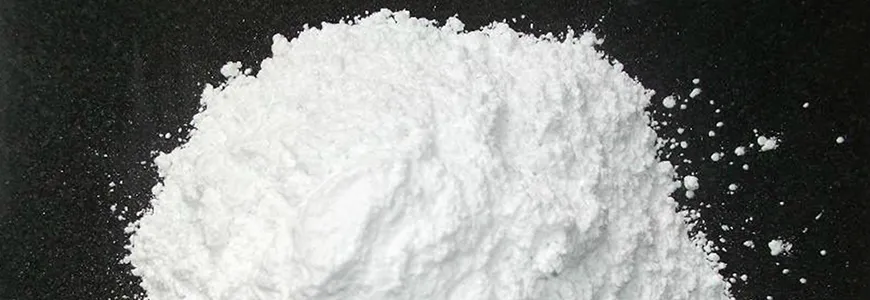
Thermal expansion in automotive plastics is a real engineering headache. When a plastic part expands too much, gaps open up at joints, panels warp, and fastener holes shift out of alignment. None of that is acceptable in a finished vehicle. Manufacturers who rely on quality talc powder for automotive compound production have found it to be one of the more practical answers to this problem — not a miracle fix, but a measurable improvement that shows up in dimensional testing.
Why Thermal Expansion Matters in Automotive Plastics
The technical term is coefficient of thermal expansion, or CTE. Every material has one. The lower it is, the less the material expands when temperature rises.
Unreinforced polypropylene has a CTE roughly five to ten times higher than steel. That mismatch causes problems when plastic parts are attached to metal structures — which is most of the time in a car. The plastic wants to move more than the metal allows, and over thousands of heating and cooling cycles, something gives way.
Reducing that CTE gap is one of the main reasons compound makers add fillers. Talc is one of the most effective options available for this purpose at a reasonable cost.
How Talc Reduces CTE in Polymer Compounds
Talc particles are flat and plate-like at the microscopic level. When talc is blended into a polymer during compounding, those flat particles align with the flow direction during moulding. This alignment creates a kind of internal structure inside the plastic that resists expansion.
The result is a compound with lower CTE — sometimes reduced by 30 to 50% compared to the unfilled polymer, depending on loading level and particle characteristics. That brings the plastic's thermal behaviour closer to the metal parts it sits alongside.
Particle size plays a role here. Finer talc, with a median particle size (D50) in the 3–6 micron range, tends to disperse more evenly and gives more consistent property improvements. Coarser grades can still reduce CTE but may affect surface finish and impact performance differently.
Loading levels for thermal applications typically sit between 20% and 40% by weight. Higher loadings reduce CTE further but increase density and can affect toughness, so the formulation needs to be balanced against the part's other requirements.
What Compound Makers Should Check Before Sourcing Talc
Buying talc for a thermal management application is not the same as buying a general-purpose filler. A few things matter more than the price per tonne.
Particle size consistency is the first one. If the D50 shifts between deliveries, your compound properties shift too — and that shows up in dimensional checks during production.
Aspect ratio matters for CTE reduction specifically. Higher aspect ratio talc (more plate-like, less blocky) gives better alignment during processing and a more effective reduction in thermal expansion. Ask for this data before you commit to a grade.
Moisture content should be low — under 0.5% is a reasonable threshold. High moisture causes processing defects that no amount of formulation work will fix downstream.
Why Ashirwad Minerals for Automotive Compound Talc
Ashirwad Minerals supplies talc that is ground and classified specifically for technical compounding applications. The particle size distribution is controlled and tested, so manufacturers are not guessing about what they're getting.
The team at Ashirwad understands what automotive compound makers actually need. When customers are qualifying a new talc grade for a CTE-sensitive application, they get clear technical data — particle size distribution, aspect ratio, moisture, whiteness — not just a general product sheet.
Supply consistency is taken seriously. Ashirwad works with production volumes suited to compound manufacturing, and quality documentation is available for supplier audits. For automotive supply chains where traceability matters, that's not a small thing.
Conclusion
High thermal expansion in automotive plastics is a real problem with a practical solution. Talc-filled compounds bring CTE down to a level where plastic and metal parts can work together over years of temperature cycling. Getting the talc grade right — particle size, aspect ratio, loading level — is what separates a compound that performs from one that just passes the initial spec.
Ashirwad Minerals supplies consistent, well-characterised talc for exactly this kind of application. If thermal expansion is on your list of problems to solve, it's worth a conversation.
FAQs
How much does talc reduce thermal expansion in polypropylene compounds? At loading levels of 20–40%, talc can reduce the CTE of polypropylene by 30 to 50% compared to the unfilled material. The exact reduction depends on the talc grade, loading level, and processing conditions.
What talc particle size works best for reducing CTE in automotive compounds? A D50 in the 3–6 micron range generally gives good dispersion and consistent property improvements. Finer grades tend to perform better for thermal applications because they distribute more evenly through the polymer matrix.
Can talc be used alongside other fillers for thermal management? Yes. Talc is sometimes used in combination with glass fibre or other reinforcements. Each filler contributes differently — talc reduces CTE and improves stiffness, while glass fibre adds tensile strength. The balance depends on the part's requirements.
What automotive parts commonly use talc-filled compounds for thermal control? Dashboards, door panels, bumper fascias, HVAC housings, and under-bonnet components are common applications. Any part that sees repeated temperature cycling and needs to stay dimensionally stable is a candidate.
Does Ashirwad Minerals provide technical data sheets for automotive compound qualification? Yes. Ashirwad Minerals provides test reports and technical data covering particle size distribution, moisture content, whiteness, and other key parameters needed for automotive supplier qualification audits.



























Sign in to leave a comment.