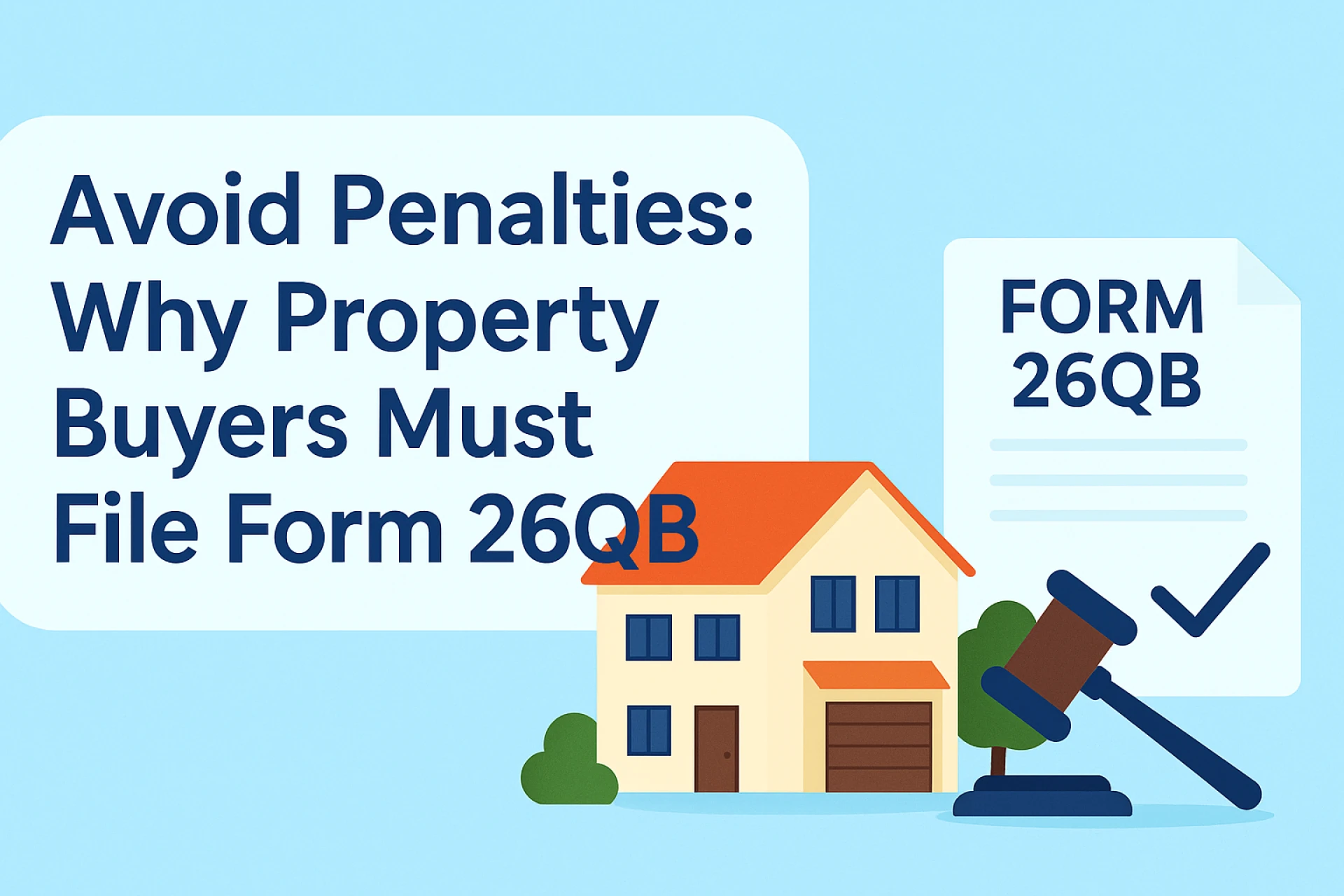

Purchasing property is one of the biggest financial decisions in life. While most buyers focus on registration and stamp duty, many overlook an important tax compliance step—deducting and paying TDS on property purchases above ₹50 lakh.
If you’re buying property in India, understanding Form 26QB is crucial to avoid penalties and ensure smooth ownership transfer.
What is TDS on Property?
Under Section 194-IA of the Income Tax Act, buyers must deduct 1% TDS from the total property value (if it exceeds ₹50 lakh) and deposit it with the Income Tax Department. This deduction is mandatory and must be done before making the full payment to the seller.
Why Filing Form 26QB Matters
Form 26QB is a challan-cum-statement that records the TDS payment made by the buyer. Filing it ensures:
- ✅ Legal compliance with tax laws
- ✅ Proof of payment for both buyer and seller
- ✅ Smooth property transfer without disputes
- ✅ Avoidance of penalties like interest, late fees, and fines
Key Steps for Buyers
- Deduct TDS at the time of payment to the seller.
- Fill and submit Form 26QB online through the Income Tax portal.
- Pay the TDS using net banking, debit card, or challan at the bank.
- Download Form 16B (TDS certificate) from TRACES and give it to the seller.
Common Mistakes to Avoid
- Forgetting to deduct TDS before making payment
- Late filing of Form 26QB, which attracts a daily fine
- Incorrect details of buyer, seller, or property in the form
- Not issuing Form 16B to the seller after payment
Need a Step-by-Step Guide?
If you want a detailed walkthrough with practical tips, check out this guide: How to Fill Form 26QB & Pay TDS on Property Purchase. It explains the entire process in simple steps to help buyers stay compliant.
Final Thoughts
Tax compliance may feel like a burden during property purchase, but skipping it can lead to serious penalties. Filing Form 26QB is a simple yet essential step every buyer must complete to ensure a legally sound and stress-free property deal.

























Sign in to leave a comment.