Managing rental properties involves many moving parts. Property managers must track rent payments, monitor expenses, manage tenants, and stay compliant with regulations. Handling all of this manually can lead to errors, wasted time, and financial confusion. This is where real estate accounting becomes essential.
When professional accounting practices are combined with modern rental accounting software, property management becomes far more organized and efficient. These tools help reduce mistakes, improve cash flow visibility, and support better financial decisions.
In this blog, we explain how real estate accounting simplifies property management, how rental accounting software supports daily operations, and how property managers can successfully adopt these solutions.
What You’ll Learn in This Blog
This article explains:
- What real estate accounting involves
- How accounting supports property management
- Common challenges solved through better accounting
- The role of rental accounting software in real estate bookkeeping
- Key benefits of using accounting software for rental properties
- Practical examples from real property managers
- Tips for setting up accounting systems successfully
What Is Real Estate Accounting?
Real estate accounting focuses on managing and tracking financial activity related to rental properties and real estate investments. It is designed specifically for property-related income and expenses, unlike general business accounting.
It typically includes:
- Rent billing and collections
- Tracking maintenance and repair costs
- Managing leases and tenant agreements
- Handling real estate taxes
- Recording property value changes over time
The purpose of real estate bookkeeping is to provide accurate financial information so property managers and owners can make smart decisions, improve profits, and meet legal requirements.
With proper systems in place, real estate accounting turns property management into a more organized and forward-looking process.

Why Real Estate Accounting Is Essential for Property Management
Property management goes beyond collecting rent. Managers must oversee multiple properties, tenants, vendors, and financial obligations. Real estate accounting supports this work by offering clear financial insight.
Financial Visibility
Accurate records show how much income each property generates and how much is being spent. This helps managers maintain healthy cash flow.
Compliance Support
Real estate income comes with tax and reporting responsibilities. Real estate accounting helps ensure records are complete and ready for filing.
Smarter Decisions
With clear financial data, managers can decide when to adjust rent, schedule upgrades, or invest in new properties.
Easier Audits
Organized real estate bookkeeping makes audits and reviews faster and less stressful.
Without structured accounting, property managers risk overspending, missing tax deductions, or making poor financial choices.
Property Management Problems Solved by Real Estate Accounting
Many challenges faced by property managers are directly tied to poor financial tracking. Real estate accounting, especially when supported by rental accounting software, helps solve these issues.
Rent and Payment Tracking
Manual rent tracking often leads to missed or disputed payments. Accounting software records payments automatically and keeps tenant balances clear.
Expense Control
Maintenance, utilities, insurance, and taxes can quickly add up. Real estate bookkeeping organizes these costs and helps identify areas where spending can be reduced.
Managing Multiple Properties
Handling several properties manually increases the chance of errors. Rental accounting software brings all property data into one system for easier management.
Tax Accuracy
Real estate income is subject to specific tax rules. Real estate accounting ensures income and expenses are recorded correctly for accurate tax reporting.
Error Reduction
Spreadsheets and paper records are prone to mistakes. Automated systems reduce errors and improve consistency.
By addressing these challenges, real estate bookkeeping saves time and reduces financial stress.
How Rental Accounting Software Supports Real Estate Accounting
While real estate accounting sets the financial structure, rental accounting software improves speed and accuracy through automation.
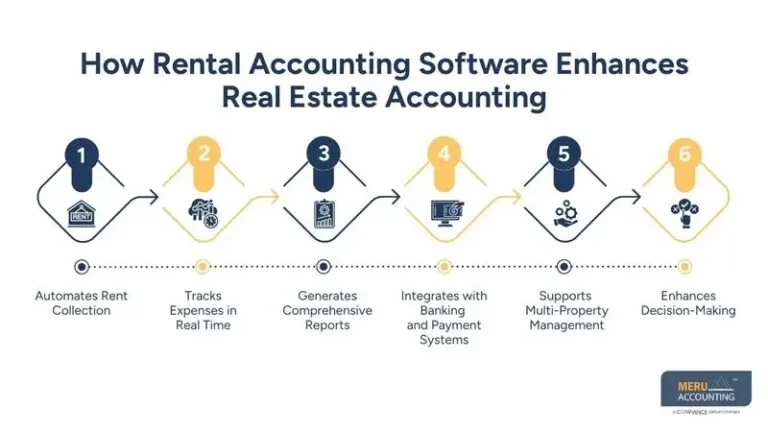
Automated Rent Collection
Invoices, reminders, and payment records are handled automatically, improving cash flow and reducing manual work.
Real-Time Expense Tracking
Expenses are recorded as they occur, making it easier to compare actual costs with budgets.
Financial Reporting
Rental accounting software generates reports such as income summaries, cash flow statements, and tenant reports with minimal effort.
Bank and Payment Integration
Transactions sync directly with bank accounts, reducing reconciliation time and improving accuracy.
Multi-Property Support
Managers can view performance across all properties in one dashboard and identify which properties perform best.
Better Planning
Real-time data allows property managers to plan repairs, upgrades, and investments more effectively.
Benefits of Using Real Estate Accounting with Software
Combining real estate accounting with rental accounting software offers clear advantages:
- Saves time by automating routine tasks
- Reduces errors in financial records
- Improves cash flow management
- Makes compliance and audits easier
- Builds transparency with tenants
- Provides insights for better decision-making
Together, accounting knowledge and software tools create a reliable financial system.
Real-World Examples
Many property managers have improved operations through real estate bookkeeping and accounting software:
- Apartment managers reduced manual work and improved tenant communication
- Vacation rental operators gained better control over seasonal income and expenses
- Commercial property managers simplified reporting for multiple tenants
- Individual investors reduced late payments and improved profitability
These examples show how real estate accounting can transform property management.
Tips for Setting Up Real Estate Accounting and Software
To get the best results, property managers should:
- Choose software that matches their property size and needs
- Train staff on proper data entry and reporting
- Record income and expenses promptly
- Use automation for recurring tasks
- Review financial reports regularly
- Integrate accounting software with banking tools
- Stay aligned with tax and compliance rules
Strong real estate bookkeeping starts with consistent processes.
How Meru Accounting Can Help
Meru Accounting provides expert real estate accounting services designed for property managers and rental businesses.
We support clients by:
- Maintaining accurate financial records
- Tracking rent, expenses, and vendor payments
- Preparing clear financial and tax-ready reports
- Assisting with accounting software setup and integration
Our services allow property managers to focus on growth while we handle the financial details.
Key Takeaways
- Real estate accounting is essential for effective property management
- Real estate bookkeeping improves accuracy and financial control
- Accounting software reduces errors and saves time
- Automated reporting supports better decisions
- Meru Accounting offers reliable support for property managers



























Sign in to leave a comment.