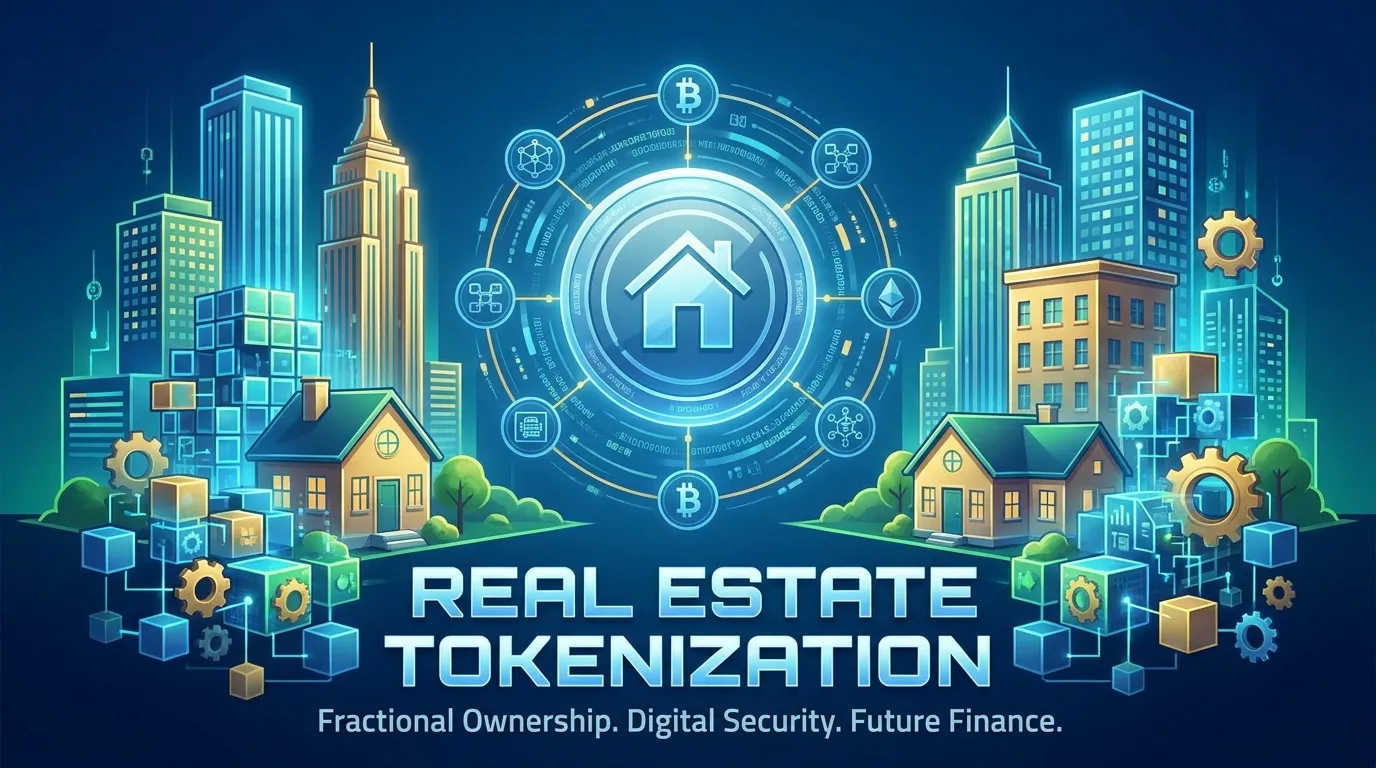

Real estate has long been one of the world’s most valuable and trusted asset classes, but it is also one of the least liquid. Buying, selling, financing, and transferring property usually involves large capital requirements, lengthy paperwork, legal verification, brokers, registrars, banks, and jurisdiction-specific compliance. This makes real estate attractive as a store of wealth but difficult to access for smaller investors and slow to move for property owners seeking flexible capital.
Real estate tokenization aims to solve part of this problem by converting ownership rights, income rights, or investment interests in a property into blockchain-based digital tokens. These tokens can represent fractional exposure to residential buildings, commercial properties, hotels, rental portfolios, land parcels, or real estate funds. The property itself does not move onto the blockchain; rather, the blockchain records digital units connected to legally enforceable rights in the underlying asset.
The scale of the opportunity is significant. Savills estimated that global real estate was worth about $393.3 trillion at the end of 2024, making it the world’s largest store of wealth and larger than global equities and debt combined Savills. Yet much of this value remains locked inside assets that are expensive to divide and slow to trade. Tokenization offers a way to modernize this market by making real estate investment more accessible, transparent, and operationally efficient.
Why Real Estate Tokenization Needs Professional Expertise
Real Estate Tokenization is not just the process of creating a token and linking it to a property. It requires legal structuring, technical architecture, smart contract development, investor compliance, asset valuation, custody planning, and ongoing property management integration. A tokenized property project must answer a basic but critical question: what exactly does the token holder own? The answer may be equity in a special purpose vehicle, a right to rental income, a share in a real estate fund, or a debt instrument backed by property cash flows.
This is why working with a reliable Real Estate Tokenization company is important for property developers, real estate investment firms, asset managers, and enterprises. A professional partner helps design a structure that aligns blockchain technology with property law, securities regulations, tax obligations, and investor protection standards. Without this foundation, a token may exist technically but fail legally or commercially.
End-to-end Real Estate Tokenization Services typically include property feasibility analysis, tokenomics design, smart contract development, KYC/AML integration, investor dashboard creation, payment gateway integration, secondary marketplace support, compliance automation, and post-launch maintenance. The most successful projects treat tokenization as a regulated investment infrastructure model rather than a simple blockchain experiment.
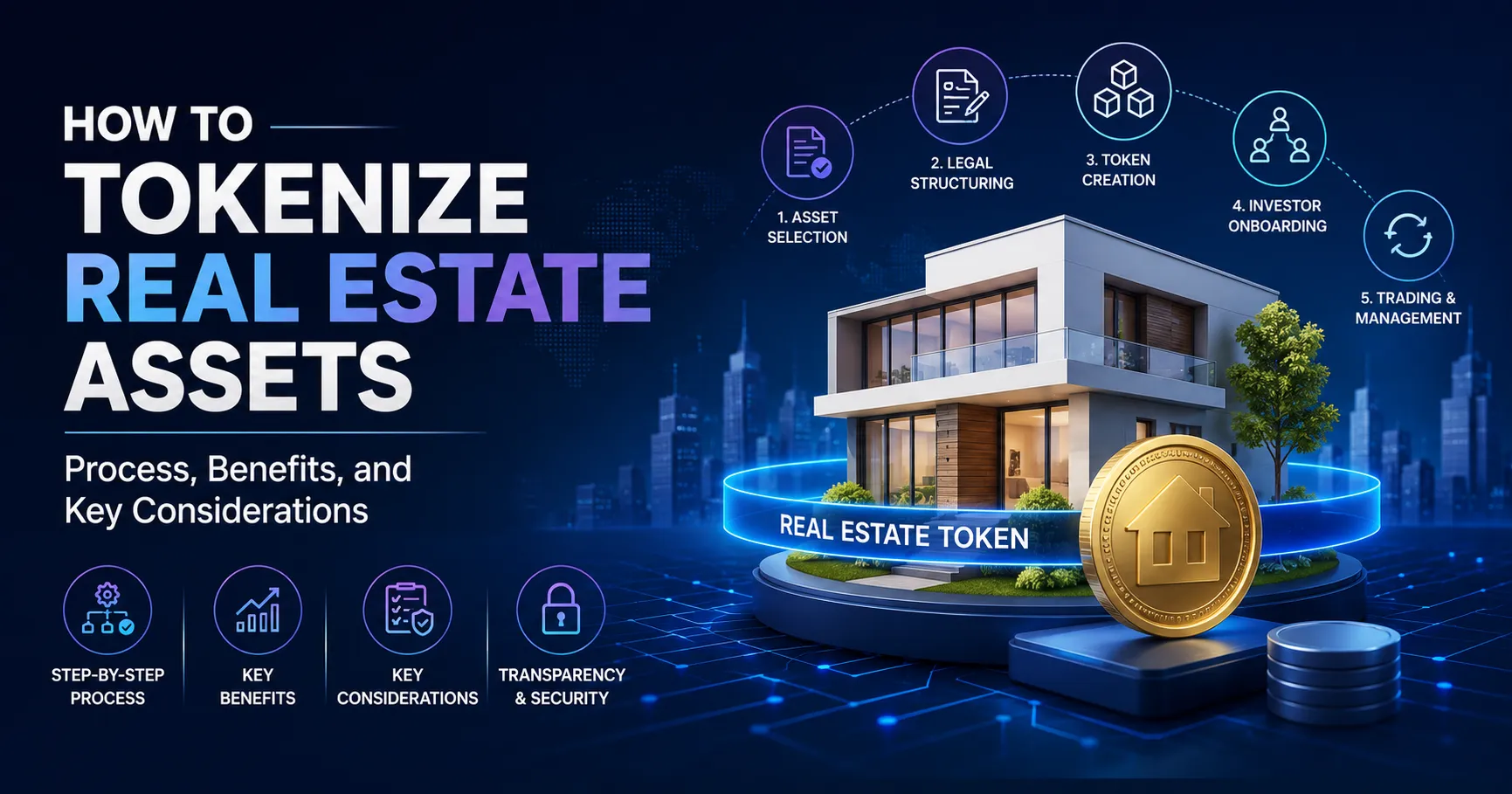
Step 1: Selecting the Right Property or Portfolio
The first step in real estate tokenization is choosing the right asset. Not every property is suitable for tokenization. The strongest candidates usually have clear title, stable valuation, predictable income, market demand, and a compelling investment story. For example, a fully leased commercial building with long-term tenants may be easier to tokenize than undeveloped land with uncertain approvals. Similarly, a hotel in a prime tourist destination may attract investors if revenue, occupancy, and management structures are transparent.
Asset owners must assess whether tokenization solves a real problem. For developers, it may unlock project financing. For landlords, it may create liquidity without selling the entire property. For investment firms, it may help create fractional access to a diversified property portfolio. For investors, it can lower entry barriers and provide exposure to assets that were previously reserved for institutions or high-net-worth individuals.
A useful real-world example is the St. Regis Aspen Resort tokenization project, where Aspen Digital Token was connected to a luxury hotel asset and offered through a compliant private securities structure Aspen Coin. While the broader tokenized real estate market is still developing, projects like this show how premium properties can be packaged into blockchain-based investment instruments.
Step 2: Legal Structuring and Ownership Design
Legal structuring is the most important part of real estate tokenization. A token must be connected to enforceable rights. In many cases, the property is held by a special purpose vehicle, and investors receive tokens representing shares, membership interests, revenue rights, or debt claims linked to that entity. This structure helps separate the asset from the operating company and creates a clearer legal relationship between token holders and the property.
The legal model depends on jurisdiction and investor type. If tokens are sold to investors, they may be treated as securities. This means the issuer may need to comply with private placement rules, disclosure requirements, investor eligibility checks, transfer restrictions, and ongoing reporting obligations. For global offerings, the complexity increases because securities laws differ from country to country.
This stage should also define voting rights, income distribution rules, redemption conditions, dispute resolution, transfer limitations, tax treatment, and what happens if the property is sold. These details cannot be left vague. Blockchain can automate processes, but it cannot replace the legal contracts that establish ownership and investor protection.
Step 3: Property Valuation, Due Diligence, and Documentation
Before tokens are issued, investors need confidence in the asset. This requires professional valuation, title verification, legal due diligence, financial analysis, and documentation of property condition. For income-generating properties, issuers should provide rental agreements, occupancy data, maintenance costs, insurance details, debt obligations, and projected cash flows.
Due diligence is especially important because tokenization can give the appearance of transparency while still hiding off-chain risks. A smart contract may show how many tokens exist, but it cannot automatically prove that the building is properly insured, that tenants are paying rent, or that there are no legal disputes over the title. These facts must be verified through traditional professional processes and then reflected in investor reporting.
The World Economic Forum has noted that tokenization can enhance transparency, efficiency, accessibility, and fractional ownership, but also emphasizes that adoption depends on trusted frameworks, interoperability, regulation, and safeguards World Economic Forum. In real estate, this means strong documentation is just as important as strong code.
Step 4: Token Design and Smart Contract Development
Once the legal and asset structure is clear, the technical design begins. Developers choose the blockchain network, token standard, compliance architecture, wallet model, and smart contract logic. In many cases, real estate tokens are designed as security tokens rather than ordinary utility tokens. This means they may include transfer restrictions so only verified investors can hold or trade them.
Smart contracts can automate several functions, including token issuance, ownership tracking, investor whitelisting, dividend or rental income distribution, token burning, and compliance checks. For example, if a token represents a share of rental income, the system can calculate and distribute payments to token holders based on their ownership percentage. If the property is sold, smart contracts can support proceeds distribution after legal and administrative obligations are settled.
However, smart contracts must be audited carefully. Errors in code can create financial losses, compliance failures, or disputes. The technology must also integrate with off-chain systems such as property management software, payment processors, identity verification tools, custody providers, and legal reporting systems.
Step 5: Compliance, KYC, and Investor Onboarding
Real estate tokenization must operate within regulatory boundaries. Investor onboarding usually includes Know Your Customer checks, Anti-Money Laundering screening, accreditation verification where required, sanctions screening, and jurisdiction-based eligibility rules. These checks ensure that tokens are distributed only to permitted investors.
Compliance can also be embedded into token transfers. For instance, if a token can only be held by verified investors in approved jurisdictions, the smart contract can block transfers to non-whitelisted wallets. This is one of the strongest advantages of tokenized securities: compliance does not have to rely only on manual review after the fact; it can be built directly into the transaction layer.
Still, regulation remains one of the biggest barriers to global scalability. A tokenized property may be accessible online, but that does not mean it can legally be sold to anyone in the world. Issuers must balance global reach with local legal obligations.
Step 6: Token Issuance and Fundraising
After structuring, valuation, compliance, and smart contract audits are complete, the issuer can launch the offering. Investors may purchase tokens using fiat currency, stablecoins, or other approved payment methods depending on the platform and jurisdiction. The funds raised may be used to acquire property, refinance existing ownership, support development, or provide partial liquidity to the asset owner.
The offering documents should clearly explain the investment model, risks, rights, fees, lock-up periods, expected returns, and exit options. Professional communication is essential because investors are not just buying a token; they are participating in a real estate investment with legal, market, operational, and liquidity risks.
Step 7: Secondary Trading and Liquidity Planning
One of the biggest promises of real estate tokenization is improved liquidity. Traditionally, selling a property interest can take weeks or months. Tokenized ownership can theoretically be transferred faster through compliant digital marketplaces. However, liquidity is not automatic. A token can be technically transferable and still have few buyers.
Research on tokenized real-world assets has shown that liquidity remains a major challenge, especially because many tokenized assets have low trading volumes, limited active holders, and regulatory restrictions that reduce open-market participation arXiv. For real estate, this is particularly important because the underlying asset is still illiquid. Tokenization improves the transfer layer, but market demand, pricing confidence, and compliant trading venues are still necessary.
A strong liquidity strategy may include regulated exchanges, marketplace partnerships, buyback options, redemption windows, institutional investor participation, or portfolio-level tokenization rather than single-asset tokenization.
Step 8: Ongoing Management and Investor Reporting
Real estate tokenization does not end after token issuance. The property still needs to be managed, maintained, insured, leased, audited, and reported. Investors expect updates on rental income, expenses, occupancy, valuation changes, repairs, debt obligations, and distributions.
Blockchain can improve reporting by giving investors access to ownership records and transaction history, but off-chain reporting remains essential. Property managers, auditors, legal advisors, and platform operators must work together to keep token holders informed. Long-term trust depends on consistent reporting and transparent governance.
Key Benefits of Real Estate Tokenization
The most obvious benefit is fractional ownership. Tokenization can reduce the capital required to participate in property investment, making real estate more accessible to a wider investor base. It can also help property owners raise capital without selling an entire asset.
Another benefit is faster and more transparent ownership transfer. Blockchain-based records can reduce administrative friction, improve auditability, and create a single source of ownership data. Tokenization can also support automated income distribution, reducing manual processing and improving investor experience.
For developers and asset managers, tokenization can create new fundraising channels. For investors, it can provide exposure to specific properties, geographies, or property types with lower minimum investment thresholds. For the broader market, it can encourage innovation in real estate finance.
Major Challenges to Consider
Despite its potential, real estate tokenization faces several challenges. Legal enforceability is the biggest. Investors must be certain that the token gives them real rights, not just digital symbolism. Regulatory compliance is another challenge, especially for cross-border offerings.
Valuation can also be difficult. Unlike publicly traded stocks, real estate prices are not updated continuously through deep markets. Property values depend on location, tenant quality, interest rates, local demand, and macroeconomic conditions. Liquidity can also be limited if there are not enough qualified buyers.
Technology risk must not be ignored. Smart contract vulnerabilities, wallet loss, cyberattacks, poor custody practices, and platform failure can all affect investors. The best projects reduce these risks through audits, insurance, secure custody, governance controls, and clear legal documentation.
Conclusion
Real estate tokenization can transform property investment by making ownership more fractional, transparent, programmable, and accessible, but it must be executed with legal precision, strong compliance, secure technology, and credible asset management. From property selection and valuation to smart contract development, investor onboarding, secondary trading, and ongoing reporting, each step must be handled professionally to create a trustworthy tokenized real estate ecosystem. For businesses seeking expert support, Blockchain App Factory provides the best services by offering end-to-end real estate tokenization solutions that help property owners, developers, and investment firms launch secure, compliant, and scalable tokenized property platforms.
FAQs
1. What is real estate tokenization?
Real estate tokenization is the process of converting ownership rights or economic interests in a property into blockchain-based digital tokens.
2. Can token holders own part of a property?
Yes, depending on the legal structure. Tokens may represent equity, revenue rights, fund units, or other legally defined interests connected to the property.
3. Is real estate tokenization legal?
It can be legal when properly structured, but it often falls under securities, property, tax, and investment regulations that vary by jurisdiction.
4. Does tokenization make real estate instantly liquid?
No. Tokenization can make transfers easier, but real liquidity depends on investor demand, compliant marketplaces, pricing transparency, and regulatory approval.
5. Who can benefit from real estate tokenization?
Property developers, real estate funds, asset managers, investors, landlords, and enterprises can benefit through fractional ownership, improved fundraising, better transparency, and more efficient asset management.

























Sign in to leave a comment.