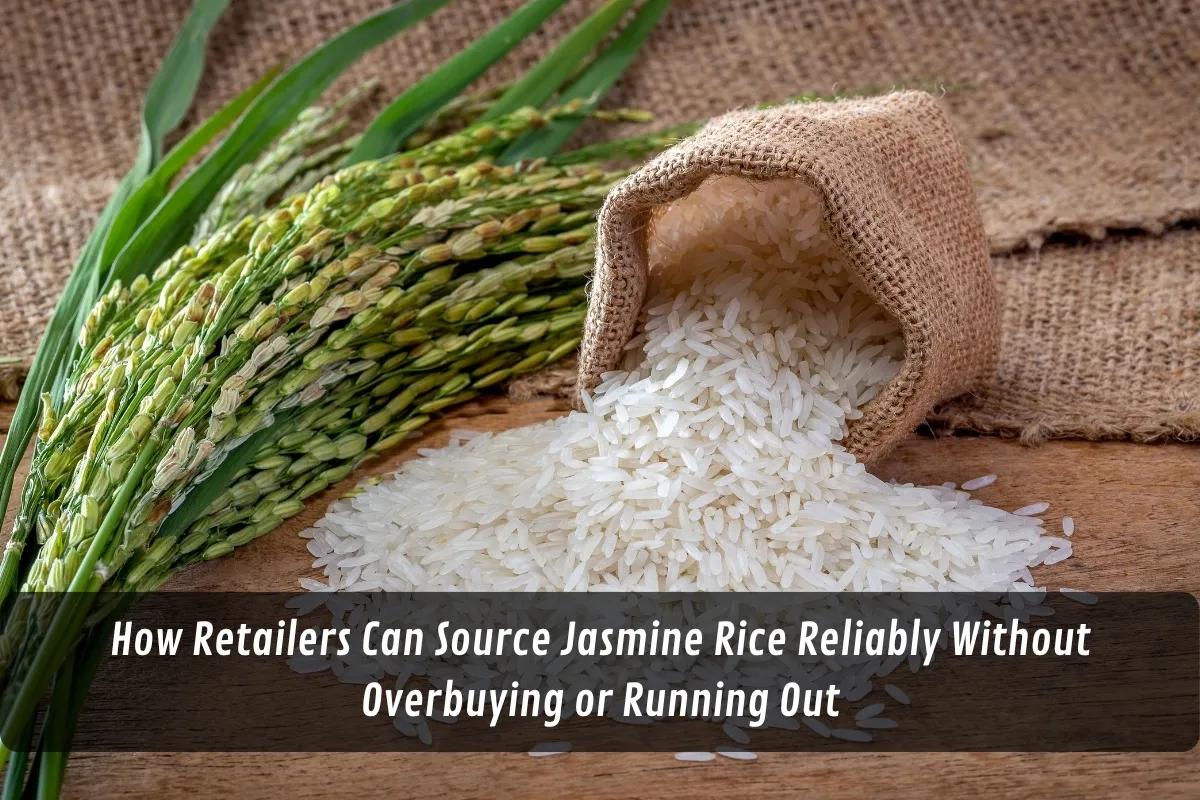

Jasmine rice is one of those “always-on” staples that rarely gets a spotlight until it’s missing from the shelf and someone asks staff to check out the back.
If you’ve ever watched a customer change their whole basket because the rice they usually buy isn’t there, you already know it’s not a small issue, it’s a meal-plan issue.
Retail buyers often end up searching phrases like “SunRice jasmine rice for retailers” when what they really want is simple: steady supply, the right pack formats, and fewer last-minute scrambles.
The goal isn’t to carry ten varieties; it’s to run a repeatable system that keeps the core line available without quietly stockpiling cash in the storeroom.
Why jasmine rice quietly drives repeat purchase behaviour
For many shoppers, jasmine rice isn’t an impulse buy, it’s a base ingredient they plan dinners around.
When a core staple disappears, the frustration isn’t “I can’t buy rice”; it’s “I can’t cook what I intended,” and that’s the kind of friction that nudges people to change stores.
In foodservice, the same dynamic shows up as menu disruption, substitution costs, and inconsistent outcomes on the plate.
Jasmine rice becomes a reliability product: customers notice when it’s missing, and kitchens notice when it cooks differently.
The real sourcing problem isn’t taste; it’s operational fit
Most retailers don’t struggle because they can’t identify a decent jasmine rice; they struggle because the supply setup doesn’t match how their store actually works.
Pack formats might not align with the buyer mix (small household packs vs bulk), case quantities might be awkward for storage, or lead times might be vague enough that staff “panic order” on a Friday.
Another common issue is treating all rice SKUs as interchangeable, when movement rates can differ a lot depending on local demographics, nearby hospitality demand, and whether the store ranges complementary Asian pantry lines.
Reliability also includes how clean the ordering process is, what information is provided upfront, how substitutions are handled, and how easy it is to plan around delivery days.
Common mistakes retailers make with jasmine rice ordering
The most frequent mistake is forecasting off the average week, then getting surprised by predictable spikes.
A close second is ordering too many pack sizes without a clear role for each, which splits demand and leaves the “wrong” cases sitting around.
Another is having no simple reorder trigger, so ordering becomes a memory test that fails when the store is busy.
Some stores also ignore storage realities, bulk cases end up in damp or high-traffic areas, packaging gets damaged, and shrink starts looking like “slow stock.”
And it’s easy to underestimate how one missing staple can dent basket size: customers buying rice often also buy sauces, proteins, and vegetables.
Decision factors when choosing a jasmine rice supply setup
Start with the product and the ordering mechanics, not the branding.
You want a supply arrangement that makes it easy to keep one or two core jasmine SKUs consistently available, with pack formats that match how shoppers (and local food businesses) actually buy.
Key decision factors to weigh:
- Pack formats and case quantities: Do they suit shelf space and back-of-house capacity without forcing overbuying?
- Delivery cadence and lead times: Can you plan reorder points around when deliveries land (and what happens on public-holiday weeks)?
- Availability transparency: Are out-of-stocks and substitutions communicated early enough to act on?
- Consistency signals: Does the product behave consistently in cooking performance and customer acceptance from batch to batch?
- Support for retail execution: Can you access clear ordering expectations and practical guidance that helps staff reorder confidently?
If the goal is fewer substitutions and cleaner re-ordering, it helps to review a single source of pack formats, ordering expectations, and availability notes like the BKK Australia Pty Ltd jasmine rice supply guide.
You’re not looking for hype; you’re looking for clarity that lets you make the decision once, then run it as a system.
Operator Experience Moment
In day-to-day retail ops, rice is the kind of line that looks “fine” until the exact moment it isn’t, because the shelf can be full on Monday and bare by Saturday.
The teams that manage it best aren’t guessing better; they’ve simplified the range and made the reorder decision almost automatic.
When that happens, staff spend less time firefighting and more time keeping the aisle tidy, faced up, and easy to shop.
A simple 7–14 day plan to tighten ordering and reduce waste
Days 1–2: Map your real demand (quick, not perfect).
Look at the last 6–8 weeks of movement for jasmine rice, then mark any known spike weeks (long weekends, local festivals, big sporting weekends, school holiday starts).
Days 3–4: Decide what “core” means in your store.
Choose one core jasmine SKU that should rarely be missing, then add one support format only if you can clearly explain why it exists.
Days 5–7: Set one reorder trigger people will actually follow.
Base it on lead time plus typical weekly movement (e.g., “reorder at two weeks of cover”), then make the trigger visible and simple enough that it survives staff changeovers.
Days 8–10: Clean up shelf and storage discipline.
Give the core SKU a stable shelf location, keep back stock dry and protected, and rotate cases using FIFO so you’re not selling tired packaging and wondering why sales dip.
Days 11–14: Review once, adjust one thing, then hold steady.
After two reorder cycles, tweak the trigger up or down, but avoid changing supplier, pack formats, and shelf placement at the same time.
Practical opinions: Simplify the range before you “optimise” it.
Practical opinions: Reorder triggers beat heroic last-minute buying.
Practical opinions: If lead times aren’t clear, reduce complexity until they are.
Local SMB mini-walkthrough (Australia)
A suburban independent grocer notices jasmine rice sells steadily, then jumps around long weekends and community events.
They keep one core jasmine SKU and one bulk option, then drop the slowest-moving pack size to stop demand splitting.
They set a reorder trigger based on weeks of cover, tied to delivery days rather than gut feel.
They keep rice easy to find and cross-merchandise pantry companions without creating a cluttered aisle.
They store back stock off the floor in a dry area and rotate cases weekly to reduce packaging damage and shrink.
After two weeks, they adjust only the reorder trigger and keep everything else stable so staff execution stays consistent.
Key Takeaways
- Jasmine rice availability is mostly an operations problem: forecasting, pack fit, reorder discipline, and storage.
- One core SKU (plus one support format if there’s a real need) usually beats a wide range that’s hard to manage.
- Simple reorder triggers tied to lead time reduce “panic ordering” and the overstock that follows.
- Supplier clarity, pack formats, ordering expectations, delivery cadence, matters as much as the product itself.
Common questions we hear from Australian businesses
Q1) How many jasmine rice SKUs should a small retailer stock?
In most cases… one core jasmine SKU covers the majority of demand, with a second format only if there’s a clear reason (bulk buyers, nearby takeaways, or regular restaurant customers). A practical next step is to review 6–8 weeks of sales and identify which single SKU moves consistently, not just during peaks. In Australia, demand can swing around long weekends and community events, so a tight range is easier to protect from stockouts.
Q2) What’s the simplest way to set a reorder point without complicated forecasting?
Usually… a “weeks of cover” rule works well: decide the buffer you want to hold, then convert it into cases based on recent weekly movement and lead time. The next step is to pick one trigger and run it for two delivery cycles before changing anything. In many Australian SMB stores, the best reorder system is the one staff can execute during a busy shift.
Q3) How do I avoid overbuying when availability feels uncertain?
It depends… on cashflow, storage conditions, and how predictable deliveries are, but the common fix is to protect the core SKU first and avoid adding extra pack sizes “just in case.” The next step is to calculate how many cases you can store properly (dry, pest-controlled, rotated) and cap routine orders to that, then plan separately for known spikes. In Australian conditions, poor storage (humidity, heat, pests) can turn “safety stock” into avoidable shrink.
Q4) Should retailers promote jasmine rice heavily, or keep it steady?
In most cases… treat it as a reliability line: keep it consistently available, well-presented, and easy to locate, then use light cross-merchandising rather than aggressive promo swings that cause empty shelves. The next step is to trial one simple adjacency (sauces or pantry staples) for two weeks and compare movement and basket behaviour. In Australian grocery, availability and visibility often outperform big discounts that trigger stockouts.






























Sign in to leave a comment.