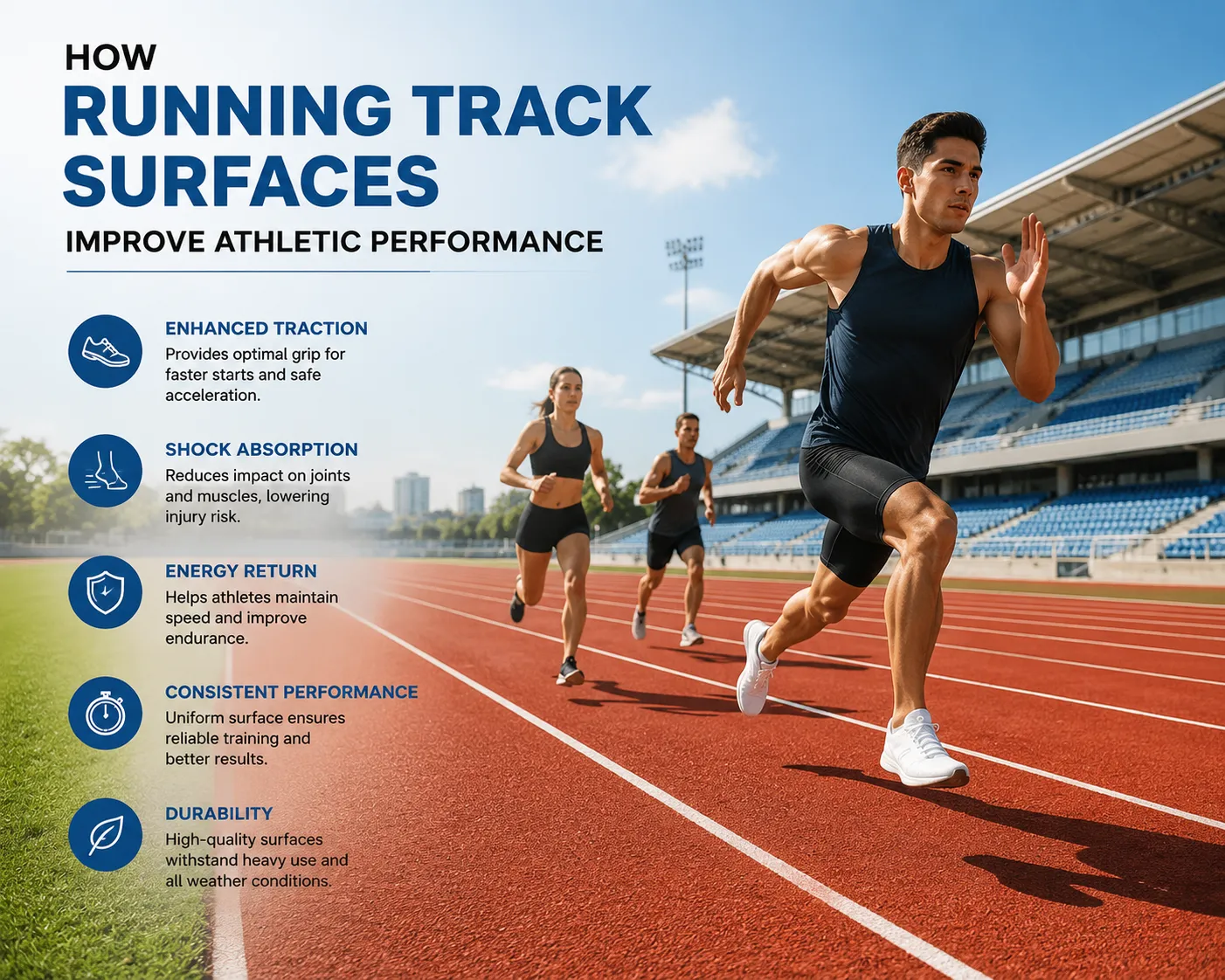

Athletic performance depends on many factors, including training, technique, fitness, footwear, and the quality of the surface an athlete trains and competes on. A professionally designed running track can provide athletes with a consistent environment that supports speed, movement, comfort, and training efficiency.
For schools, athletics clubs, universities, professional training centres, and sporting facilities, investing in a quality athletic running track system can help create a surface designed specifically for the demands of running and track-and-field activities.
The Importance of a Quality Running Track
A running track is more than simply a coloured surface around a sports field. It is an engineered system designed to provide specific performance characteristics.
A well-designed track can offer:
- Consistent surface performance
- Appropriate shock absorption
- Reliable traction
- Surface resilience
- Weather resistance
- Comfortable running characteristics
- Long-term durability
These characteristics can help athletes train with greater consistency while supporting a safer and more comfortable sporting environment.
1. Consistent Surface Performance
Consistency is important for athletes who train regularly.
An appropriately designed running track provides a uniform surface across the running lanes. This means athletes can experience similar running conditions throughout their training sessions rather than dealing with uneven areas that may be found on some natural surfaces.
A consistent surface can also help athletes focus on technique, pacing, and performance.
2. Shock Absorption and Athlete Comfort
Running places repeated forces on the body. Every stride creates an impact that travels through the athlete's feet and legs.
Modern synthetic track surfaces can be designed with resilient layers that provide controlled shock absorption. This can create a more comfortable running experience while helping manage the repeated impact associated with athletic activity.
The exact performance of the surface depends on the complete track construction, including the base, elastic layers, and surface system.
3. Reliable Traction
Traction is essential for sprinting, running, jumping, and changing direction.
A high-quality track surface should provide athletes with reliable grip while still allowing efficient movement. Appropriate traction can help athletes maintain control during acceleration and at higher running speeds.
The surface texture and material specification should therefore be selected according to the intended sporting application.
4. Supporting Speed and Running Efficiency
Athletes need a surface that responds predictably to their movement.
A professionally engineered synthetic running track can provide a balance between resilience and firmness. This allows athletes to run efficiently without the surface feeling excessively hard or unstable.
For competitive athletes, even small differences in surface characteristics can influence how a track feels during sprinting and training.
5. Weather and Outdoor Performance
Outdoor athletics facilities must operate under changing environmental conditions.
Running tracks can be exposed to sunlight, rain, temperature changes, and regular outdoor use. A suitable athletic running track system should therefore be selected with the local climate and expected usage in mind.
Proper drainage is also important. Effective water management helps reduce the risk of standing water and supports the usability of the track following rainfall.
6. Durability for Regular Training
Athletics tracks can receive significant levels of use from schools, clubs, athletes, and community organisations.
A durable surface can help the facility accommodate regular training sessions while maintaining its performance characteristics.
The overall lifespan of a track depends on factors such as material quality, installation, usage, environmental exposure, and maintenance.
Running Track Surfaces for Different Facilities
Different organisations may have different requirements for their athletics track.
Schools and Colleges
School tracks often need to accommodate students of different ages and ability levels. Durability, safety, ease of maintenance, and versatility can therefore be important considerations.
Athletics Clubs
Athletics clubs may require surfaces suitable for regular training in sprinting, middle-distance running, long-distance running, hurdles, and field events.
Professional Training Facilities
High-performance facilities generally require careful consideration of surface performance, consistency, drainage, durability, and maintenance.
Community Sports Facilities
Community facilities may need a versatile surface that can withstand frequent use while remaining practical to maintain.
The Role of Professional Installation
Even the highest-quality track materials cannot perform correctly without proper installation.
A professional installation process can involve:
- Site assessment
- Ground preparation
- Sub-base construction
- Drainage installation
- Base and performance layers
- Synthetic surface installation
- Line marking
- Quality inspection
Every stage contributes to the final performance of the track.
Maintaining Your Running Track
Regular maintenance helps protect the surface and extend its service life.
Maintenance requirements can vary depending on the type of track system, but may include routine cleaning, debris removal, inspections, drainage checks, and addressing damaged areas.
Following the manufacturer's maintenance recommendations is important for preserving the surface's performance.
Why Choose Australian Sport Surface?
Australian Sport Surface provides sports surface solutions for athletic and recreational facilities across Australia.
When planning a new running track, choosing an experienced sports surface provider can help ensure that important factors such as surface performance, durability, installation, drainage, and maintenance are considered as part of the overall project.
Whether the project is for a school, athletics club, training facility, or community sports precinct, the right athletic running track system can provide a purpose-built environment for regular training and competition.
Conclusion
A quality running track can play an important role in creating a consistent and comfortable environment for athletes. Features such as controlled shock absorption, reliable traction, surface resilience, drainage, and durability can all contribute to the overall performance of an athletics facility.
Choosing the right athletic running track system and ensuring professional installation can help create a track designed for long-term use.
With the right planning and sports surface expertise, Australian Sport Surface can help facilities develop running track solutions suited to their specific requirements.























Sign in to leave a comment.