
Small businesses handle a wide range of documents every day. From invoices and tax records to employee files and contracts, paperwork quickly becomes a part of everyday operations. Without a clear system, these records can pile up and become difficult to manage.
Keeping documents indefinitely is not always the best solution. Keeping too many files can lead to a mess, higher storage costs, and risks if private information stays around too long. On the other hand, deleting records too soon can cause legal or financial problems.
A clear document retention plan helps small businesses manage information responsibly. By deciding what to keep, for how long, and when documents shredding should be securely shredded, businesses can stay organized, follow the rules, and be ready for what's next.
What Document Retention Means
Document retention refers to the process of managing business records throughout their lifecycle. This includes determining which documents should be stored, how long they should remain available, and when they can be safely disposed of.
Both physical paperwork and digital files fall under this process. Emails, contracts, financial statements, and employee records are all examples of documents that may require structured retention.
Without a structured system, businesses might have a hard time finding important files or accidentally delete items they still need. A clear plan for what to keep helps prevent confusion and ensures you can get to important info whenever you need it.
Benefits of a Smart Retention Strategy
Setting up a solid plan for file storage offers several real perks for small businesses.
- One of the most noticeable benefits is improved organisation. When documents are stored according to clear guidelines, employees can quickly locate the information they need. This saves time and reduces frustration when searching through large volumes of records.
- A retention plan also helps reduce unnecessary storage. Over time, you can get rid of files you no longer need, which clears up physical space and digital storage.
- Another key benefit is improved compliance with legal and financial regulations. Many rules require businesses to keep certain records for a set period of time. Having a clear schedule ensures those files are ready if you ever have an audit or a legal check.
Steps To Smart Document Retention
1. Identifying Documents
Not all documents need to be treated the same. Some records hold long-term value, while others may only be relevant for a short period.
- Financial documents are among the most important records to maintain. These can include things like tax forms, receipts, bills, and bank statements. Keeping these organized makes it much easier to track your finances and get ready for tax season.
- Employee files also need to be kept carefully. Papers about pay, benefits, or work agreements may need to be saved for a set amount of time by law.
- You should also keep contracts and agreements in a safe place, especially if they show what you still owe or have promised to others.
By knowing which records matter most, small businesses can avoid storing unnecessary documents while ensuring they have the important ones when they need them.
2. Set Timelines
Once you know which papers are important, the next step is deciding how long to keep them. How long you can keep things depends on the law and your business needs.
- Many financial records are kept for several years to comply with tax or accounting rules. Payroll records may also need to remain accessible for a defined period, depending on employment regulations.
- Some documents, such as company formation records or major contracts, may need to be stored permanently because they represent key information about the business.
Setting clear dates for how long you keep files, when to store them, or throw them away without any guesswork. It also makes sure you have what you need if you ever need to look up old records.
3. Organize Files
Even the best retention plan will not be effective without proper organization. A structured filing system enables employees to quickly locate documents and manage them efficiently.
Many businesses organise records by category, such as financial documents, contracts, employee files, or operational records. Within these groups, you can organize your documents by date or by project.
Digital systems work better when you use the same names for files and clearly label your folders. For paper files, you can use labelled cabinets or storage boxes.
Active files remain easily accessible for daily use, while archived records can be stored securely until their retention period ends.
4. Assign Responsibility
A document retention policy works best when someone is responsible for maintaining it. In many small businesses, this responsibility may fall to an office manager, accountant, or administrative staff member.
Pick one person to stay on top of your files and ensure your schedule is always followed. This person can keep track of when to put things away, check them, or dispose of them.
Giving someone this job also stops your team from getting confused. When everyone knows who is in charge of the records, the whole process stays much more organized and reliable.
5. Plan Professional Secure Disposal
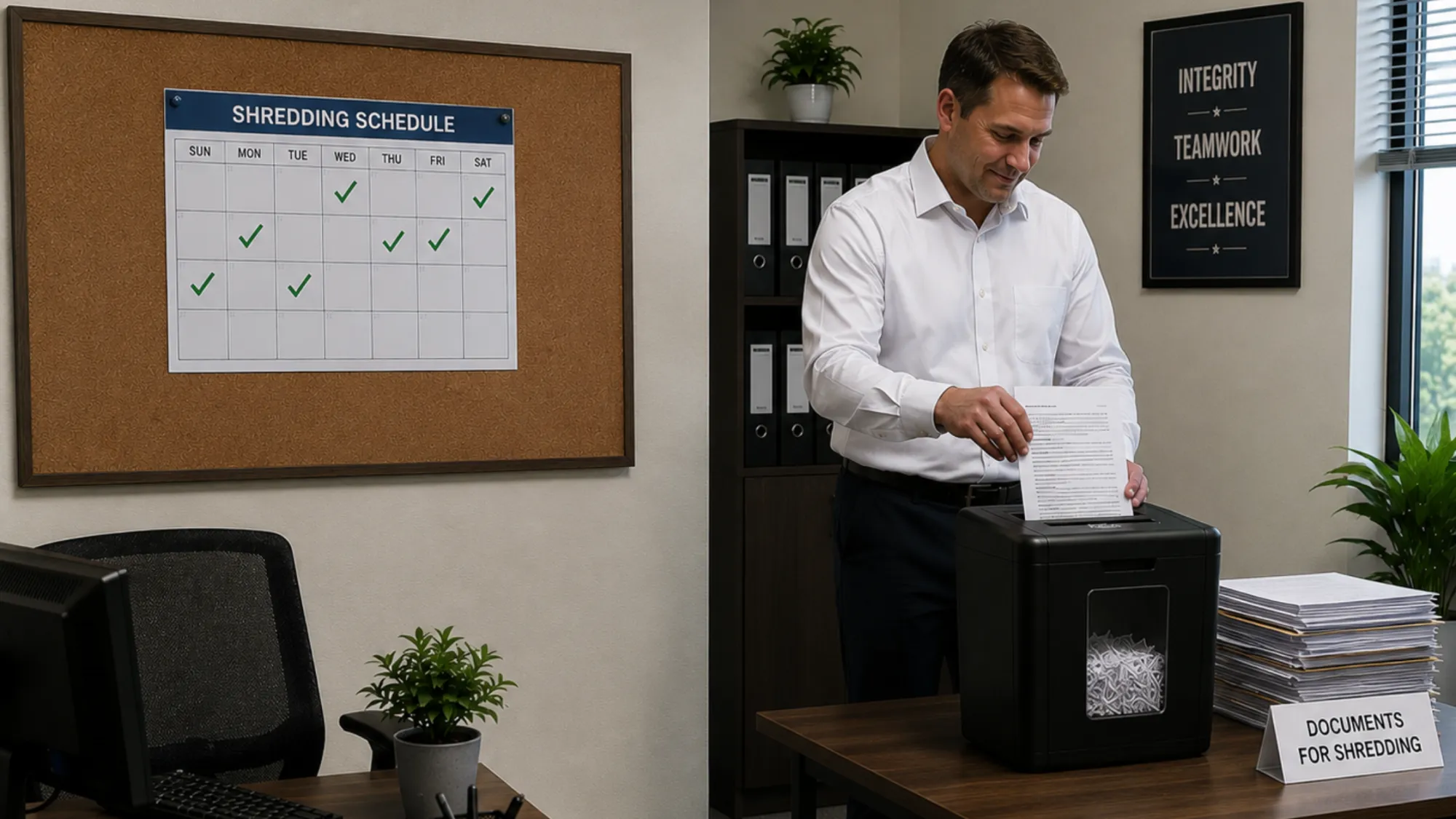
An effective retention strategy does not stop at storage. It must also include a plan for safely disposing of documents once they are no longer required. Paper records containing sensitive information should be destroyed in a manner that prevents reconstruction or misuse. In the same way, digital files (hard drives) should be securely shredded rather than just moved to a trash folder.
As digitalisation evolves, document destruction trends evolve too, so it is the safest way to outsource shredding with modernisation, which helps protect sensitive information, reduce risk, and provide a certificate of destruction for peace of mind.
6. Review Policy
As businesses grow and rules change, you should check your file plans periodically. What worked for a company a few years ago might not work as it grows or as new rules take effect.
Regular checks let businesses adjust how long they keep things, update how they store them, and improve their recordkeeping. This constant check-up helps make sure your plan still works for your needs and the law.
Putting Smart Document Retention into Practice
Building a smart system for keeping files helps small businesses stay organised and ready for the future.
By identifying which records are important, setting clear dates, and carefully managing files, businesses can maintain control over their information. It is just as important to know when files should be safely thrown away.
Good record-keeping means both storing things properly and disposing of them safely. When businesses take the time to develop a clear retention strategy with the help of a professional shredding company, they reduce risk, improve efficiency, and build a stronger foundation for long-term information management.






















Sign in to leave a comment.