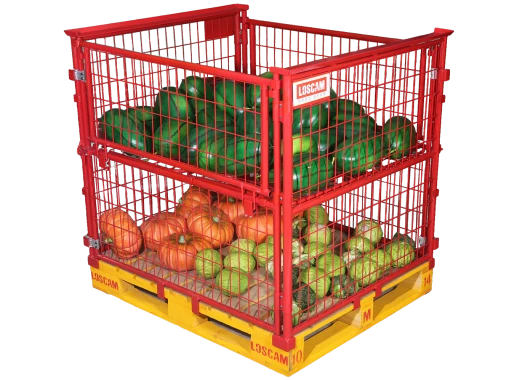

Smart pallet pooling solutions lead to cost reductions and streamlined pallet management which outperforms conventional pallet methods. By sharing a common pool of pallet crates, businesses can make better use of them. With this model, companies rely on technology to monitor processes and operations in real-time. This leads to lower costs, higher productivity and better management of the supply chain in various industries.
Enhanced visibility through IoT (Internet of Things) tracking
The use of advanced sensors and IoT technology enables smart pallet pooling platforms to monitor the location and condition of assets in real time. Individual pallet tracking by managers saves on losses and reduces the need for manual reconciliation. Thanks to this openness, companies can quickly decide how to adjust resources to meet increased or decreased demand.
Being informed about necessary maintenance and sudden changes in equipment helps avoid unnecessary downtime and logistic problems. As a result, companies see less idle equipment and better use of their assets. Thanks to data-driven insights, teams can distribute pallets ahead of demand rather than wait for issues to arise. In addition, custom dashboards help stakeholders understand past trends and predict future requirements, assisting in continuously perfecting pallet circulation plans.
Optimised asset utilisation and reduced capital costs
Smart pallet pooling shifts companies away from outright ownership to a pay-per-use model, eliminating the need for large upfront investments. Dynamic allocation algorithms enable pool operators to deploy the right number of pallets at a given time, thereby avoiding shortages and surpluses. This lean inventory approach lessens warehousing requirements and frees up working capital for core business activities. Businesses also benefit from economies of scale by sharing and reusing pallets among multiple users, reducing per-unit costs. While procurement and maintenance savings are realised over time, they can be substantial and directly affect the bottom line without impacting service levels.
Streamlined handling and labour
Smart pooling systems use automation tools to simplify pallet handling. The implementation of RFID (Radio Frequency Identification) checkpoints and automated sorting systems minimises manual scanning and data entry operations, leading to savings in both time and effort. Warehouse workers can now focus on quality checks and order packaging because they don't have to search for misplaced pallets anymore. Integrated routing systems allow drivers and forklifts to use optimal paths that reduce travel distances within the yard and depot. Companies that eliminate unnecessary handling steps can reduce their labour costs and complete orders faster, resulting in improved customer satisfaction.
Lower storage expenses with strategic pool positioning
Smart pallet pooling relies on network-wide information to place assets where they are most needed, reducing the time they stay in low-traffic depots. If organisations shift under-utilised pallets from remote locations to more active hubs, they can avoid having to rent out storage space for a long period. This allows for using less space for staging and saves money on rent and utilities. Moreover, grouping returns in a single place makes it easier and more inexpensive to manage inspections and repairs. Strategic rebalancing of pallet inventories enables assets to flow continuously through circulation channels instead of just idling in underutilised facilities, improving the efficiency of the entire pallet crate network.
Reduced administrative overhead through automated accounting
Traditionally, pallet management requires people to keep records of inspections, maintenance, and bills manually. Smart pooling platforms include financial tools that automatically generate invoices for users based on the duration of their service usage and any associated events. Most disputes about pallet numbers or condition reports disappear when digital logs are used. When invoices are correct and promptly sent, cash flow increases, and there is less work for the finance team in reconciling accounts. Being able to view all transactions simultaneously helps with compliance reports and budget planning. Consequently, enterprises require fewer office staff and can redirect their attention to key initiatives related to pallets.
Scalability and flexibility for peak demand
Smart pallet pools can adjust to handle increased demand during peak seasons or promotions without the need for permanent asset ownership. Organisations can use more pallets without worry, knowing the pool can provide additional units whenever needed. When demand and supply are balanced, the pool adjusts itself, saving you money on unused items. This quality benefits companies with changing order volumes, allowing them to handle both growth and shrinkage without affecting their cash flow. Quickly adjusting the number of pallets used helps the supply chain remain flexible during unpredictable times.
Smart pallet pooling is a progressive approach to managing supply chain assets. With shared inventories, automatic tracking and flexible billing, pallet solutions help a company save money and perform better. The model allows organisations to spend less on capital, labour and storage while responding more quickly to market changes. As a result, this strategy helps businesses grow sustainably and remain competitive in a challenging logistics field. It also reduces waste and supports a circular economy, making it a smarter choice for environmentally conscious operations.

























Sign in to leave a comment.