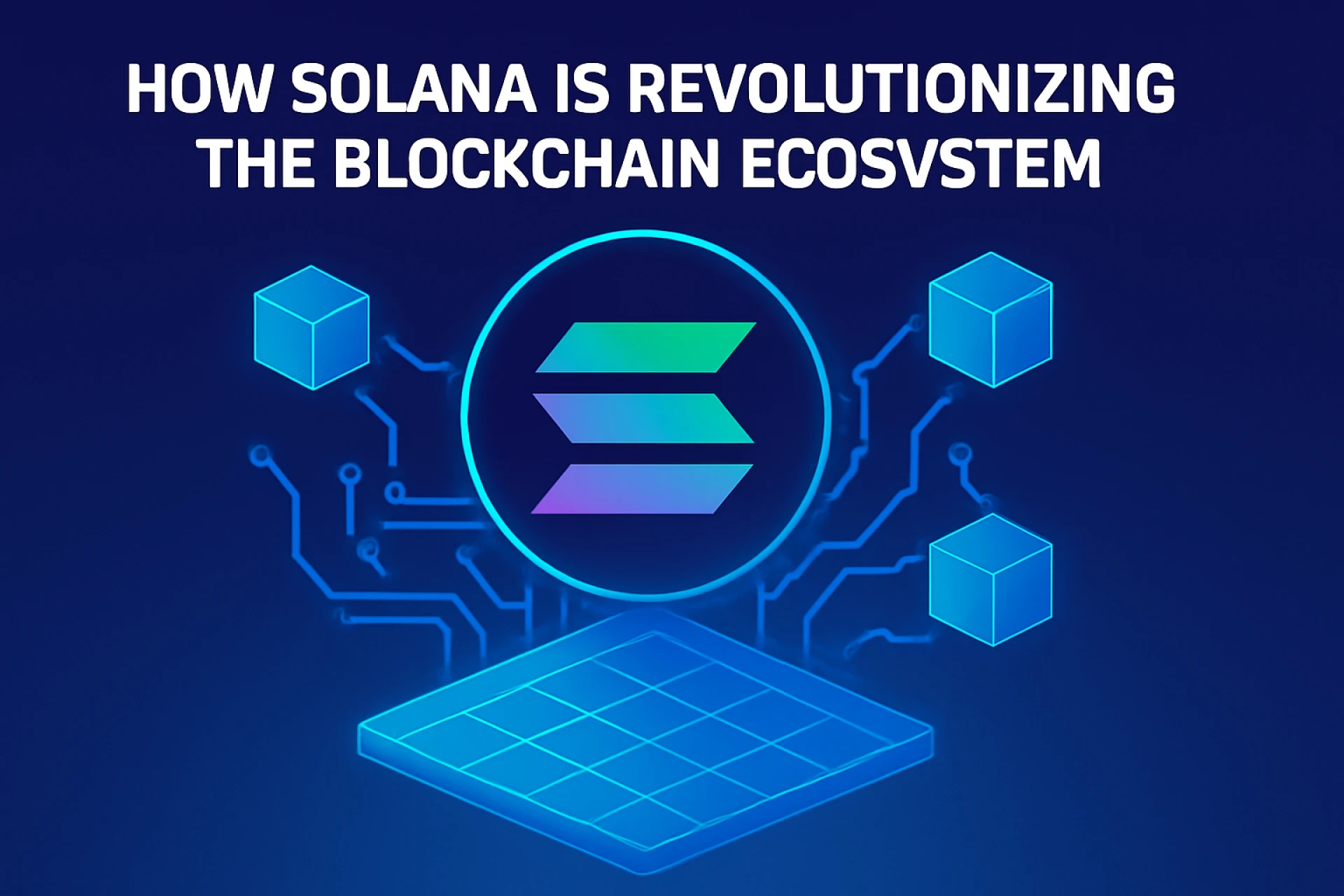

Blockchain technology has been one of the most transformative innovations of the 21st century. It has revolutionized various industries, from finance and healthcare to supply chain management and voting systems. While Ethereum has long been the dominant player in the blockchain ecosystem, a new contender has emerged—Solana. Solana's high-performance blockchain has garnered significant attention for its ability to overcome many of the limitations of previous blockchain networks. This article will delve into how Solana is revolutionizing the blockchain ecosystem, its key features, and why it is poised to lead the future of decentralized technologies.
1. Introduction to Solana
At its core, Solana is a decentralized blockchain platform designed to provide high-speed, low-cost transactions. What sets Solana apart from other blockchains is its unique architecture and consensus mechanism. Unlike Ethereum, which relies on a proof-of-work (PoW) system, Solana uses a novel proof-of-history (PoH) consensus mechanism, coupled with proof-of-stake (PoS). This combination allows Solana to process thousands of transactions per second (TPS), drastically improving scalability compared to older blockchain networks.
Solana’s innovation goes beyond just scalability. It also focuses on affordability. With its ability to handle thousands of transactions at a fraction of the cost of competitors, Solana provides an attractive solution for developers, businesses, and users alike.
2. High-Speed Transactions
One of the key challenges with traditional blockchain networks like Bitcoin and Ethereum has always been their transaction speeds. As the number of users grows, these networks can become congested, resulting in delays and higher fees. Solana solves this problem by providing transaction speeds that can reach up to 65,000 transactions per second, making it one of the fastest blockchain networks available today.
In addition to speed, Solana's network is designed to be highly efficient, ensuring that transactions can be processed quickly without compromising security. This performance is achieved through Solana's unique consensus mechanism and its use of parallel processing, which allows it to execute multiple transactions simultaneously.
3. Scalability Without Sacrificing Decentralization
Scalability has been one of the most significant issues facing blockchain technology. Many blockchain networks sacrifice decentralization in the pursuit of higher transaction throughput. However, Solana is changing this paradigm by allowing for both scalability and decentralization without compromise. Solana’s architecture ensures that the network remains decentralized, with thousands of nodes participating in the consensus process.
Unlike many other blockchain projects, Solana does not require developers to make a tradeoff between scalability and decentralization. Instead, the network is designed to support large-scale applications, such as decentralized finance (DeFi), without experiencing the slowdowns and high fees typically associated with scaling blockchain networks.
For anyone looking to make the most out of the Solana ecosystem, tools like the Best Solana Bot are helping users automate their interactions with the blockchain, making it even easier to navigate and engage with decentralized applications (dApps) in real time.
4. Cost Efficiency
One of the major barriers to entry for many users and developers in the blockchain space has been the cost of transactions. In networks like Ethereum, gas fees can fluctuate, often making microtransactions or small operations prohibitively expensive. Solana's cost-efficiency is one of its most attractive features. The blockchain is designed to minimize fees by reducing the computational complexity of each transaction. As a result, transaction costs on Solana are typically just a fraction of a cent, which opens up new possibilities for microtransactions, NFTs, gaming, and much more.
This cost efficiency is critical for the widespread adoption of blockchain technology, as it allows smaller users and developers to participate without being burdened by expensive fees. Whether you are sending money, making purchases, or interacting with dApps, Solana ensures that the cost remains low, making it accessible to a broader audience.
5. Enhanced Security and Reliability
While speed and cost are crucial factors, blockchain networks must also maintain a high level of security. Solana’s approach to security combines its innovative proof-of-history and proof-of-stake mechanisms to ensure that the network is both secure and reliable. The network is designed to be resistant to attacks, such as Sybil attacks or 51% attacks, that have plagued some other blockchains in the past.
The combination of these mechanisms also ensures that the network can maintain a high level of reliability, even as it scales to accommodate more users and applications. This is particularly important for decentralized applications (dApps) that rely on blockchain networks for critical functions, such as financial transactions, asset management, and identity verification.
6. Decentralized Finance (DeFi) on Solana
The rise of decentralized finance (DeFi) has been one of the most exciting developments in the blockchain space. DeFi applications allow users to interact with financial services—such as lending, borrowing, and trading—without relying on traditional intermediaries like banks. Solana's high-speed and low-cost transaction capabilities have made it an ideal platform for the development of DeFi applications.
Solana has already seen the launch of several DeFi protocols, including decentralized exchanges (DEXs), lending platforms, and yield farming protocols. These DeFi platforms are able to offer fast and cheap transactions, which makes them more attractive to users who are tired of paying high fees on Ethereum-based platforms.
Additionally, Solana's scalability ensures that DeFi applications on its network can handle a high volume of transactions, enabling them to scale without compromising performance or security. This opens up the possibility for more complex DeFi use cases, such as cross-chain lending, decentralized insurance, and more.
7. The Role of NFTs on Solana
Non-fungible tokens (NFTs) have become one of the most talked-about aspects of blockchain technology. These unique digital assets represent ownership of a specific item, whether that’s art, music, or even virtual real estate. While NFTs have primarily been associated with Ethereum, Solana has quickly become a major player in the NFT space.
Solana's low transaction costs and high-speed capabilities make it a perfect platform for minting, buying, and selling NFTs. Users can create and trade NFTs without having to worry about exorbitant fees or slow transaction times. In fact, some NFT creators and collectors are choosing Solana as their blockchain of choice due to the platform’s ability to offer an efficient and cost-effective solution.
Moreover, Solana’s growing NFT marketplace has attracted artists, creators, and investors who are looking for a more scalable and accessible platform. The ability to mint NFTs quickly and inexpensively allows for greater creativity and innovation in the space.
8. Interoperability and Cross-Chain Capabilities
One of the key challenges facing blockchain networks is interoperability—how different blockchains can communicate and work together. Solana is working towards solving this problem by implementing cross-chain capabilities. This allows assets and data to move freely between Solana and other blockchains, enhancing the overall utility of the Solana ecosystem.
By enabling interoperability, Solana aims to break down the silos that exist between different blockchain networks. This creates new opportunities for users to access a wider range of dApps, DeFi protocols, and NFTs, regardless of which blockchain they are built on. Solana's cross-chain functionality is still in development, but it holds great promise for the future of blockchain interoperability.
9. Developer-Friendly Ecosystem
For a blockchain network to thrive, it must have a vibrant developer community. Solana's ecosystem is designed to be developer-friendly, with tools, documentation, and resources that make it easy to build on the platform. Solana supports a wide range of programming languages, including Rust and C, which allows developers to use their existing knowledge and skills to build decentralized applications.
Additionally, Solana’s low fees and fast transaction speeds provide a significant incentive for developers to create new applications and services on the network. This has resulted in a growing ecosystem of dApps, DeFi protocols, and NFTs, all of which are driving the adoption of Solana's platform.
10. The Future of Solana in the Blockchain Ecosystem
As blockchain technology continues to evolve, Solana is well-positioned to remain a key player in the space. With its high-speed transactions, low costs, and focus on scalability and decentralization, Solana is redefining what is possible within the blockchain ecosystem. The network's growing developer community, expanding use cases, and commitment to innovation make it a strong contender for the future of decentralized technologies.
As more users and developers flock to Solana, the ecosystem will continue to grow and evolve. The rise of decentralized finance, NFTs, and other blockchain applications will only increase the demand for fast, scalable, and affordable networks, and Solana is poised to meet that demand.
For anyone interested in harnessing the power of Solana's blockchain for their own projects or investments, staying up-to-date with the latest developments is crucial. Tools like Best Solana Bot are also helping users navigate the ecosystem more effectively.
Conclusion
In conclusion, Solana is undoubtedly revolutionizing the blockchain ecosystem. Its combination of high-speed transactions, low-cost fees, scalability, and developer-friendly features sets it apart from other blockchain platforms. Whether it’s powering decentralized finance applications, facilitating the creation of NFTs, or enabling seamless cross-chain interoperability, Solana is proving to be a game-changer in the world of blockchain technology.
As Solana continues to expand its capabilities and attract new users, it will undoubtedly play a pivotal role in shaping the future of decentralized technologies. The possibilities for what can be built on the Solana network are endless, and the future looks bright for this revolutionary platform.
To learn more about Solana's potential, explore further through https://xsolanabot.com/.

























Sign in to leave a comment.