

Storm cleanup services prevent long-term property damage by removing debris within 24-72 hours after severe weather events, eliminating conditions that lead to structural deterioration, pest infestations, and water damage. Professional storm cleanup service assess hidden damage, secure vulnerable areas, and implement immediate protective measures that prevent minor storm impacts from escalating into major structural problems.
Delayed cleanup allows water infiltration, mold growth, and pest entry that can cause thousands of dollars in additional damage over time. This comprehensive guide examines cleanup priorities, damage prevention strategies, and service components that protect properties from cascading deterioration following storm events.
Immediate Damage Prevention
Critical Time Windows
The first 48 hours after storm damage determine whether property issues remain manageable or develop into extensive problems. Water intrusion through damaged roofs, windows, or siding creates conditions for mold growth that begins within 24-48 hours of moisture exposure.
Fallen trees and large debris create ongoing hazards that worsen with time. Tree limbs pressed against structures continue causing damage through wind movement, while blocked drainage systems redirect water flow into foundations and basements.
Bonus Tip: Document all visible damage with photographs before cleanup begins to support insurance claims and establish baseline conditions for restoration planning.
Structural Vulnerability Assessment
Professional cleanup teams identify compromised structural elements that pose immediate safety risks and long-term stability concerns. Damaged roof sections, weakened support beams, and foundation cracks require immediate attention to prevent progressive failure.
Window and door frame damage compromises building envelope integrity. Gaps and cracks allow moisture infiltration that deteriorates insulation, framing materials, and interior finishes over extended periods.
Types of Storm Damage Prevention
Water Damage Mitigation
Storm cleanup services install temporary tarping and weatherproofing to stop ongoing water infiltration. Emergency repairs seal openings that allow rain, snow, and humidity to enter compromised structures.
Drainage restoration removes debris from gutters, downspouts, and storm drains that redirect water away from foundations. Blocked drainage systems cause water pooling that leads to foundation settling, basement flooding, and landscape erosion.
Debris-Related Damage Control
Heavy debris removal prevents additional structural damage from ongoing contact pressure. Tree branches resting on roofs continue causing damage through thermal expansion, wind movement, and gradual settling that increases contact pressure over time.
Sharp debris creates puncture risks for roofing materials, siding, and windows. Metal fragments, broken glass, and splintered wood cause progressive damage when left in contact with building surfaces during subsequent weather events.

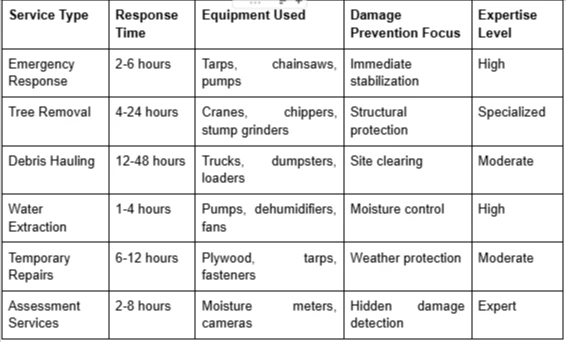
Storm Cleanup Service Comparison
Long-Term Damage Prevention Strategies
Mold and Moisture Control
Professional cleanup includes moisture detection and drying protocols that prevent mold establishment in hidden areas. Water trapped within wall cavities, insulation, and subflooring creates ideal conditions for microbial growth that damages materials and creates health hazards.
Dehumidification equipment removes excess moisture from affected areas within critical time windows. Proper drying prevents wood rot, metal corrosion, and insulation degradation that compromise building performance and indoor air quality.
Bonus Tip: Monitor humidity levels for 30 days after storm cleanup to ensure complete moisture elimination and prevent delayed mold development.
Pest Prevention Measures
Storm damage creates entry points that allow pest infiltration into structures. Cleanup services seal gaps, holes, and damaged areas that provide access routes for rodents, insects, and wildlife seeking shelter.
Debris removal eliminates nesting materials and food sources that attract pests to damaged properties. Organic debris like fallen fruit, damaged vegetation, and standing water create breeding conditions for various pest species.
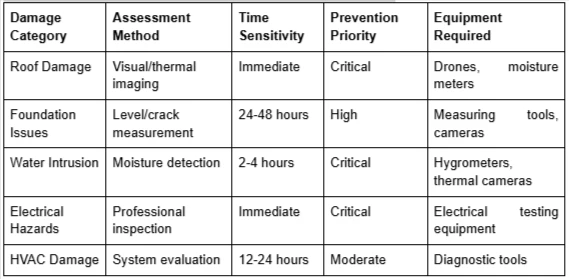
Technical Damage Assessment Criteria
Things to Consider Before Making a Decision
Insurance Coverage Coordination
Review insurance policy coverage for storm damage and emergency service expenses before selecting cleanup providers. Many policies have specific requirements for emergency repairs and preferred contractor networks that affect claim processing.
Document all damage thoroughly before cleanup begins to support insurance claims. Professional cleanup services often provide detailed reports and photographs that satisfy insurance documentation requirements.
Service Provider Qualifications
Verify that cleanup services carry appropriate licensing and insurance coverage for storm damage work. Emergency situations create urgency, but selecting unqualified providers can lead to inadequate repairs and additional damage.
Check references and previous storm response experience to ensure providers can handle the scale and complexity of damage present. Large-scale events may overwhelm local capacity, requiring providers with regional resources.
Property-Specific Factors
Assess unique property characteristics that influence cleanup priorities and methods. Historic buildings, custom construction, and specialty materials require experienced providers with appropriate expertise and equipment.
Consider accessibility challenges that affect service delivery and equipment deployment. Remote locations, limited access routes, and utility disruptions impact response times and service capabilities.
Coordination with Restoration Plans
Plan cleanup activities to support long-term restoration goals rather than just immediate stabilization. Proper debris sorting and material preservation can reduce replacement needs and preserve salvageable components.
Coordinate with architects, engineers, and contractors involved in permanent repairs to ensure cleanup activities support rather than complicate restoration efforts.
Bonus Tip: Prioritize cleanup activities that prevent the most expensive types of long-term damage, such as water infiltration and structural instability.
Common Questions
Cleanup Priority Sequencing
Address immediate safety hazards first, including unstable trees, electrical dangers, and structural collapse risks. Safety concerns take precedence over property protection considerations during initial response phases.
Focus on water infiltration control after safety stabilization. Stopping ongoing moisture intrusion prevents the most costly types of progressive damage that develop rapidly after storm events.
Hidden Damage Detection
Professional assessment identifies damage that remains invisible during initial inspections. Water infiltration, foundation movement, and structural stress often require specialized equipment and expertise to detect reliably.
Thermal imaging and moisture detection reveal problems within wall cavities, roof assemblies, and foundation areas. Early detection allows preventive treatment before damage becomes extensive and expensive to repair.
Service Coordination Benefits
Coordinated cleanup services prevent conflicts between different contractors and ensure comprehensive damage prevention. Single-source providers often deliver more efficient service and better communication during complex recovery situations.
Professional coordination includes proper sequencing of activities to maximize effectiveness. Water extraction before debris removal, structural stabilization before cleanup, and assessment before repair planning optimize outcomes.

How Storm Cleanup Services Prevent Long-Term Property Damage FAQ
How quickly must storm cleanup begin to prevent long-term damage? Begin cleanup within 24-48 hours to prevent mold growth and progressive structural damage. Water infiltration and debris pressure cause the most rapid deterioration during this critical window.
What types of hidden damage do professional services detect? Professional teams identify water infiltration, foundation movement, structural stress, and pest entry points that remain invisible during surface inspections. Specialized equipment reveals problems before they become extensive.
Can delayed cleanup increase total repair requirements? Yes, delayed cleanup often doubles or triples total repair needs through progressive damage. Water damage, mold growth, and structural deterioration accelerate rapidly without prompt intervention.
How do cleanup services coordinate with insurance claims? Professional services provide detailed documentation, photographs, and damage assessments that support insurance claims. Many providers work directly with insurance adjusters to streamline the claims process.
What makes some properties more vulnerable to long-term damage? Older buildings, custom construction, and properties with existing maintenance issues face higher risks of progressive damage. Complex architectural features and specialty materials require experienced cleanup providers.
Make the Right Decision
Professional lawn and landscape service provide essential protection against long-term property damage through rapid response and professional damage prevention strategies. Immediate action within critical time windows prevents minor storm impacts from developing into major structural and financial problems.
Evaluate cleanup providers based on response capabilities, technical expertise, and coordination with insurance and restoration requirements. Quality service during the cleanup phase significantly reduces total recovery time and expense.
Select providers with proven storm response experience and appropriate equipment for your property type and damage scope. Professional cleanup creates the foundation for successful long-term restoration and prevents cascading damage that multiplies repair requirements.
Reviewer: Sophie Williams looked over this post and brought 7 years of field experience to her suggestions, helping ensure the content stays relevant to business owners and practical for everyday use.




























Sign in to leave a comment.