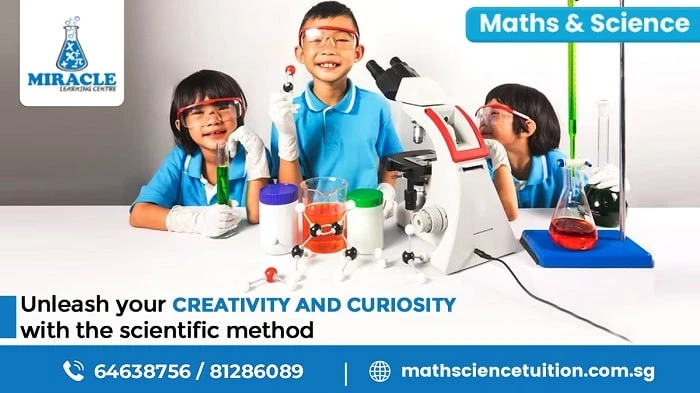

Science is everywhere. It is in the air we breathe, the water we drink, the food we eat, the gadgets we use, and the natural phenomena we observe. Science helps us understand how the world works and how we can improve our lives. Science also teaches us valuable skills such as curiosity, creativity, critical thinking, problem-solving, and communication. In this article, we explore the importance of the scientific method for kids and how science tuition can enhance their learning experience.
Understanding the Scientific Method
The scientific method is a series of steps that scientists follow to answer questions and solve problems. The scientific method is not a rigid or fixed procedure, but rather a flexible and adaptable way of thinking and doing. This method encourages children to think critically, ask questions, and explore the world around them in a structured manner. Science tuition provides a platform where these fundamental principles can be instilled in young learners, laying the foundation for a lifetime of intellectual curiosity.
The scientific method usually involves the following steps:
Ask a questionScientists start by asking a question about something they want to know more about. For example, why do plants need sunlight? What causes rainbows? How do magnets work?
Do background researchScientists look for existing information and knowledge related to their question. They read books, articles, websites, and other sources to learn what is already known and what is still unknown. They also talk to other experts and peers to get feedback and advice.
Make a hypothesisA hypothesis is a possible answer or explanation for the question. It is based on the background research and logical reasoning. A hypothesis should be testable, meaning that it can be supported or rejected by evidence. For example, a hypothesis for why plants need sunlight could be: Plants need sunlight to make their own food through a process called photosynthesis.
Test the hypothesisScientists design and conduct experiments to test their hypothesis. An experiment is a controlled way of observing and measuring what happens under different conditions. Scientists use variables, which are factors that can change or affect the outcome of the experiment. There are two types of variables: independent and dependent. The independent variable is the one that the scientist changes or manipulates. The dependent variable is the one that the scientist measures or observes. For example, in an experiment to test how sunlight affects plant growth, the independent variable could be the amount of sunlight, and the dependent variable could be the height of the plant.
Analyze the dataScientists collect and record the data from their experiments. Data can be quantitative (numbers) or qualitative (words, images, etc.). Scientists use graphs, tables, charts, and other tools to organize and visualize their data. They also use statistics, calculations, and logic to analyze and interpret their data. They look for patterns, trends, relationships, and differences in their data. They compare their results with their hypothesis and with other studies.
Draw a conclusionScientists summarize and communicate their findings based on their data analysis. They state whether their hypothesis was supported or rejected by their data. They also explain why their results are important and what they mean. They also discuss the limitations, errors, and uncertainties of their experiment. They suggest ways to improve their experiment or to further investigate their question.
Communicate the resultsScientists share their results with other scientists and the public. They write reports, articles, papers, or books to document their methods, data, analysis, and conclusions. They also present their results in conferences, seminars, workshops, or classrooms. They invite feedback, comments, questions, and criticisms from their peers and audience. They also acknowledge their sources and references.
Why to Consider Science Tuition?
The scientific method is not only for scientists. It is also for kids and anyone who wants to learn more about the world. Learning and applying the scientific method can help kids develop essential skills and attitudes for life. It can also spark their interest and passion for science and discovery.
However, learning the scientific method can be challenging and confusing for some kids. They may need guidance and support from their parents, teachers, and mentors. They may also benefit from enrolling in science tuition. Science tuition centre and science tutors can provide personalized and interactive learning experiences for kids. They can help kids understand the concepts and principles of science and the scientific method. They can also help kids design and conduct their own experiments and projects. They can also motivate and inspire kids to pursue their curiosity and creativity.
Conclusion
To sum up, the importance of the scientific method for kids cannot be overstated. Science tuition centre in Singapore, with the assistance of their dedicated science tutors, provides a structured and nurturing environment for children to explore the wonders of the scientific world. Through hands-on learning, critical thinking, and the development of a growth mindset, the scientific method prepares children for a future where curiosity, adaptability, and problem-solving skills are paramount. As we invest in the scientific education of our youth, we pave the way for a generation that will not only understand the world but actively contribute to its advancement.

























Sign in to leave a comment.