
Most people don't give their nails a second thought until a break, an infection, or a glance in the mirror makes it unavoidable. The truth is, nail care isn't complicated but it does require more consistency than most people give it. Done right, it's one of those small habits that quietly makes a noticeable difference over time.
Here's a straightforward guide on what your nails actually need, what professional treatments offer, and what makes the real difference when you stick with it.
What Your Nails Are Telling You
Before getting into routines, it helps to understand why nails deserve regular attention in the first place.
Healthy nails are a reflection of what's going on inside your body. Good hydration, adequate nutrition, and decent sleep all show up — or don't — in the condition of your nails. Brittle nails that chip easily can point to low iron or biotin. Ridges, discolouration, or unusual softness can signal deficiencies in zinc or other nutrients. They're not a diagnostic tool, but they're worth paying attention to.
On a practical level, nails that are clean and properly maintained are far less likely to harbour the bacteria and fungi that cause infections. The area under the nail tip is a surprisingly common spot for dirt and moisture to accumulate, and without regular cleaning and trimming, problems can develop without much warning.
And then there's the straightforward confidence side of it. Neat, well-kept nails — no matter the length or whether they're polished or bare — leave an impression. It's a small detail that people notice, often without consciously realising it.
A Daily Routine That Actually Holds Up
The single biggest thing that separates people who have good nails from those who don't is consistency. Not expensive products. Not salon visits every week. Just a handful of habits done regularly.
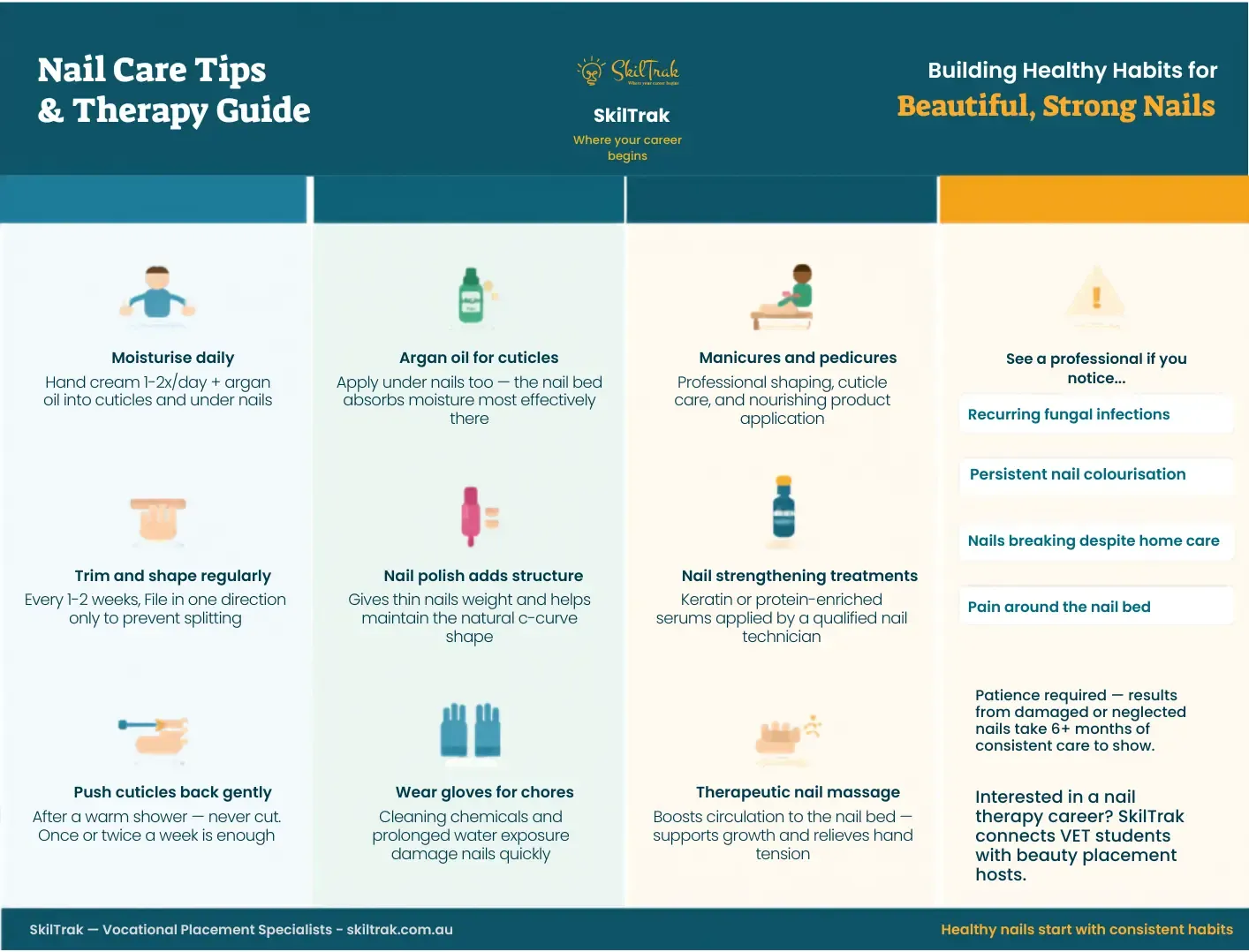
Moisturise every day. Nails lose moisture just like skin does, and when they dry out, they become rigid and prone to cracking or splitting. A good hand cream applied once or twice a day goes a long way. For the cuticles specifically, argan oil is worth using — it absorbs well and nourishes the nail bed effectively. One thing many people miss: apply oil under the tip of the nail as well, not just on top. That's where the nail bed is most receptive to moisture and where the benefit is greatest.
Trim and file on a regular schedule. Nails that grow too long are far more likely to snag on things and break unevenly. Trimming every one to two weeks — depending on how fast yours grow — keeps them manageable. When you file, always move in one direction rather than sawing back and forth, which creates micro-tears along the nail edge and weakens it over time. If your nails are naturally thin, a glass or crystal file is noticeably gentler than a standard emery board.
Push cuticles back instead of cutting them. Cutting cuticles seems logical — they look neater that way — but it removes the protective barrier between the nail plate and the skin, which leaves an opening for infection. The better approach is to gently push them back after a warm shower when the skin is soft. This alone, done consistently over a few months, can genuinely change the shape and apparent length of your nails. A lot of people assume they simply have short nail beds, when in reality their cuticles have never been properly maintained.
Gloves for the tough stuff. Washing dishes, scrubbing surfaces, gardening — all of these are hard on nails. Cleaning products strip moisture fast, and prolonged water exposure softens the nail plate and makes it more vulnerable to damage. Wearing gloves for these tasks is the simplest protection available.
Replace nail biting with something better. Nail biting is almost always an unconscious habit, which makes it genuinely hard to stop. One method that works for some people is keeping cuticle oil on hand and reaching for that whenever the urge kicks in. It gives your fingers something to do and actively does good at the same time — so even if you're not fully breaking the habit yet, you're not making things worse.
What Real Experience Actually Looks Like
The honest reality of nail care is that results come slowly. Not over a few weeks — over months, sometimes longer.
Someone who spent years biting their nails and wrote off their nail beds as permanently short found that two years of consistent daily care — hand cream twice a day, argan oil massaged in regularly, keeping polish on almost all the time — completely changed how their nails looked and grew. Not because they found a miracle product, but because they kept at an unglamorous routine long enough for it to work.
A few things worth taking from that kind of experience:
- Nail polish isn't just decorative. For nails that are naturally thin or flexible, a layer of polish adds a small amount of structural weight that helps the nail hold its shape and maintain its natural curve. If your nails tend to bend or lose their form easily, a strengthening base coat worn consistently can make a noticeable difference — even if you never add colour on top.
- The cuticle-pushing habit can become its own problem if taken too far. Once or twice a week is plenty. Overdoing it leads to soreness and redness, and eventually starts to damage the very tissue you're trying to manage. The goal is maintenance, not perfection.
- Don't measure progress in weeks. If you're starting from nails that are damaged, bitten, or long neglected, give yourself at least six months before drawing any conclusions. That's not a long time in the scheme of things, and knowing it upfront keeps you from giving up too early.
When to Book a Professional
Home care handles most of what your nails need. But there are situations where a professional is the better option — and knowing the difference saves time and frustration.
Manicures and pedicures go beyond what most people do at home. A professional manicure includes proper shaping, cuticle care, and often the application of strengthening products or a nourishing treatment. The hand massage that comes with it improves circulation to the nail bed, which supports growth and keeps the surrounding skin in good condition. It's worth asking for the massage component specifically — not every salon includes it by default.
Nail strengthening treatments are designed for nails that stay brittle or weak despite consistent home care. These typically involve keratin or protein-based serums applied directly to the nail plate. A nail technician can work out which treatment suits your nail type rather than taking a guess.
Therapeutic nail massage is underrated as a standalone service. For anyone who types for long hours or does repetitive work with their hands, the tension that builds up in the fingers, wrists, and nail beds is real — and a proper massage addresses it in a way that home care simply can't replicate.
If you're dealing with recurring fungal infections, persistent discolouration that isn't improving, nails that keep breaking no matter what you do, or pain around the nail bed, that's when home care isn't enough. A nail technician can advise, and for anything with an underlying cause, a GP or dermatologist is the right next step.
The Short Version
Nail care works when it's done consistently, not intensely. You don't need a complicated routine or expensive products — you need the basics done reliably, day after day.
Moisturise. Trim regularly. Push cuticles back gently and not too often. Protect your nails from chemicals and prolonged water. Be patient. Seek professional help when what you're doing at home isn't cutting it.
The nails you have right now aren't fixed. A few months of consistent care — even just the basics — will show you that clearly enough.



























Sign in to leave a comment.